
Bringing home a cat is exciting right up until you are standing in the pet aisle wondering whether you need three kinds of bowls, a luxury cave bed, and a toy shaped like a sushi roll. Learning how to take care of a cat for beginners is less about buying everything and more about meeting a few important needs consistently.
Cats need safe territory, suitable food and water, clean toileting areas, play, gentle social contact, healthcare, and uninterrupted rest. This guide turns those needs into a realistic routine.
QUICK NAVIGATION In This Article
Quick answer
To care for a cat, provide complete cat food, fresh water, clean litter trays, scratching surfaces, daily interactive play, comfortable hiding and resting places, routine grooming, identification, and veterinary care. Let a new cat settle at its own pace, reward behaviour you like, and seek veterinary advice for sudden or persistent changes.
Start with what a cat actually needs
A cat does not judge a home by the price of its accessories. It judges by security and choice. Five needs shape a practical setup:
- Security: quiet hiding places, predictable routines, and respectful handling.
- Resources: food, water, litter trays, beds, and scratching surfaces.
- Natural behaviour: chances to stalk, pounce, climb, explore, scratch, and rest.
- Social choice: friendly contact without force.
- Health support: preventive care and prompt attention when something changes.
The International Cat Care guidance on getting a cat is a useful pre-adoption reality check, particularly for matching a cat’s age, temperament, and needs to a household.
How to take care of a cat for beginners: 12 essentials
1. Prepare one calm settling-in room
A whole house can feel enormous to a cat that has just left a foster home, shelter, breeder, or previous family. Begin with one quiet room containing food, water, a litter tray, a hiding place, a bed, and a scratching surface.
Keep food and water away from the litter tray. Place the hiding option somewhere accessible; an open carrier with a blanket or a sturdy cardboard box on its side works well. Do not pull the cat out to introduce it to visitors. Sit quietly, speak softly, and let curiosity do the work.
2. Book a veterinary baseline visit
Arrange an initial examination soon after adoption, following any timing advised by the shelter or previous veterinary team. Take vaccination, microchip, parasite-control, medication, and previous medical records if available.
Discuss vaccination and parasite prevention, spaying or neutering status, microchip registration, dental health, body condition, diet, and any symptoms or toileting concerns.
Save the regular clinic and nearest out-of-hours emergency clinic in your phone before you need them. That small piece of preparation is far more useful than trying to search while frightened at midnight.
3. Feed a complete diet for the correct life stage
Choose food labelled as complete and appropriate for a kitten, adult, or senior cat. “Complementary” foods and treats are not a complete diet. Use the feeding guide as a starting point, then adjust portions with veterinary guidance.
Avoid changing food abruptly unless a veterinarian advises it. A gradual transition over several days is often easier on digestion. If you need help comparing formats and life stages, MeowTips’ guide to choosing nutritious food for every life stage provides a useful next step.
4. Make water easy to find and pleasant to drink
Provide fresh water every day. Many cats prefer wide bowls that do not press against their whiskers. Ceramic or stainless-steel bowls are easy to inspect and clean; wash them regularly rather than repeatedly topping up old water.
Try placing water in more than one quiet location, separate from food and litter. A fountain can interest some cats, but it is optional and needs regular cleaning.

5. Set up litter trays for success
A practical starting point is one litter tray per cat, plus one extra, in separate accessible locations. A tray guarded by another pet, beside a noisy appliance, or difficult for an older cat to enter may not feel usable.
Choose an unscented litter unless you already know the cat’s preference. Scoop at least daily and wash the tray routinely with a mild, cat-safe approach. Strong fragrances may please humans more than cats.
If your cat toilets outside the tray, do not punish it. Consider cleanliness, location, litter type, stress, conflict, and possible discomfort. Straining, frequent attempts, crying, or passing little or no urine needs prompt veterinary attention.
6. Put scratching surfaces where the cat wants them
Scratching is normal communication and body maintenance, not revenge against upholstery. Cats scratch to stretch, maintain their claws, and leave visual and scent marks.
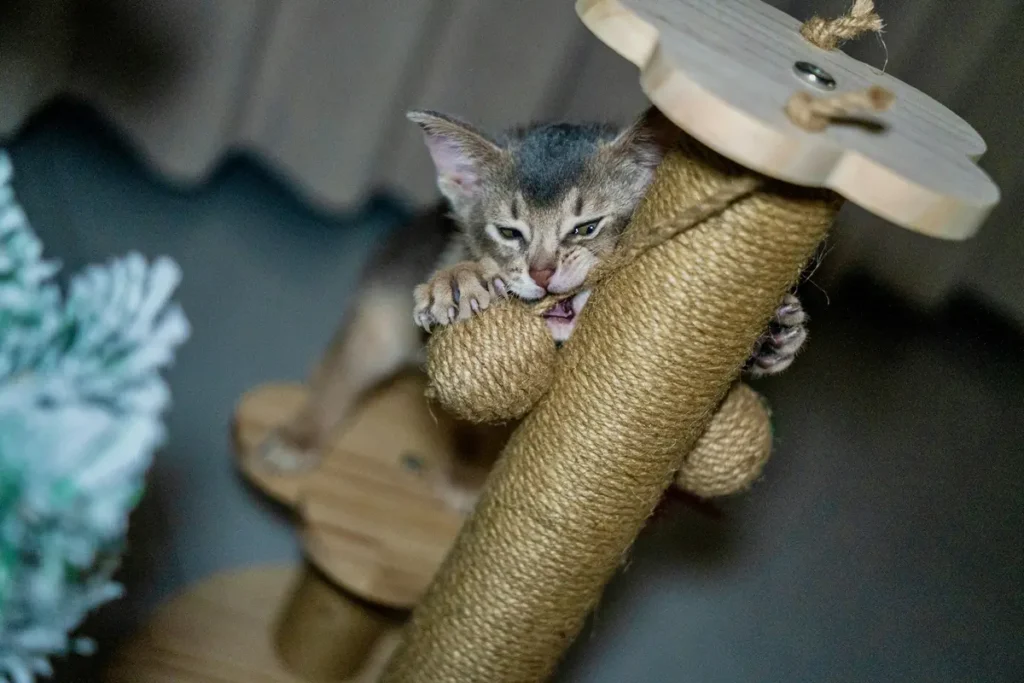
Offer at least one tall, stable vertical post that allows a full-body stretch, plus a horizontal cardboard or sisal option. Place scratching surfaces near sleeping areas, entrances, or furniture the cat already targets. Reward investigation with a treat, praise, or play. If the sofa is tempting, protect it temporarily while making the nearby legal option more attractive.
7. Schedule short hunting-style play sessions
Interactive play is exercise and a safe outlet for predatory behaviour. Move a wand toy like prey: hide it, pause it, let it dart, and allow the cat to catch it.
End with a small food portion or treat when practical, creating a satisfying hunt-catch-eat sequence. Rotate toys so they remain interesting. Put string, ribbon, thread, elastic bands, and wand toys away after play; these can be hazardous if chewed or swallowed.
8. Build vertical space, hiding places, and restful zones
Cats experience a room in three dimensions. A window perch, sturdy cat tree, shelf designed for pets, or secure furniture route can add usable territory without taking up much floor space.
Provide enclosed, elevated, and open resting options. Keep at least one retreat off-limits to children and other pets so the cat can sleep without interruption.
9. Let affection be a two-way conversation
Approach slowly and offer a hand at nose level rather than reaching directly over the head. Many cats enjoy brief strokes around the cheeks, chin, and head. Watch the response.
A relaxed body, leaning in, or returning for more usually means “continue.” Tail lashing, skin twitching, ears turning back, or moving away means “pause.” Respecting those signals builds trust.
If your new companion calls when you walk away, the explanation may range from social contact and routine to boredom or stress. This guide to why a cat meows when you leave the room explains how to respond without accidentally rewarding frantic vocalising.

10. Keep grooming short, gentle, and routine
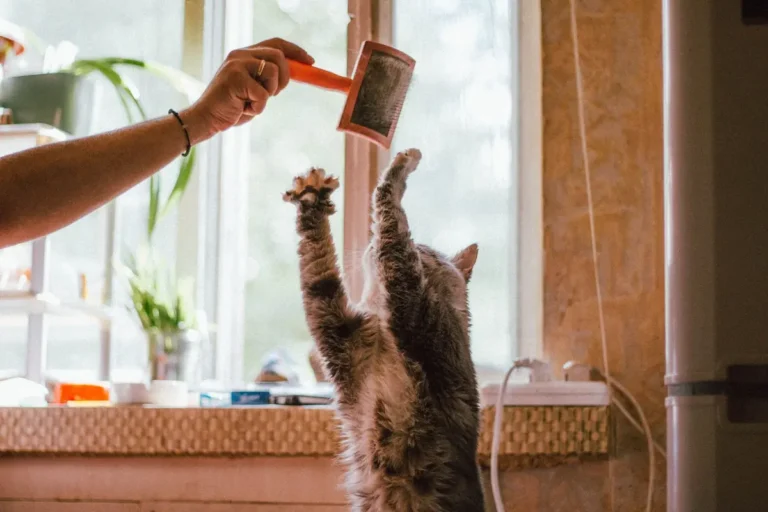
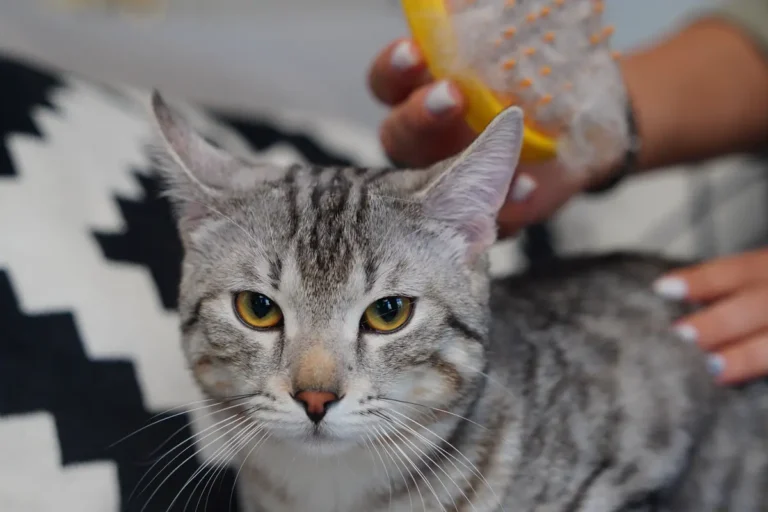
Grooming needs vary by coat, age, mobility, and health. Begin with short sessions when the cat is calm. Let it inspect the brush, make a few gentle passes, reward, and stop before patience runs out.
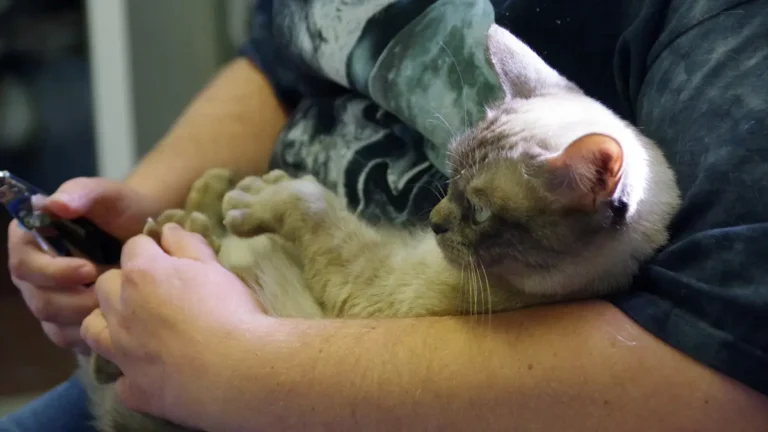
Check claws regularly and ask a veterinary professional or experienced groomer to demonstrate trimming if you are unsure. Provide scratching options, but remember that scratching does not always keep every claw at a comfortable length.
Ask your clinic about gradual tooth-brushing training and suitable dental products; never use human toothpaste. The ASPCA’s general cat-care guidance also covers grooming, handling, identification, and household basics.
11. Cat-proof the home from a cat’s point of view
Get down to feline eye level and look for dangling, chewable, climbable, and squeezable hazards. Secure windows and balconies with cat-safe barriers. Check washing machines, dryers, reclining chairs, cupboards, and garages before closing or operating them.
Store medicines, cleaning products, pesticides, nicotine products, batteries, and small swallowable objects securely. Keep lilies out of a cat household. Avoid essential-oil diffusers and concentrated oils unless your veterinarian has confirmed a specific use as safe.
Keep microchip contact details current. A breakaway identification collar may add another route home when appropriate, but it does not replace a registered microchip.
12. Notice changes instead of waiting for dramatic symptoms
Know your cat’s normal appetite, water intake, litter habits, activity, grooming, breathing, mobility, sociability, and body condition.
Contact a veterinarian when a change is sudden, persistent, or accompanied by discomfort. Urgent help may be needed for difficulty breathing, collapse, repeated unproductive vomiting, suspected poisoning, major injury, seizures, inability to pass urine, or repeated straining with little or no urine.
Kittens, older cats, and cats with existing conditions may deteriorate more quickly. If unsure, call a veterinary clinic instead of trying to diagnose the problem online.

A simple daily cat-care routine
Cats usually cope well with routines that are predictable without being rigid to the minute.
| Time | Essential tasks | What to notice |
|---|---|---|
| Morning | Refresh water, serve a measured meal, scoop litter, offer brief play | Appetite, urine and stool, energy, movement |
| Daytime | Provide safe rest, a view, scratching options, and independent enrichment | Hiding, boredom, conflict with other pets |
| Evening | Interactive play, meal, litter check, calm social time | Grooming, mood, willingness to interact |
| Weekly | Wash bowls, inspect trays and bedding, rotate toys, check coat and claws | Weight trend, tangles, pests, household hazards |
| Regularly | Veterinary prevention, microchip-detail checks, carrier practice | Any change from your cat’s established normal |
This is a framework, not a test. A shy cat may need quieter social time. A kitten may need more frequent meals and play. A senior cat may need easier access, warmer beds, and more frequent health checks.
A first-time cat owner checklist
Before arrival, gather the essentials:
- complete food appropriate for the cat’s life stage;
- separate food and water bowls;
- litter trays, scoop, and familiar litter if possible;
- secure carrier;
- stable vertical and horizontal scratching surfaces;
- hiding box and washable bedding;
- interactive wand toy and safe solo toys;
- brush suited to the coat;
- enzymatic cleaner for accidents;
- microchip, veterinary, and emergency contact details.
Optional purchases can wait. Observing the cat will reveal its preferred beds, toys, scratching angles, and feeding style.
Mistakes new cat owners can avoid
- Changing everything on day one: Keep familiar food and litter initially when possible, then change one thing at a time.
- Forcing contact or introductions: Holding a frightened cat or placing pets face-to-face can increase tension. Use gradual, scent-led introductions and allow retreat.
- Placing every resource together: Spread food, water, litter, beds, and scratching options so one location does not become a bottleneck.
- Punishing normal behaviour: Improve the environment and reward the alternative instead of yelling, spraying water, or using physical punishment.
- Assuming every change is behavioural: Pain can look like hiding, aggression, reduced grooming, or litter problems. Sudden changes deserve a health check.
When to consult a veterinarian or behaviour professional
A veterinary check is the first step for new or worsening behaviour, appetite changes, weight loss, toileting changes, reduced activity, repeated vomiting or diarrhoea, overgrooming, breathing changes, or signs of pain.
If health problems have been addressed but fear, aggression, house-soiling, inter-cat conflict, or separation-related distress continues, ask your veterinarian for a referral to a qualified feline behaviour professional who uses reward-based, low-stress methods. Avoid anyone recommending intimidation, physical punishment, flooding, or pain-based tools.
Frequently asked questions
What does a first-time cat owner need?
A first-time owner needs complete cat food, separate food and water bowls, litter trays and litter, a secure carrier, scratching surfaces, hiding and resting places, safe toys, basic grooming supplies, identification, and a veterinary plan. Start with essentials and learn the individual cat’s preferences before buying elaborate accessories.
How long should a new cat stay in one room?
A new cat should remain in its settling room until it is eating, drinking, using the litter tray, and showing comfortable curiosity. That may take hours for one cat and several days or longer for another. Expand access gradually, keeping the original room available as a safe base.
What is a good daily routine for an indoor cat?
A good routine includes measured meals, fresh water, daily litter scooping, short interactive play sessions, quiet rest, scratching opportunities, and social contact chosen by the cat. Predictability helps, but the schedule should suit the cat’s age, health, activity level, and household environment.
How can I keep an indoor cat happy?
Keep an indoor cat happy by offering vertical territory, hiding places, window views, scratching choices, food puzzles, rotated toys, and daily hunting-style play. Give the cat control over interaction and provide separate resources in multi-cat homes. Enrichment should add meaningful choices rather than constant stimulation.
A good start is built from ordinary days
The answer to how to take care of a cat for beginners is reassuringly practical: create a safe environment, meet essential needs consistently, notice what is normal for your cat, and let trust develop without forcing it. You will not perform every task perfectly. A clean tray, a predictable meal, ten focused minutes of play, and a respected “not now” add up to excellent care.
What is your cat’s funniest habit—or the beginner question you wish someone had answered sooner? Share it in the comments so other MeowTips readers can learn from it too.
This article provides general cat-care and behaviour information. It cannot assess an individual cat or replace advice from a veterinarian or qualified feline behaviour professional.