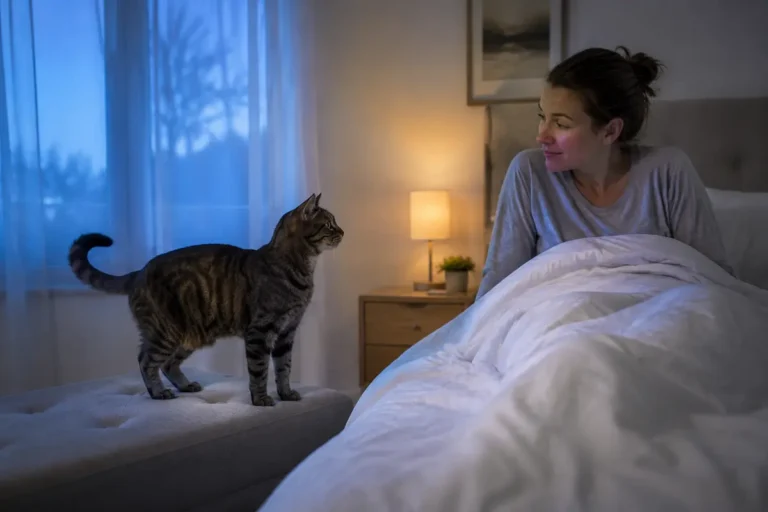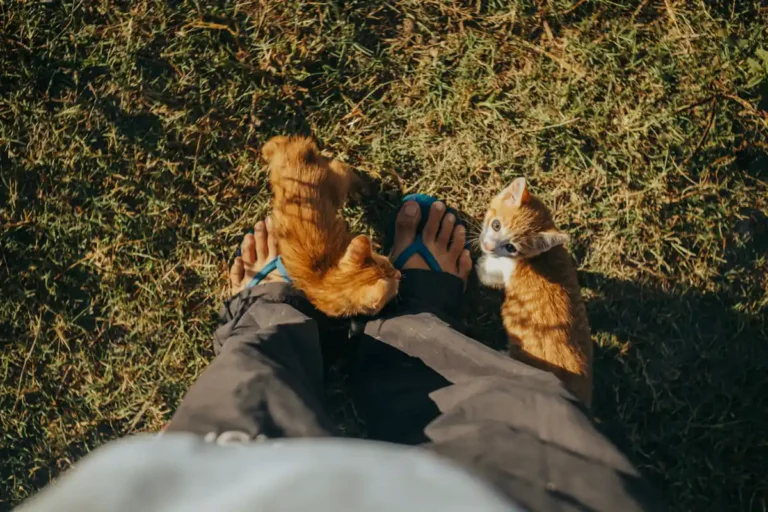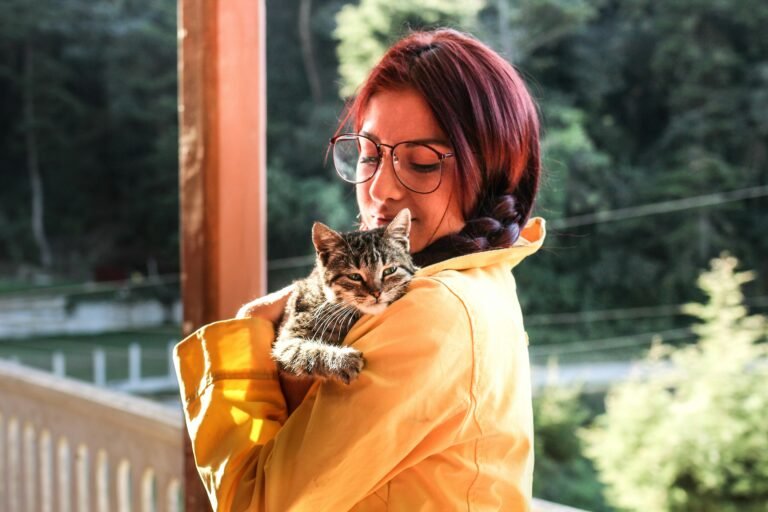

You stand up from the sofa, walk into the kitchen, and hear it almost immediately:
“Meeeoow!”
You call your cat’s name. They answer. You return to the room, and suddenly everything is fine—as if you hadn’t just been summoned back for an emergency meeting.
If this happens regularly, you may wonder, “Why does my cat meow when I leave the room? Is my cat lonely, anxious, or simply being dramatic?”
In many cases, this behaviour is harmless. Your cat may be checking where you went, requesting attention, or reacting to a familiar routine being interrupted. However, persistent crying can occasionally indicate separation-related stress or an underlying health problem.
The sound itself is only part of the story. When it happens, how long it lasts, and what your cat does next will help you understand what they are trying to communicate.
QUICK NAVIGATION In This Article
The Short Answer
Your cat may meow when you leave the room because they:
- Want to know where you are
- Have learned that meowing brings you back
- Want food, play, affection, or access through a closed door
- Feel bored without your company
- Dislike a sudden change in routine
- Have a strong attachment to you
- Experience separation-related anxiety or frustration
- Feel unwell, uncomfortable, or confused
A cat that gives one or two relaxed meows is usually communicating rather than panicking. Continuous crying accompanied by pacing, destructive behaviour, inappropriate toileting, appetite changes, or vomiting deserves closer attention.
Why Does My Cat Meow When I Leave the Room?
1. Your Cat Is Using a Contact Call
Cats do not rely on spoken language the way humans do, but they quickly discover that vocalising gets our attention.
A meow from the next room can function like a simple check-in:
“Where did you go?”
Your cat may not be distressed at all. They may simply want a response so they can locate you. Some cats will meow, hear their owner answer, and settle without following them.
Try responding calmly from the other room. If your cat stops crying or walks over with relaxed body language, the meow was probably a contact call rather than a sign of serious anxiety.
2. Meowing Has Worked Before
Cats are excellent at recognising patterns.
Imagine that your cat meows every time you leave the sofa. You return, speak to them, offer a cuddle, or give them a treat. From your cat’s perspective, the lesson is straightforward:
“When I meow, my person comes back.”
This is known as learned or reinforced behaviour. You did not intentionally train your cat to call you, but your response may have taught them that vocalising is effective.
That does not mean you should suddenly ignore every sound. First, make sure your cat’s physical and emotional needs have been met. Then begin rewarding calm, quiet behaviour instead of responding instantly to every attention-seeking meow.
3. Your Cat Wants Something
Sometimes the answer is refreshingly practical.
Your cat may follow you or call from another room because they want:
- A meal or treat
- Fresh water
- A clean litter tray
- Interactive play
- Access to a closed room
- A favourite sleeping spot
- Petting or companionship
Look at what happens after you return. Does your cat walk towards the food bowl? Lead you to the back door? Sit beside a toy? Cats often use a combination of meowing, staring, walking away, and looking back to guide us towards what they want.
Before treating the behaviour as anxiety, check whether your cat is making a specific request.
4. Your Cat Enjoys Your Company
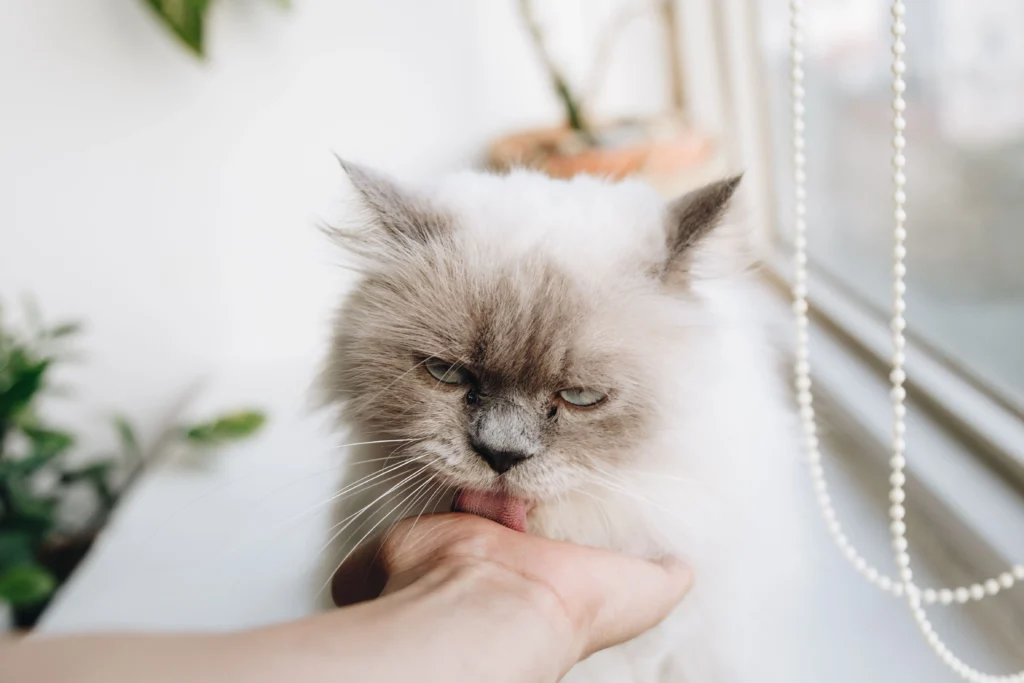
Cats have an unfair reputation for being detached. In reality, many form close social bonds with their caregivers.
Your cat may feel safest when you are nearby. They might not sit on your lap or enjoy being picked up, yet still prefer sharing the same room. Quiet companionship is a genuine form of feline affection.
If your cat meows once, follows you, and settles beside you, they may simply be choosing to remain close to someone they trust.
This is especially common in cats that:
- Were hand-reared
- Were adopted as young kittens
- Live in a single-person household
- Have a naturally social temperament
- Receive most of their play and enrichment from one person
Closeness alone is not a behavioural problem. It becomes concerning when the cat appears unable to relax without constant access to one particular person.
5. Your Cat Is Bored
A bored indoor cat may treat your movements as the day’s main entertainment.
When you leave the room, the interesting part of their environment disappears. Meowing becomes a way to restart the action.
Other signs of boredom can include:
- Knocking objects off surfaces
- Repeatedly demanding play
- Chasing ankles
- Overgrooming
- Scratching furniture excessively
- Waking you during the night
- Becoming fixated on food
- Restlessness despite having recently eaten
Cats need opportunities to stalk, chase, climb, scratch, investigate, and “capture” prey. A basket full of motionless toys does not always provide enough stimulation. Interactive play and changing enrichment activities usually work better.
6. A Change in Routine Has Made Your Cat Uncertain
Cats notice surprisingly small changes.
Working from home and then returning to the office, moving furniture, welcoming a baby, adopting another pet, or changing feeding times can make a previously confident cat more vocal.
A cat that became accustomed to having you nearby throughout the day may protest when the routine changes. This does not necessarily mean the cat has a clinical anxiety disorder. They may simply need time and gentle support while learning the new pattern.
A predictable schedule for meals, play, rest, and departures can make the day feel safer.
7. Your Cat May Be Experiencing Separation-Related Stress
Cats can develop separation-related difficulties, although every vocal cat does not have separation anxiety.
According to Cats Protection, possible signs include excessive vocalisation, restlessness, hiding, refusing food, inappropriate toileting, destructive scratching, vomiting, or diarrhoea when a cat is left alone.
The behaviour may be linked to one particular person. Your cat could become distressed when you leave even if another family member remains at home.
Possible warning signs include:
- Prolonged crying after you leave
- Pacing between doors and windows
- Scratching or biting at exit points
- Urinating or defecating outside the litter tray
- Refusing food until you return
- Destructive behaviour that occurs only during absences
- Excessive grooming
- Becoming unusually frantic when you prepare to leave
- An extreme or unsettled greeting when you return
A phone or pet camera can help. Record several ordinary departures and observe what your cat does after the door closes. This provides far more useful information than guessing based on the greeting you receive when you return.
8. Pain, Illness, or Age-Related Changes Could Be Involved
A sudden increase in meowing should never be dismissed as “bad behaviour,” particularly in an older cat.
Pain, hearing or vision loss, thyroid disease, high blood pressure, kidney disease, cognitive decline, and other health problems can affect vocalisation. Senior cats may call because they feel confused or cannot locate you easily.
Cornell University notes that nighttime vocalisation can occur in cats with conditions such as hyperthyroidism or hypertension, while age-related cognitive changes may cause anxiety and disorientation. Cornell Feline Health Center
Book a veterinary appointment if the meowing:
- Began suddenly
- Is becoming louder or more frequent
- Sounds distressed or painful
- Occurs alongside weight loss or increased appetite
- Comes with increased thirst or urination
- Is accompanied by vomiting, diarrhoea, limping, or hiding
- Mainly affects a senior cat
- Continues despite changes to routine and enrichment
Is It Separation Anxiety or Normal Meowing?
Use your cat’s overall behaviour rather than the sound alone.
| More likely normal communication | Possible separation-related distress |
|---|---|
| One or two brief meows | Continuous crying or yowling |
| Cat settles after hearing your voice | Cat remains unable to settle |
| Relaxed ears, tail, and posture | Pacing, crouching, or frantic movement |
| Normal appetite and litter-box habits | Refusal to eat or toileting outside the box |
| Cat follows you and relaxes | Cat panics around doors or departure cues |
| Behaviour happens occasionally | Behaviour occurs during most departures |
This comparison is not a diagnosis. A veterinarian should rule out medical causes before a serious behavioural problem is assumed.
How to Stop Your Cat Meowing When You Leave
The goal is not to silence your cat. It is to help them feel secure enough that they no longer need to call repeatedly.
Step 1: Identify the Pattern
For several days, note:
- What time the meowing happens
- Whether you leave the room or the entire home
- How long the crying lasts
- What happened immediately beforehand
- Whether food, play, or litter-box use is involved
- How your cat behaves when you return
Patterns often reveal the trigger. Meowing before dinner may be food-related, while crying whenever a particular person leaves may suggest attachment or separation-related stress.
Step 2: Meet Your Cat’s Basic Needs
Before practising any behaviour modification, make sure your cat has:
- Appropriate meals on a consistent schedule
- Fresh water
- Clean, accessible litter trays
- Comfortable sleeping and hiding places
- Scratching surfaces
- Daily social interaction
- Physical and mental enrichment
In a multi-cat home, provide enough separate resources so one cat cannot block another from food, water, litter trays, or resting areas.
Food-related vocalisation can sometimes look like attention-seeking. Keep meals nutritionally balanced and serve them on a predictable schedule. If you are reviewing your cat’s diet, explore our guide to the top 10 healthiest cat foods for every age to find age-appropriate options.
Step 3: Schedule Interactive Play
Use a wand toy or another toy your cat can stalk, chase, and catch.
Aim for short sessions that follow a natural hunting sequence:
- Watch
- Stalk
- Chase
- Pounce
- Catch
- Eat a small meal or treat
- Groom and rest
A focused 10-minute game can be more satisfying than leaving toys scattered around the floor all day.
Schedule play before a time when your cat usually becomes demanding. This meets the need proactively instead of rewarding persistent meowing.
Step 4: Practise Very Short Separations
Start with an absence your cat can comfortably handle.
Walk out of the room for two or three seconds, then return before the cat becomes upset. Repeat this occasionally and gradually increase the duration.
Progress might look like this:
- Three seconds
- Five seconds
- Ten seconds
- Twenty seconds
- One minute
- Several minutes
Move slowly. If your cat begins crying continuously, the jump was probably too difficult. Return to an easier duration rather than forcing them to “get used to it.”
Step 5: Reward Calm Independence
When your cat rests quietly a short distance away, gently place a treat beside them or offer calm praise.
You want your cat to learn that relaxed, independent behaviour is rewarding too.
Good moments to reinforce include:
- Resting on a cat tree
- Playing alone
- Looking out of a window calmly
- Remaining settled when you stand up
- Choosing a bed in another room
Avoid making every reward dependent on your cat following, pawing, or calling you.
Step 6: Make the Environment More Interesting
Useful enrichment options include:
- Puzzle feeders
- Treat hunts
- Window perches
- Cat trees and shelves
- Cardboard boxes
- Paper bags with handles removed
- Tunnels
- Scratching posts
- Rotated toys
- Cat-safe grass
- Short training sessions
Rotate toys instead of displaying all of them permanently. Something that disappears for a week often becomes exciting again when it returns.
Step 7: Keep Departures and Returns Calm
A long emotional goodbye can turn leaving into a major event. Instead, keep departures predictable and low-key.
When you return, wait for a moment of relative calm before offering enthusiastic attention. This helps prevent frantic greetings from becoming part of the routine.
You do not need to ignore your cat completely. Just avoid creating a dramatic contrast between “human present” and “human gone.”
Step 8: Never Punish the Meowing
Do not shout, spray water, bang objects, or lock your cat away as punishment.
Punishment may stop a sound momentarily, but it does not address hunger, fear, boredom, pain, or frustration. It can also make your cat feel less secure around you.
Redirect normal attention-seeking and seek professional help for genuine distress.
When Should You Get Professional Help?
Speak with your veterinarian if the behaviour is new, intense, worsening, or accompanied by physical symptoms.
Once medical causes have been excluded, a qualified feline behaviourist can help identify the emotional trigger and create a personalised behaviour plan. Severe separation-related problems may require a combination of environmental changes, gradual desensitisation, and veterinary treatment.
Never give your cat human sedatives, supplements, essential oils, or anti-anxiety medication without veterinary guidance. Products that are safe for people—or even dogs—may be dangerous for cats.
Frequently Asked Questions
Why does my cat meow when I leave but stop when I return?
Your return may satisfy your cat’s need for contact, attention, security, or access to something. The cat may also have learned that meowing successfully brings you back. Observe whether they appear relaxed or distressed while you are away.
Should I ignore my cat when they meow for attention?
Do not automatically ignore every meow. First check for hunger, pain, litter-box needs, fear, or another genuine problem. If your cat is healthy and the behaviour is clearly attention-seeking, reward quiet moments and provide attention on a predictable schedule instead of responding to persistent demands.
Does my cat have separation anxiety?
Brief meowing alone does not confirm separation anxiety. Warning signs include prolonged vocalisation, pacing, refusal to eat, destructive behaviour, excessive grooming, toileting outside the litter tray, or obvious distress during departures. A veterinary assessment should come before a behavioural diagnosis.
Why does my cat cry when I close a door?
Cats may dislike closed doors because they restrict access, interrupt their ability to monitor their territory, or separate them from people and resources. A cat crying outside a bathroom door is not automatically suffering from separation anxiety; they may simply be curious or frustrated.
Final Thoughts
When your cat meows as you leave the room, listen to the behaviour without assuming the worst. A short call may simply mean, “Where are you going?” Repeated, distressed crying tells a different story.
Start by checking your cat’s needs, observing the pattern, increasing enrichment, and rewarding calm independence. If the behaviour changes suddenly or your cat seems unable to cope, involve your veterinarian early.
Your cat is not trying to manipulate or annoy you. They are communicating in the best way they know.
Does your cat call after you, follow you from room to room, or wait silently outside the door? Share their funniest “Where do you think you’re going?” habit in the comments.
Friendly veterinary disclaimer: This article provides general educational information and is not a substitute for diagnosis or treatment from a licensed veterinarian. Contact your veterinarian if your cat’s vocalisation is sudden, excessive, or accompanied by physical or behavioural changes.