
Tiki Cat After Dark looks straightforward on the shelf: wet food built around meat, broth, and organ ingredients. Then you start comparing cans. One is shredded, another is pâté, calorie counts change by recipe, and a flavor called “rabbit” may still contain duck and chicken.
So, is it a sensible everyday food?
Short answer: Tiki Cat After Dark can be a reasonable wet-food choice for many healthy adult cats when the exact recipe carries an AAFCO statement for adult maintenance. Its strengths include high moisture, named animal ingredients, multiple textures, and published calorie information. The catches are equally practical: formulas are not interchangeable, many recipes contain more animal proteins than the front label suggests, and the right amount depends on the individual cat.
This Tiki Cat After Dark review examines current labels rather than claiming that every cat will enjoy or thrive on the food. MeowTips did not conduct a feeding trial, laboratory analysis, or veterinary review of this product.
QUICK NAVIGATION In This Article
What Is Tiki Cat After Dark?
After Dark is a line of canned wet cat food sold in shredded and pâté textures. The official pâté variety pack describes the foods as complete and balanced meals for adult cats and includes recipes such as Chicken, Chicken Liver & Quail; Turkey & Turkey Liver; Lamb & Beef Liver; Rabbit & Chicken Liver; and Duck & Chicken Liver.
That variety is useful for texture preferences, but “After Dark” is not one uniform formula. Ingredients, fat levels, calories, and even suitability for a life stage must be checked on the exact product. If pet-food terminology feels opaque, this guide to reading a cat food label explains where to find the nutritional adequacy statement and calorie declaration.

Tiki Cat After Dark Review: The Label Matters Most
The front of a can is designed to catch your eye. The small nutritional adequacy statement is what tells you whether the food is intended as a full diet or only for intermittent or supplemental feeding.
The Association of American Feed Control Officials explains that “complete” means a food contains all required nutrients and “balanced” means those nutrients are present in the correct ratios for the stated life stage. That makes the adequacy statement more useful than claims such as “premium,” “natural,” or “meat first.”
Current official pages for the four pâté recipes compared below state that they are formulated to meet AAFCO nutrient profiles for maintenance. In plain English, that means adult maintenance—not growth. Packaging and formulas can change, so the can in your hand wins if it differs from a web page.
A closer look at four pâté recipes
| After Dark pâté recipe | Crude protein, min. | Crude fat, min. | Moisture, max. | Calories per can | AAFCO statement shown |
|---|---|---|---|---|---|
| Chicken, Chicken Liver & Quail | 10% | 6.5% | 78% | 99 kcal | Maintenance |
| Rabbit & Chicken Liver | 10% | 6% | 78% | 98 kcal | Maintenance |
| Lamb & Beef Liver | 9% | 8% | 78% | 110 kcal | Maintenance |
| Venison & Beef Liver | 10% | 4% | 78% | 88 kcal | Maintenance |
Source: current Tiki Pets recipe pages, checked September 4, 2026. Guaranteed-analysis values are minimums or maximums, not the food’s exact average nutrient composition. These percentages are reported as fed, so they should not be compared directly with dry-food percentages without adjusting for moisture.
The calorie spread is worth noticing. The 88-calorie venison recipe and 110-calorie lamb recipe differ by 22 calories per can—a 25% increase relative to the 88-calorie can. Feeding the same number of cans after switching recipes could therefore change daily calorie intake meaningfully.
Hypothetical arithmetic example: If a veterinarian had already set a 200-kcal daily target, 200 ÷ 88 equals about 2.27 cans, while 200 ÷ 110 equals about 1.82 cans. That calculation illustrates the difference; it is not a feeding prescription. Body size, age, activity, neuter status, body condition, health, treats, and other foods all affect an individual cat’s needs. AAFCO’s calorie-label guide explains how pet-food calorie statements are presented.
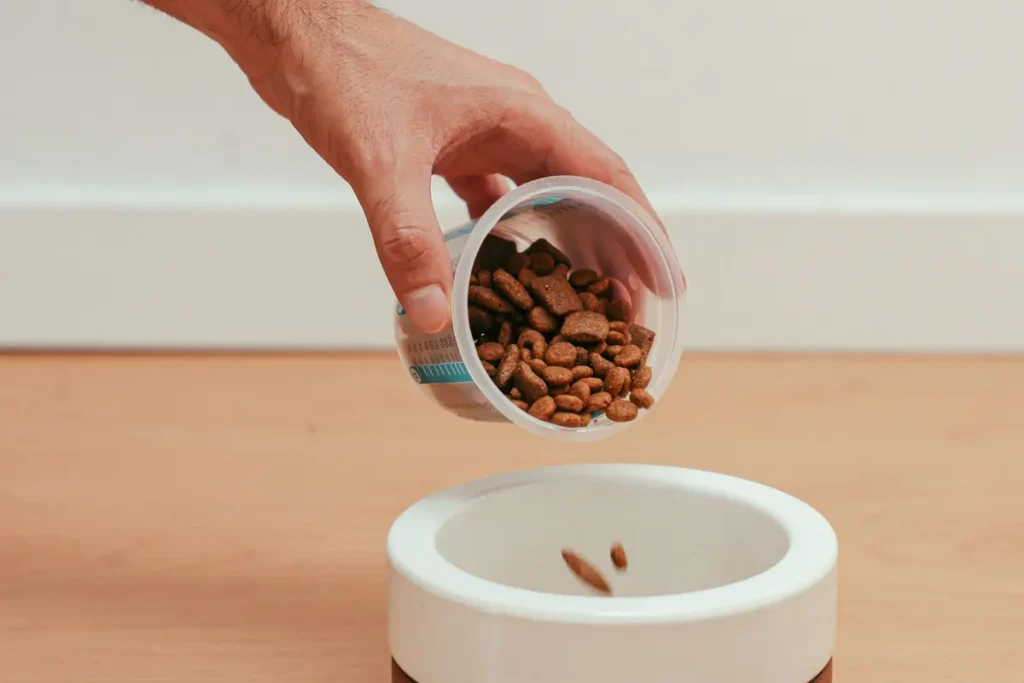
Ingredient Quality: What the List Can and Cannot Tell You
The checked pâté formulas begin with named animal ingredients. For example, Chicken, Chicken Liver & Quail lists chicken, chicken broth, chicken liver, and quail before smaller amounts of yeast, heart, gums, minerals, vitamins, and taurine. Organ meats can contribute useful nutrients, while the vitamin and mineral additions help a formulated diet meet its nutrient targets.
That is a positive label pattern, but an ingredient list cannot prove digestibility, sourcing standards, manufacturing quality control, or how well a particular cat will do on the food. It also cannot replace the adequacy statement. The WSAVA questions for selecting a pet food recommend looking beyond marketing to matters such as qualified nutrition expertise, quality control, research, and access to full nutrient information.
A recipe name is not a single-protein promise
This is the most important shopping detail in the line. The current Rabbit & Chicken Liver pâté lists rabbit, duck, chicken broth, chicken liver, and chicken heart. The Venison & Beef Liver recipe contains beef liver, while Lamb & Beef Liver also contains beef liver.
Those foods may still suit cats without dietary restrictions, but they are not automatically appropriate for a strict elimination diet or a confirmed food allergy. Read every ingredient, including broth, liver, heart, natural flavor, and fish oil. If your veterinarian is investigating an adverse food reaction, use the exact diet and protocol they recommend rather than improvising with a retail “novel protein” flavor.
Pâté or Shredded: Which Texture Should You Choose?
There is no universally superior texture. Pâté is smooth and easy to mash with water; shredded recipes provide visible strands and broth. Some cats strongly prefer one mouthfeel.
Start with what your cat reliably eats, then verify the recipe’s adequacy statement and calories. A mixed variety pack can test preferences, but rotating flavors blindly makes it harder to identify which ingredient caused vomiting, diarrhea, or itching. Introduce one new recipe at a time and keep a simple note of the flavor and response.
If your cat drinks the broth but leaves the solids, the problem may be texture rather than flavor. These practical steps for a cat that only licks the gravy can help you separate preference from a possible chewing or health concern.
Main Strengths and Limitations
Potential strengths
- The checked pâté recipes carry adult-maintenance adequacy statements.
- Named meats and organ ingredients appear high in the ingredient lists.
- Wet food contributes water as part of the meal.
- Pâté and shredded options give texture-sensitive cats more choices.
- Calories per can are published, making portion planning possible.
- Several checked pâtés avoid grains and carrageenan, although absence claims do not by themselves prove a food is better.
Limitations to consider
- Calories and fat vary enough that equal can counts are not equal portions.
- Many recipes contain chicken or beef components even when another meat leads the name.
- Adult-maintenance formulas should not be assumed suitable for kittens.
- A guaranteed analysis supplies only a limited nutrient snapshot; it does not show values such as phosphorus on the checked labels.
- Price and availability may make consistent feeding difficult.
- No label can predict palatability or tolerance for an individual cat.
- These are not therapeutic veterinary diets.
Who Might Tiki Cat After Dark Suit?
It may be worth considering for a healthy adult cat whose owner wants a complete wet food, values named animal ingredients, and can sustain the cost. The texture range may also help when a cat accepts pâté but refuses shreds—or the reverse.
Look elsewhere, or ask your veterinarian first, when:
- you are feeding a kitten, pregnant cat, or nursing cat and the exact can says only “maintenance”;
- your cat needs a veterinary diet for kidney, urinary, gastrointestinal, or another medical condition;
- a food-allergy trial requires tightly controlled proteins;
- your cat has unexplained appetite loss, repeated vomiting, diarrhea, weight change, or trouble chewing;
- the food would strain the budget enough to cause frequent, abrupt switches.
For broader life-stage context, compare the adequacy statement with these cat food choices for different ages. If you are comparing After Dark with a food that may be intended as a complement rather than a full meal, the Applaws wet cat food review explains why that distinction matters.
How Much Should You Feed?
Use the feeding guide as a starting point, not an automatic target. The current official pages suggest about 1½ cans per day per seven pounds for the 110-kcal Lamb & Beef Liver pâté and about 1¾ cans for several lower-calorie recipes. Even the manufacturer notes that amounts vary with age, activity, and condition.
A more reliable routine is:
- Confirm calories per can on the exact product.
- Account for every source of calories, including dry food, treats, and toppers.
- Measure portions instead of estimating leftovers by eye.
- Check body weight and body condition regularly.
- Ask your veterinarian to set or adjust a calorie target if your cat is underweight, overweight, growing, pregnant, nursing, senior, or ill.
If you use both textures or combine canned and kibble, this wet-and-dry cat food mixing guide shows how to calculate portions without accidentally serving two full meals.
How to Switch Without Upsetting the Routine
For a healthy cat, change food gradually over roughly seven to ten days. Begin with a small amount of the new food beside or mixed with the old food, then increase it while reducing the old food. Slower transitions may suit sensitive cats.
Do not try to force a transition by letting a cat go without food. If your cat refuses meals, seems unwell, or has a medical history, contact a veterinarian promptly. Cats can become seriously ill when they do not eat.
Once a can is open, cover and refrigerate the unused portion promptly. The FDA advises keeping the refrigerator at 40°F (4.4°C) or below, discarding leftover wet food according to the label, and washing bowls and utensils after use. Serve only a fresh portion; do not repeatedly warm and rechill the same food.

Common Buying Mistakes
- Assuming every can is equivalent. Recheck calories, fat, texture, and adequacy statement.
- Choosing from the recipe name alone. Secondary animal proteins may matter for allergies.
- Treating “grain-free” as a complete nutrition test. Nutrient adequacy and the cat’s needs matter more than a single absence claim.
- Using can count without calorie math. Can sizes and recipe energy density vary.
- Calling normal rejection “pickiness” too quickly. Dental pain, nausea, congestion, and other problems can change eating behavior.
- Stocking a case before testing acceptance. Buy a few cans first unless your cat already eats the exact recipe.
Frequently Asked Questions
Is Tiki Cat After Dark complete and balanced?
Many After Dark recipes are marketed as complete and balanced, and the four pâtés checked for this review state that they meet AAFCO nutrient profiles for adult maintenance. Verify the adequacy statement on your exact can, because recipe and market versions can change.
Can kittens eat Tiki Cat After Dark?
Do not assume an adult-maintenance recipe is appropriate as a kitten’s main diet. Kittens need food labeled for growth or all life stages. Check the exact can and ask your veterinarian if you are uncertain.
Is Tiki Cat After Dark high in protein?
The brand describes the line as high protein, while the checked pâtés list crude-protein minimums of 9% to 10% as fed. Because wet and dry foods contain very different amounts of water, compare nutrients on a dry-matter or calorie basis when making a meaningful cross-format comparison. Ask the manufacturer for typical analysis if that level of precision matters.
Is it a good choice for a cat with kidney disease?
This review cannot recommend it for kidney disease. The checked guaranteed analyses do not provide enough information—such as phosphorus on a dry-matter or calorie basis—to evaluate it as a renal diet, and After Dark is not presented as a therapeutic food. Use the diet your veterinarian recommends for your cat’s diagnosis and laboratory results.
How many cans should I feed per day?
There is no universal number. Start with the exact recipe’s calories and feeding guide, include other food and treats, and adjust with body-condition monitoring. A veterinarian can calculate a personalized target.
Is Tiki Cat After Dark chicken-free?
Some recipe names do not feature chicken, but that does not guarantee the formula is chicken-free. Rabbit & Chicken Liver, for example, includes chicken ingredients by name. Read the complete current ingredient list if chicken avoidance matters.
Final Verdict
Tiki Cat After Dark has several useful qualities for a healthy adult cat: high moisture, named animal ingredients, multiple textures, complete adult-maintenance options, and visible calorie information. The best choice, however, is not “After Dark” in general. It is the exact recipe whose life-stage statement, ingredients, calorie level, texture, cost, and availability fit your cat.
Before buying a case, compare two or three individual cans, choose one recipe, and introduce it gradually. Which matters most for your cat right now: texture, ingredient restrictions, calories, or budget?
References
- Tiki Cat After Dark pâté variety pack and individual recipe links
- AAFCO: Reading pet food labels
- AAFCO: Understanding calorie statements
- WSAVA: Questions to ask when selecting a pet food
- FDA: Proper storage of pet food and treats
Educational disclaimer: This article provides general information for owners of healthy cats. It does not diagnose illness or replace advice from a veterinarian who knows your cat.