How to Stop Your Cat From Waking You Up at Night: 9 Gentle Fixes

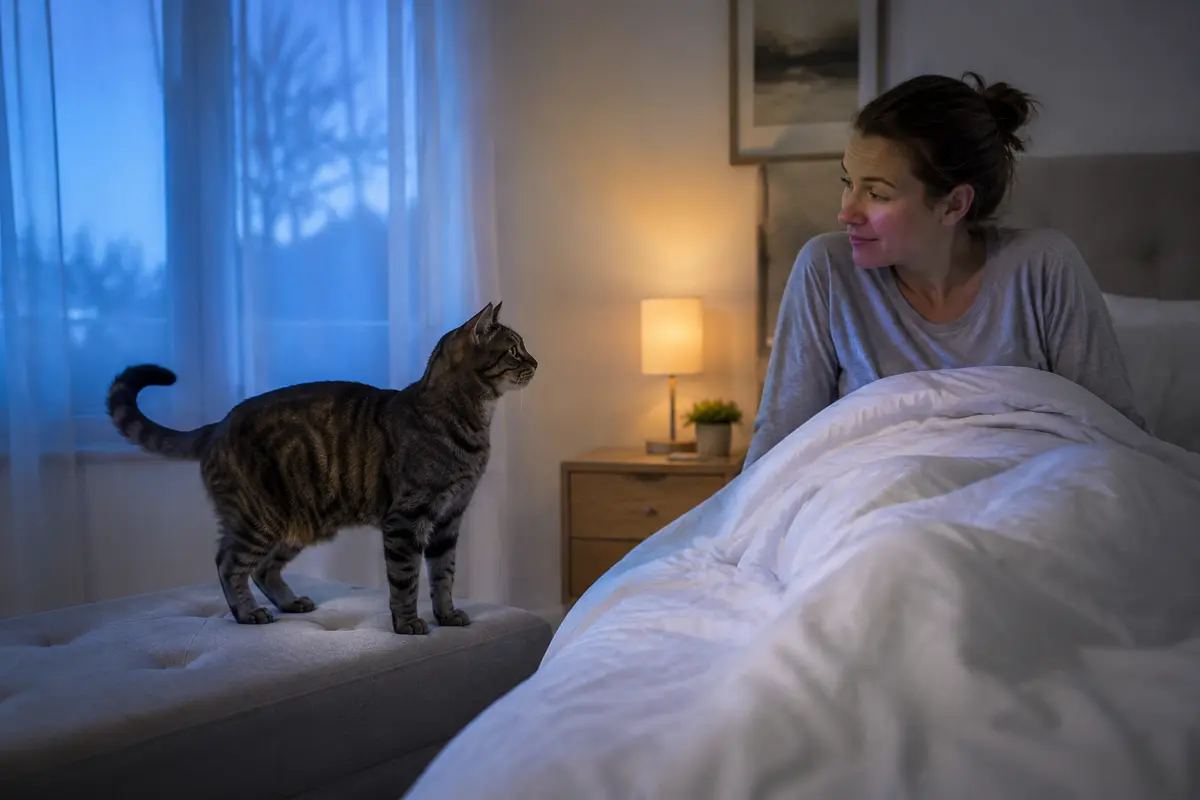
It is 4:07 a.m. A paw lands on your cheek. The same cat who ignored you for most of the evening is now meowing beside the pillow, walking across your ribs, or testing the bedroom door with impressive determination. If you want to know how to stop your cat from waking you up at night, the answer starts with the pattern behind the wake-up—not with finding a louder way to say no.
Some cats are hungry. Others have learned that persistence makes a human sit up, speak, open a door, or serve breakfast. Boredom, outdoor activity, discomfort, and age-related confusion can produce similar scenes. The right fix depends on which job the nighttime behavior is doing.
QUICK NAVIGATION In This Article
Quick Answer
First rule out pain or illness, especially if nighttime waking is new or your cat is older. Then set one consistent bedroom rule, schedule active play and a measured late meal, separate breakfast from your wake-up, and reward quiet behavior. Use enrichment or an automatic feeder when appropriate, but never punish nighttime meowing or ignore signs of genuine distress.
Why Your Cat Keeps Waking You at Night
Cats are not tiny people with poor respect for office hours. Their activity naturally rises around dawn and dusk, and an indoor cat may be ready for food or action while the house is still dark.
What happens after the wake-up is equally important. If meowing leads to breakfast, pawing produces petting, or scratching opens the door, the behavior works.
There may also be an unmet need. A cat who slept through a quiet day may have energy to spend. A dirty litter box, an empty water bowl, a noisy outdoor animal, competition with another pet, or being shut away from preferred resources can keep a cat unsettled.
Finally, behavior and health overlap. The ASPCA’s guidance on excessive meowing recommends a veterinary check because hunger, thirst, restlessness, pain, thyroid disease, kidney disease, and other medical changes may increase vocalization.
Match the pattern to the likely need
| What happens | What it may suggest | Best first step |
|---|---|---|
| Wake-up happens just before breakfast | Anticipation or hunger | Move breakfast away from your response; consider a timed feeder |
| Cat brings a toy, races, or pounces on feet | Stored play energy | Add interactive evening play and daytime activity |
| Meowing or scratching happens outside a closed door | Access-seeking, habit, or separation frustration | Set a consistent door rule and practice short daytime closures |
| Cat stares toward a window or patrols one room | Outdoor cats, wildlife, light, or noise | Block the nighttime view and check environmental triggers |
| Restlessness began suddenly | Pain, illness, stress, or household change | Arrange a veterinary assessment and review recent changes |
| Older cat wanders, seems lost, or yowls | Sensory decline, pain, hypertension, thyroid disease, or cognitive change | Contact a veterinarian promptly; add gentle environmental support |
How to Stop Your Cat From Waking You Up at Night
Change one system, not just one moment. The goal is to make nighttime predictable, meet legitimate needs before bed, and ensure that waking a person no longer controls breakfast or entertainment.
1. Start With a Health and Comfort Check
A learned habit usually follows a recognizable routine. A sudden change deserves more caution.
Call your veterinarian if nighttime waking is new, escalating, or accompanied by increased thirst, appetite or weight changes, vomiting, house soiling, stiffness, hiding, confusion, or unusual daytime sleepiness. Do not assume a senior cat is simply becoming difficult. Cornell’s information on feline cognitive dysfunction notes that nighttime vocalizing can occur alongside medical problems such as hyperthyroidism or hypertension as well as age-related cognitive changes.
Before bed, also check the ordinary essentials: clean water, an accessible litter box, a comfortable resting place, and safe access to any resources your cat needs overnight. In a multi-cat home, one cat may quietly block another from a bowl, hallway, or litter box after the humans go to sleep.
2. Choose One Bedroom Rule and Keep It Consistent
Decide whether your cat may sleep in the bedroom. Either choice can work if the cat has appropriate resources and everyone in the household follows the same rule.
What does not work well is changing the rule in response to noise. If the door opens after 20 minutes of meowing, the lesson is not “meowing failed.” The lesson is “meowing for 20 minutes opened the door.”
If your cat stays outside, create a comfortable sleeping area with a bed, water, a litter box in a suitable location, a scratching surface, and a perch or hiding place. If your cat sleeps inside, remove fragile objects and set up a cat bed or blanket away from your pillow so calm settling has an obvious place to happen.
Cats who call as soon as a person disappears may be making a contact call, requesting access, or struggling with a changed routine. The MeowTips guide to why cats meow when you leave the room can help you distinguish ordinary communication from more persistent distress.
3. Add Purposeful Play Before Bed

Use an interactive wand or other toy your cat can chase, stalk, pounce on, and physically catch. Ten focused minutes can be more useful than leaving a pile of motionless toys on the floor.
Finish with a successful catch, then put string and wand toys safely away.
The Feline Veterinary Medical Association’s environmental-needs guidance emphasizes opportunities for play and predatory behavior as part of a healthy indoor environment. Daytime activity matters too: use short play sessions, climbing options, boxes, perches, and safe exploration so the entire energy budget is not waiting for bedtime.
4. Adjust Meal Timing Without Overfeeding
If breakfast is the prize, feeding the cat when they wake you strengthens the alarm-clock routine. Instead, use measured daily portions and shift part of the existing allowance later.
Offer a meal after evening play, provided the timing and amount suit your cat’s health plan. Do not simply add an extra meal on top of the normal daily calories. Cats with diabetes, kidney disease, food allergies, prescription diets, or weight concerns need an individualized feeding discussion with their veterinarian.
The FelineVMA consensus statement on feline feeding supports feeding approaches that allow cats to eat multiple small meals and express normal foraging behavior. The practical schedule still needs to fit the individual cat and household.
5. Let a Timed Feeder Deliver Early Breakfast

For a healthy, food-motivated cat, an automatic feeder can transfer the role of breakfast provider from you to a machine. Set it shortly before the usual wake-up at first. Once the cat reliably waits near the feeder instead of your bed, move the time later in small increments if needed.
Place the feeder away from the bedroom so its motor and the cat’s anticipation do not create a new bedside event. Introduce it during the day before depending on it overnight, and confirm that each portion dispenses correctly.
A feeder is not a cure for unexplained hunger. A cat who suddenly seems ravenous, loses weight, drinks more, or remains restless after eating needs veterinary attention.
6. Provide Quiet, Safe Nighttime Activities
A young or active indoor cat may need something appropriate to do while the household sleeps. Options include a beginner-level food puzzle filled from the daily ration, a sturdy scratcher, a safe perch, cardboard boxes without handles, or quiet toys that cannot unravel or be swallowed.
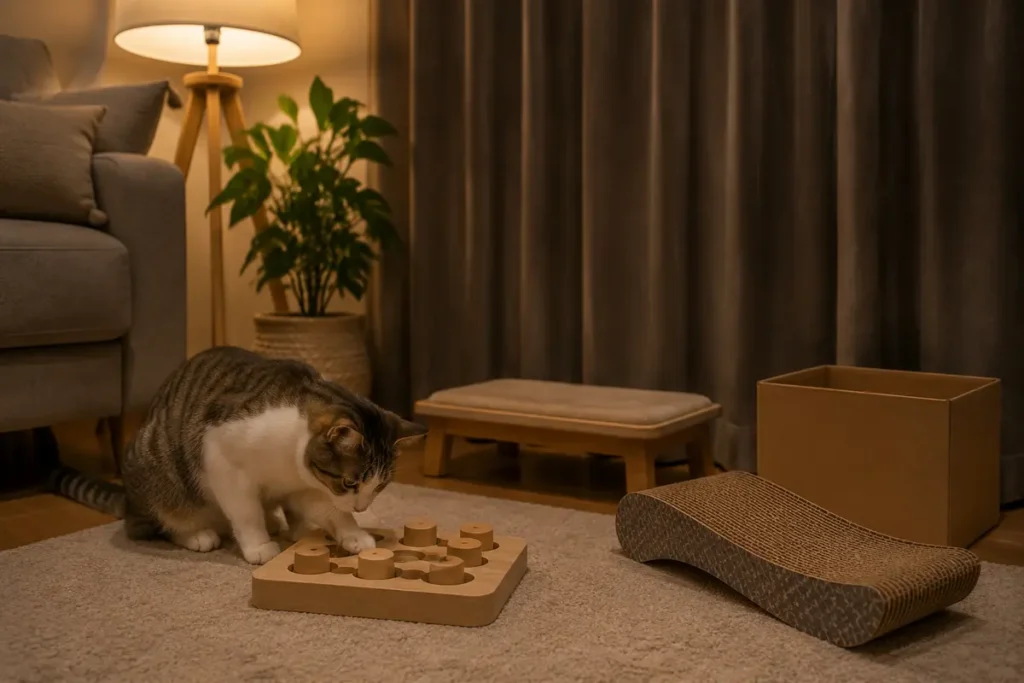
Test each item while you are awake before leaving it available overnight. Put away strings, ribbons, elastic bands, feather wands, small pieces, plastic bags, and toys your cat chews apart.
If your cat patrols a window, check for visiting cats, raccoons, foxes, birds, car lights, or sprinkler noise. Close a curtain or use an opaque lower-window covering for a few nights and note whether the waking changes.
7. Practice Calm Door Closures During the Day
Do not make bedtime the first and only time your cat experiences a closed bedroom door. Practice when everyone is awake and the cat is relaxed.
Set up the cat with a small food puzzle or enjoyable activity outside the room. Close the door for one or two seconds, then reopen it before meowing or scratching begins. Across separate sessions, increase the duration in tiny steps. If the cat stops eating, crouches tensely, paws frantically, or vocalizes continuously, the exercise became too difficult; shorten the next repetition.
At night, avoid talking, scolding, or repeatedly opening the door to negotiate. If claws are damaging the threshold, protect the area and provide a stable horizontal scratcher nearby. The MeowTips plan to stop a cat scratching carpet at a door covers physical protection and replacement scratching options in more detail.
8. Reward Quiet—Not Just the End of Noise
Ignoring a healthy cat’s learned demand behavior can be part of the plan, but it is incomplete on its own. Teach the behavior you want.
During daytime door practice, wait for a brief, achievable moment of quiet, then calmly open the door or place a reward away from the threshold. Gradually build from one quiet second to several. Do not use food to lure a frightened cat closer to something they fear; the cat should remain comfortable enough to eat and move normally.
In the morning, use a neutral cue—an alarm, opening the curtains, or completing one short task—before greeting or feeding the cat. This separates breakfast from the act of waking you. Reward calm waiting, sitting on a mat, or moving toward the feeding area.
9. Adapt the Plan for Senior Cats and Multi-Cat Homes
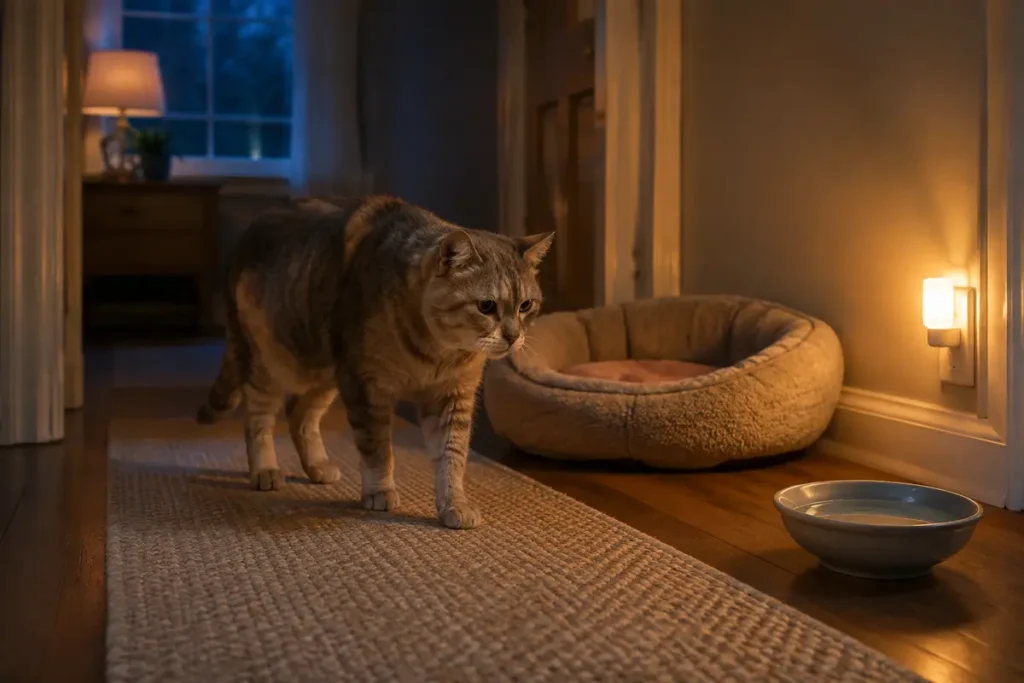
A senior cat needs investigation before training. Pain, reduced vision or hearing, high blood pressure, thyroid disease, kidney disease, and cognitive change can disturb sleep. A dim nightlight, warm accessible bed, non-slip paths, and resources on the same floor may make nighttime navigation easier, but environmental changes do not replace veterinary care.
In multi-cat homes, watch what happens rather than assuming the noisy cat is the whole problem. Another cat may guard the hallway, feeder, bed, or litter box. Provide separated resources and multiple resting choices.
What Not to Do During a 4 A.M. Wake-Up
- Do not spray water, yell, clap, chase, or throw objects. These responses can add fear and may still reward the cat with attention.
- Do not feed immediately after being awakened. That makes you the fastest route to breakfast.
- Do not reduce food blindly. Persistent hunger may reflect an unsuitable portion or a medical problem.
- Do not lock a cat away without essential resources. Water, appropriate litter access, comfort, and safe temperature still matter.
- Do not use essential oils or strong-smelling homemade deterrents. Some substances are unsafe for cats, and aversive smells do not address the cause.
- Do not expect one intense play session to erase an inactive day. Build movement and enrichment into the whole routine.
- Do not ignore sudden nighttime distress. A behavior plan should never delay veterinary care.
A Realistic Two-Week Reset
Nights 1–3: Observe and prepare
Record the time, behavior, location, and what happens afterward. Check resources, block obvious outdoor triggers, and arrange a veterinary visit if the change is new or concerning. Choose the bedroom rule and get every household member on the same page.
Nights 4–7: Change the routine
Add predictable evening play, move an appropriate portion of food later, and introduce any timed feeder during the day first. Begin very short daytime door sessions. Keep morning attention and breakfast tied to a neutral cue rather than the cat’s wake-up.
Week 2: Adjust one variable at a time
Review the log. If wake-ups have shifted from 4 a.m. to 5 a.m., that is information and progress—not a reason to change everything at once. Increase daytime activity or move the feeder time gradually. If the behavior remains intense, look again for health, stress, or resource-access problems and ask your veterinarian or a qualified feline behavior professional for help.
When to Contact a Veterinarian
Book an appointment when nighttime waking begins suddenly, increases substantially, or comes with:
- weight loss or gain;
- increased hunger or thirst;
- vomiting, diarrhea, or house soiling;
- stiffness, reluctance to jump, or sensitivity to touch;
- confusion, staring, getting stuck, or wandering;
- loud yowling that seems different from the cat’s normal voice;
- changes in vision, hearing, appetite, grooming, or social behavior; or
- any sign of pain or difficulty urinating.
Repeated trips to the litter box with little or no urine, crying while attempting to urinate, collapse, breathing difficulty, or severe weakness require urgent veterinary help.
Frequently Asked Questions
Why does my cat wake me up at exactly 4 a.m.?
A consistent time often reflects dawn activity, anticipation of breakfast, an outdoor trigger, or a learned routine. Track what the cat does and what reward follows. A timed feeder, revised meal schedule, blocked window view, and delayed morning response may help once health concerns have been excluded.
Should I ignore my cat when they wake me at night?
Do not reward a healthy cat’s learned demand behavior with food, play, or conversation, but first check for illness, distress, and unmet needs. Ignoring alone does not teach a replacement behavior. Pair consistency at night with daytime training and rewards for calm waiting.
Will feeding my cat before bed help?
It may help a food-motivated cat if the late meal comes from the normal daily allowance. Play followed by a measured meal can create a predictable evening sequence. Ask your veterinarian about timing and portions if your cat has a medical condition or prescription diet.
Can I lock my cat out of the bedroom?
Yes, if the cat is healthy, comfortable outside, and has safe access to water, a suitable litter box, resting space, and other necessary resources. Introduce closed-door time gradually during the day and keep the rule consistent. Persistent panic or distress needs professional assessment.
Why has my senior cat started yowling at night?
Older cats may vocalize because of pain, reduced senses, hypertension, thyroid or kidney disease, or cognitive change. Arrange a veterinary examination rather than treating the behavior as a simple bad habit. A nightlight and accessible resources may provide support while the cause is investigated.
How long does it take to stop nighttime cat wake-ups?
Simple learned routines may begin changing within several days of consistent management, but there is no universal deadline. Hunger, household stress, door frustration, multi-cat conflict, and medical problems require different solutions. Track patterns for two weeks and seek professional help if the behavior remains intense or welfare is affected.
Build a Night Routine That Works for Both of You
Learning how to stop your cat from waking you up at night is less about winning a 4 a.m. contest and more about changing what the hour predicts. Meet genuine needs before bed, remove the payoff for waking you, reward calm alternatives, and take sudden or senior-cat changes seriously.
A quieter night is usually built from several small, consistent adjustments. The cat gets a safer, more predictable routine—and you get to meet them again after sunrise.
Veterinary disclaimer: This article provides general educational information and does not replace diagnosis or treatment from a licensed veterinarian.