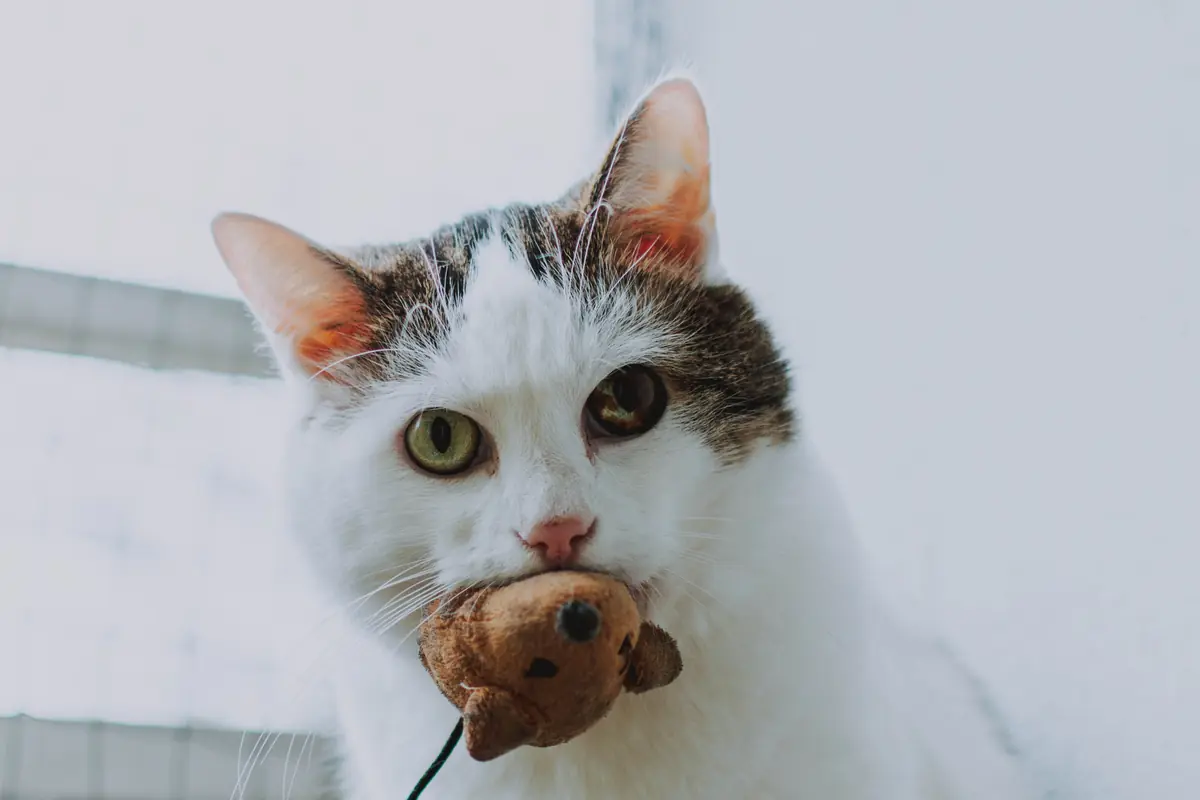

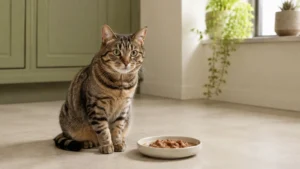
You shuffle into the kitchen, half awake and desperate for coffee, only to discover a stuffed mouse floating face-down in your cat’s water bowl.
Again.
Your cat is sitting nearby, looking rather pleased with the arrangement. Meanwhile, you are holding a dripping toy and wondering, “Why does my cat put toys in the water bowl—and am I supposed to do something about it?”
This wonderfully odd habit is usually harmless. Cats may drop toys in water as part of hunting-style play, sensory exploration, learned attention-seeking, or a personal storage system that makes perfect sense to them. There is no single proven explanation, so the best clue is what your cat does immediately before and after the dunking.
Let’s investigate the most likely reasons, whether wet toys can create a safety problem, and how to redirect the behaviour without spoiling your cat’s fun.
QUICK NAVIGATION In This Article
Quick Answer: Why Does My Cat Put Toys in the Water Bowl?
Cats may place toys in their water bowls because they are:
- Treating toys like captured prey
- Storing prized objects in a familiar area
- Exploring how toys move or feel in water
- Creating a more interesting play experience
- Repeating a behaviour that gets attention
- Entertaining themselves when bored
- Dropping toys accidentally while carrying them
Most cats are not trying to wash, drown, or punish their toys. Those are entertaining human interpretations, but feline behaviour is rarely that theatrical.
1. Your Cat Is Completing a Hunting-Style Routine
Even a pampered indoor cat retains an instinctive interest in hunting movements.
A toy mouse may be fabric and stuffing to you, but to your cat it can become something to stalk, chase, pounce on, capture, carry, and manipulate. International Cat Care explains that play can involve the same broad sequence cats use during predatory behaviour: searching, stalking, chasing, pouncing, catching, and handling the captured object.
Dropping the “catch” near food or water may be your cat’s version of completing that sequence.
It is tempting to say your cat believes the water bowl is a miniature pond or that they are drowning their prey. We cannot know that with certainty. A safer explanation is that the toy, carrying behaviour, and familiar resource area have become connected in your cat’s play routine.
Signs that hunting-style play is involved
- Your cat carries the toy in their mouth
- They make chirping or muffled meowing sounds
- They bat the toy before or after dropping it
- Small mouse-shaped toys are chosen most often
- The behaviour happens after energetic play
- They retrieve the wet toy and continue playing
If your cat looks relaxed and playful, the soaking is probably another chapter in their private hunting adventure.
2. The Water Bowl May Feel Like a Safe Storage Spot
Cats often organise their world around familiar resources: food, water, sleeping places, litter areas, scratching surfaces, and favourite hiding spots.
Your cat may view the water station as part of their secure home territory. A prized toy placed there is less likely to disappear beneath the sofa—at least in theory.
Some cats drop toys into their food bowls too. Others carefully arrange springs, bottle caps, hair ties, or toy mice beside their dishes. It can look like a tiny feline collection point.
This does not necessarily mean your cat is offering you a gift. They may simply be leaving an important object in a familiar location.
3. Your Cat Is Experimenting With Water
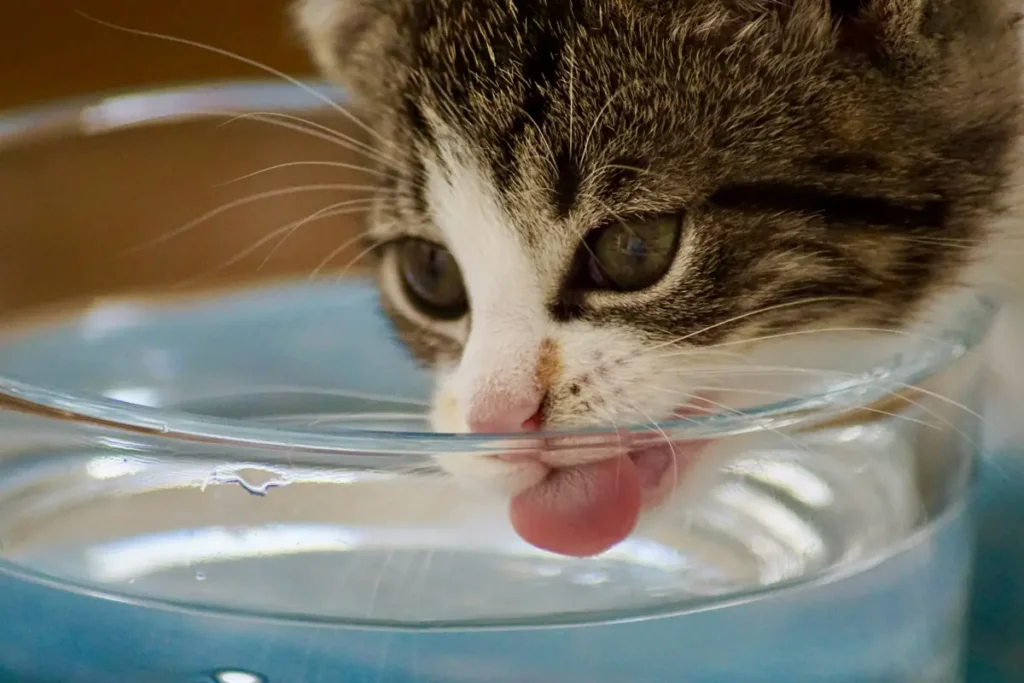
Cats investigate the world through smell, touch, sound, sight, and movement. Water changes all of those things.
When a toy lands in a bowl, it may:
- Float or sink
- Spin when touched
- Become heavier
- Produce ripples
- Make a soft splash
- Smell different
- Feel cooler or softer
- Move less predictably
For a curious cat, that is a surprisingly rich experiment.
A lightweight spring may skim across the surface, while a stuffed mouse slowly absorbs water and sinks. Your cat may tap, scoop, retrieve, and drop the object repeatedly simply because the changing movement is fascinating.
Kittens are especially likely to treat a water bowl as both a drink station and an unofficial science laboratory.
4. Your Cat Likes the Toy’s Wet Texture
Some cats repeatedly soak one particular toy and ignore all the others.
The explanation may be texture.
A wet fabric toy feels, smells, and moves differently. Certain cats enjoy biting, carrying, licking, or suckling damp materials. A toy filled with catnip may also release a stronger scent after becoming wet, although it should be removed before the stuffing becomes dirty or mouldy.
Watch what your cat does next:
- Do they suck or chew the wet fabric?
- Do they carry it directly to a bed?
- Do they bring it to you?
- Do they wait for you to throw it?
- Do they return it to the water when it dries?
The pattern can reveal whether your cat enjoys the wet toy itself or simply enjoys making it wet.
If your cat begins tearing off and swallowing fabric, stuffing, rubber, plastic, or string, remove the item. Eating non-food material is called pica and warrants a conversation with your veterinarian.
5. The First Dunking May Have Been an Accident
Imagine your cat carrying a toy through the kitchen. They stop for a drink, lower their head, and—plop—the toy falls into the bowl.
You laugh, pick it up, speak excitedly, and clean the water.
To your cat, something interesting just happened.
A single accidental drop can become a ritual if it produces an entertaining splash or a reliable response from you. Cats are excellent at noticing cause and effect, especially when the effect includes attention.
Over time, what began as clumsiness can turn into a deliberate routine.
6. Your Reaction May Be Rewarding the Behaviour
Picture the usual scene:
Your cat drops a toy into the water. You gasp, say their name, rush across the room, pick up the toy, refresh the bowl, and perhaps toss the toy for them.
That is an impressive amount of entertainment from one tiny splash.
Even mildly annoyed attention can reward a behaviour if your cat was hoping to make something happen. This is especially likely when toy dunking occurs while you are working, cooking, using your phone, or preparing for bed.
If attention is the reward, you may notice that your cat watches you carefully after dropping the toy. They might even wait until you are looking before doing it.
Try responding calmly. Remove the toy without turning the moment into a game, then offer scheduled play at another time.
7. Your Cat May Need More Enrichment
A cat that has few opportunities to climb, chase, search, and solve problems will invent activities.
Sometimes that activity is elegant. Sometimes it involves soaking a stuffed banana at 2 a.m.
The ASPCA describes environmental enrichment as creating a safe, varied space with toys and activities that help prevent boredom. Indoor cats particularly benefit from opportunities to express natural behaviours.
Possible signs that boredom is contributing include:
- Repeatedly tipping or splashing water
- Knocking objects from surfaces
- Attacking feet or ankles
- Excessive nighttime activity
- Constantly demanding attention
- Scratching inappropriate surfaces
- Fixating on food
- Losing interest in toys left out permanently
The solution is not necessarily buying more toys. Cats often prefer variety and interaction over a floor covered with ignored objects.
Is It Normal for Cats to Put Toys in Water?
Yes. Occasional toy dunking is normally a harmless quirk, particularly when your cat is relaxed, eating normally, drinking normally, and playing with enthusiasm.
You do not need to stop the behaviour simply because it looks strange.
However, wet toys can contaminate drinking water. Fabric may carry saliva, dust, loose fibres, catnip, food residue, or dirt into the bowl. Stuffed toys can also remain damp internally, creating an unpleasant smell or potential mould problem.
Refresh the water whenever a dirty toy lands in it, and allow washable toys to dry completely before returning them.
Are Wet Cat Toys Safe?
A simple fabric mouse that gets wet occasionally is unlikely to cause a crisis. Still, not every toy belongs in water.
Remove these items immediately if they become soaked:
- Electronic or battery-powered toys
- Toys with loose bells or metal parts
- Objects covered in peeling paint
- Toys with ribbons, elastic, or long strings
- Items containing glue that softens in water
- Toys leaking stuffing or catnip
- Small objects that could be swallowed
- Hair ties and rubber bands
- Heavily dyed fabrics that release colour
Never leave string, ribbon, yarn, or fishing-rod toys unattended. These materials can be dangerous if swallowed.
Choose washable toys with secure stitching, and inspect them regularly for damage.
How to Stop Your Cat Putting Toys in the Water Bowl
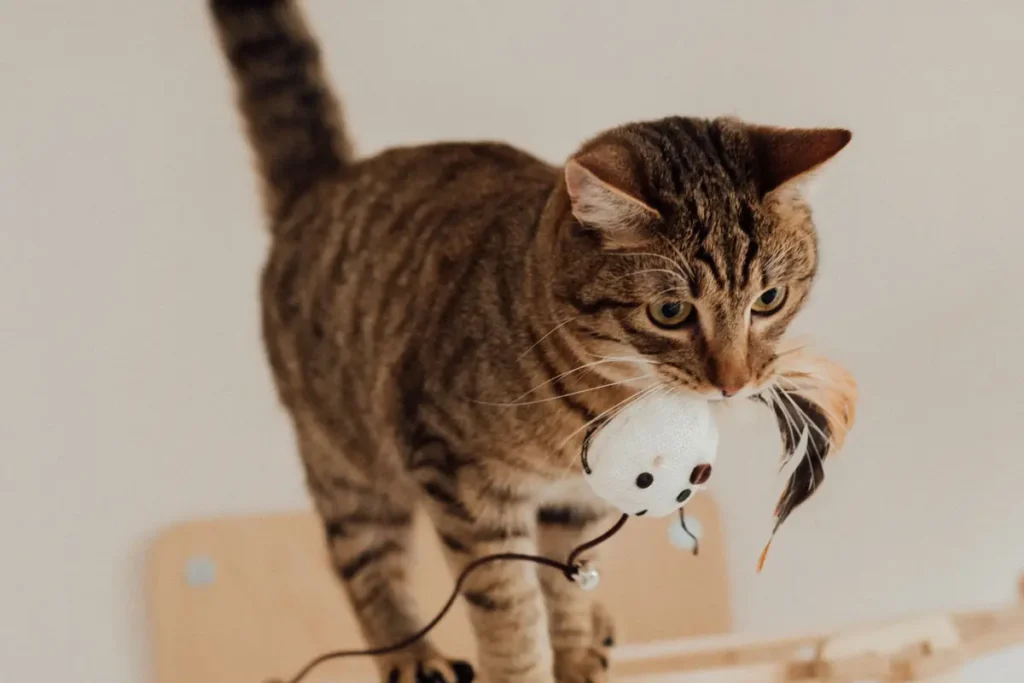
If the behaviour is harmless and you find it funny, management may be all you need. If you are constantly replacing soggy toys and dirty water, try these steps.
1. Move the Toy Basket Away From the Water
Do not place toys directly beside the feeding station. Create a separate play area across the room or in another part of the home.
Give your cat an appealing “drop zone,” such as:
- A shallow cardboard box
- An open fabric basket
- A play tunnel
- A small empty tray
- A cat bed used for toy storage
Occasionally place a favourite toy in the new area so it develops value.
2. Provide More Than One Water Station
Offer water in several quiet locations. Your cat may use one bowl for drinking and continue treating another as a recreational pool, but at least clean water remains available.
Wide ceramic, glass, or stainless-steel bowls are usually easier to clean than scratched plastic dishes. A heavy base can also prevent enthusiastic cats from tipping the entire bowl.
3. Try a Cat Water Fountain
A fountain may satisfy a cat that enjoys moving water and ripples. It will not solve every toy-dunking habit, but it can provide a more interesting drinking option.
Keep a regular bowl available while your cat adjusts, and clean the fountain according to its instructions.
4. Schedule Short Interactive Play Sessions
Use wand toys, rolling balls, soft mice, or other toys your cat can chase and successfully catch.
A satisfying session can follow this sequence:
- Search
- Stalk
- Chase
- Pounce
- Catch
- Briefly handle the “prey”
- Finish with a small meal or treat
Several short sessions usually suit cats better than one exhausting marathon.
For a broader foundation covering feeding, grooming, litter boxes, enrichment, and home safety, read our guide to basic cat care tips for new cat owners.
5. Rotate Toys Instead of Leaving Everything Out
Keep most toys stored and offer a small selection at a time. Swap them every few days.
A toy that disappears for a week often feels more exciting when it returns. Rotation also lets you identify which objects are repeatedly selected for swimming lessons.
6. Avoid Rewarding the Dunking With Drama
Do not shout, chase your cat, or turn cleanup into an energetic game.
Quietly remove the wet toy and refresh the water. Offer attention when your cat is playing appropriately or resting calmly.
Punishment is unnecessary and may create anxiety around the water station.
7. Use Washable “Water Toys”
If your cat is committed to the habit, work with it.
Offer one or two water-safe toys that:
- Cannot be swallowed
- Have no string or detachable pieces
- Contain no batteries
- Do not release dye
- Are easy to wash and dry
Supervise water play and keep your cat’s primary drinking bowl separate.
When choosing replacement toys, follow Cornell University’s cat-safe toy guidance, which recommends avoiding loose strings and small detachable pieces that a cat could swallow.
What If My Cat Does It When I Leave?
Some cats carry, vocalise, or rearrange toys when their favourite person leaves the room. The behaviour may be a self-directed activity, an invitation to play, or part of a separation-related pattern.
If toy dunking is accompanied by persistent crying, pacing, destructive behaviour, or an inability to settle when you leave, read our guide explaining why your cat meows when you leave the room.
A pet camera can help you see whether your cat plays calmly after you leave or appears genuinely distressed.
When Should You Speak to a Veterinarian?
The question “why does my cat put toys in the water bowl?” usually has a fun behavioural answer. Veterinary advice becomes appropriate when the habit appears alongside other changes.
Contact your veterinarian if your cat:
- Suddenly becomes obsessed with water
- Drinks or urinates noticeably more
- Loses weight despite eating normally
- Chews and swallows toy material
- Appears distressed or unable to stop
- Stops eating or playing
- Vomits repeatedly
- Shows confusion or unusual behaviour
- Damages their mouth while carrying objects
Increased thirst and urination can accompany medical conditions such as diabetes or hyperthyroidism, particularly when combined with weight or appetite changes. Cornell University’s feline health guidance recommends veterinary investigation when these signs appear.
The toy may be harmless; the change in thirst may not be.
Become a Cat-Behaviour Detective
Instead of immediately stopping the habit, observe it for a week.
Write down:
- Which toy gets dunked
- What time it happens
- Whether you are nearby
- What your cat did beforehand
- Whether the toy floats or sinks
- What your cat does afterwards
- Whether food or attention follows
You may discover a clear pattern. Perhaps it happens after evening zoomies, while you are on a work call, or only with one soft mouse that feels better when damp.
Your cat is unlikely to explain the experiment, so a little detective work is the next best thing.
Frequently Asked Questions
Why does my cat put their favourite toy in the water bowl?
Your cat may treat the favourite toy like captured prey, store it in a familiar location, enjoy its wet texture, or know that dunking it gets your attention. Observe what your cat does immediately afterwards for clues.
Why does my cat put toys in the food bowl?
Food and water areas are familiar, important parts of a cat’s territory. Some cats appear to store toys beside valuable resources or simply drop them while moving between play and eating.
Is my cat trying to drown the toy?
Probably not in the human sense. The behaviour may be connected to predatory play and object manipulation, but there is no reliable evidence that domestic cats deliberately imagine toys as living prey that must be drowned.
Why does my cat dunk toys at night?
Cats often become active around dawn and dusk. A cat with stored energy may carry, chase, and dunk toys while the household is quiet. Evening interactive play can provide a more satisfying outlet.
Should I take the toy away?
Remove it if it contains batteries, loose parts, string, leaking stuffing, or dye. A safe washable toy can be returned after it has been cleaned and dried completely.
Final Thoughts
So, why does my cat put toys in the water bowl? Your little collector may be completing a hunting-style routine, experimenting with water, storing a treasured object, seeking attention, or inventing an activity to beat boredom.
If your cat is healthy and the toy is safe, there is usually no reason to worry. Keep the drinking water clean, inspect wet toys carefully, provide engaging play opportunities, and accept that the occasional soggy mouse may be part of life with a creative feline.
What is the strangest object your cat has ever dropped into their water bowl? Share your cat’s most ridiculous “science experiment” in the comments.
Veterinary disclaimer: This article provides general educational information and does not replace advice, diagnosis, or treatment from a licensed veterinarian.
Good
| Report