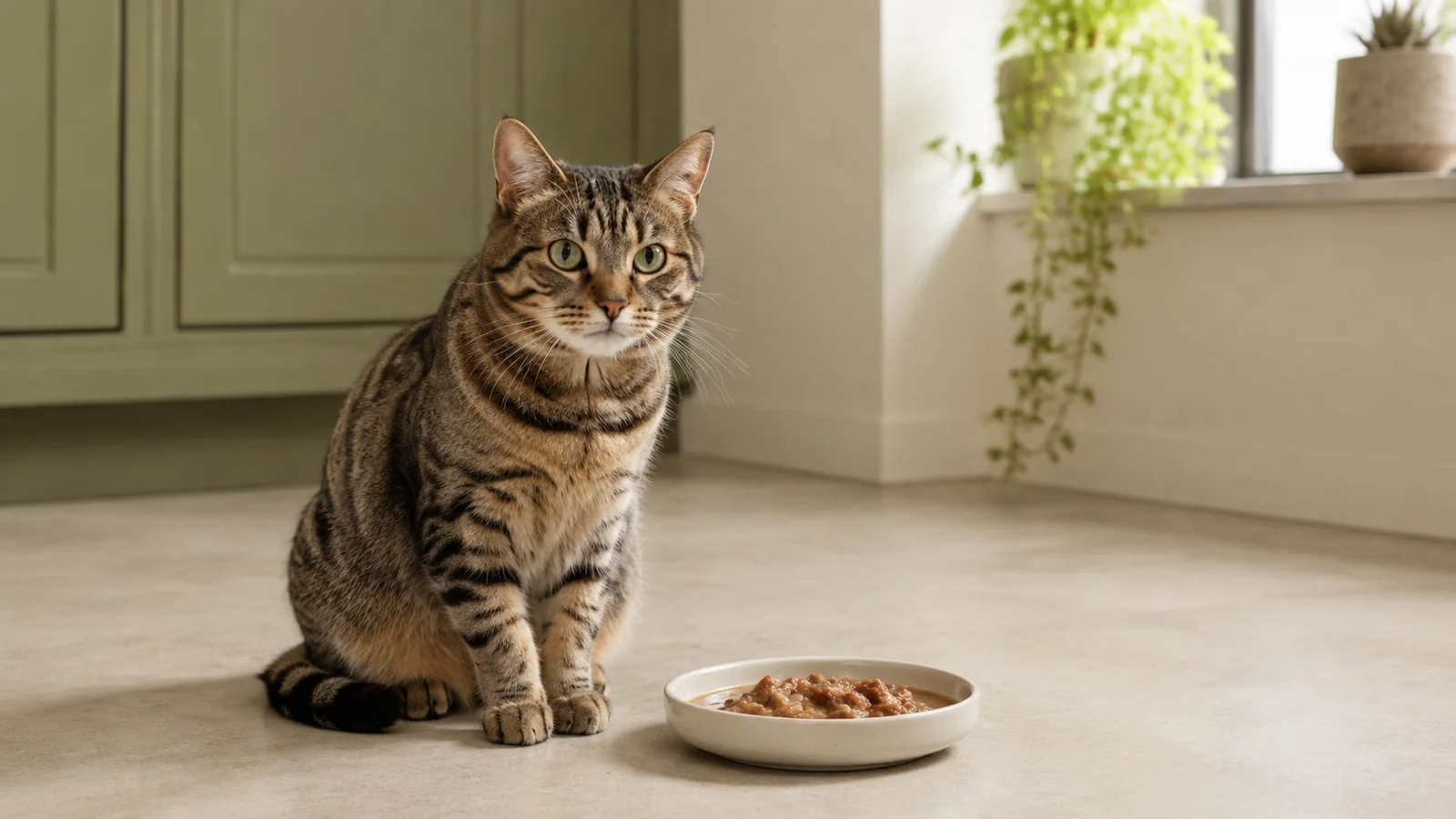

You open a pouch, put dinner down, and return to a bowl of neatly stripped chunks. The sauce is gone. Most of the food is still there. If your cat only licks gravy, buying another flavor may seem like the obvious next move—but first, check what your cat is actually eating across the day.
Quick answer: If your cat only licks gravy, they may prefer its smooth texture, but a new change in eating can also signal mouth discomfort or illness. Check whether your cat is eating their usual amount of other complete food. If overall intake has dropped, contact your veterinarian promptly. If your cat is otherwise eating normally, try a small portion of mashed food or a complete pâté while keeping their familiar diet available.
QUICK NAVIGATION In This Article
First, Is Your Cat Eating Enough Overall?
Two bowls can look almost identical after dinner and mean different things.
One belongs to a cat that ate their usual measured dry-food meals and sampled a little wet food. The other belongs to a cat that has barely eaten anything since yesterday. Counting both as “a fussy eater” misses the most useful information.
Before changing the menu, write down the last substantial meal, what else your cat ate, and whether this behavior is new.
| What you notice | What to do next |
|---|---|
| A longstanding habit with chunky wet food; other meals and behavior are unchanged | Review the full daily diet and try one small texture change. |
| Your cat previously ate the chunks but now leaves them | Contact your veterinarian about the change. |
| Wet food, dry food, and familiar favorites are all being left | Seek veterinary advice promptly instead of continuing food experiments. |
| Your cat approaches food but appears unable to eat comfortably | Arrange veterinary assessment; hunger does not rule out an eating problem. |
These observations help describe the problem; they do not diagnose its cause. Cornell’s guidance on appetite loss explains that not eating can seriously affect an adult cat within as little as 24 hours, and very young kittens can deteriorate sooner. That is a reason to call early, not a safe waiting period.
Why Your Cat Only Licks Gravy and Leaves the Chunks
The texture may be the sticking point
Chunks, shreds, pâté, and mousse are different eating experiences. A cat willing to lap a smooth sauce may be less interested in larger pieces suspended in it.
Cats Protection’s veterinary guidance on gravy and jelly licking identifies texture preference as one possibility and suggests mashing chunks or trying pâté. A response to smoother food is useful information, but it does not prove there is no health problem.
Eating may have become uncomfortable
A cat can want dinner and still struggle to pick it up, chew, or swallow. That distinction matters when a familiar meal suddenly becomes difficult.
VCA explains the difference between appetite loss and difficulty eating, including problems involving the mouth and teeth. Note what happens at the bowl rather than trying to inspect or force open a sore mouth yourself.
The whole feeding routine may need a closer look
Was there a generous scoop of kibble before dinner? Did someone else hand out treats? Is another cat hovering nearby? Has the food changed from freshly opened to refrigerator-cold?
These are questions to investigate, not explanations to assume. A short written record is more useful than deciding your cat is being stubborn.
Try One Small Change at the Next Meal
Use this approach for a cat who is otherwise eating normally. If intake has fallen or your cat seems unwell, speak with your veterinarian before treating the problem as a preference.
Start with the food you already have
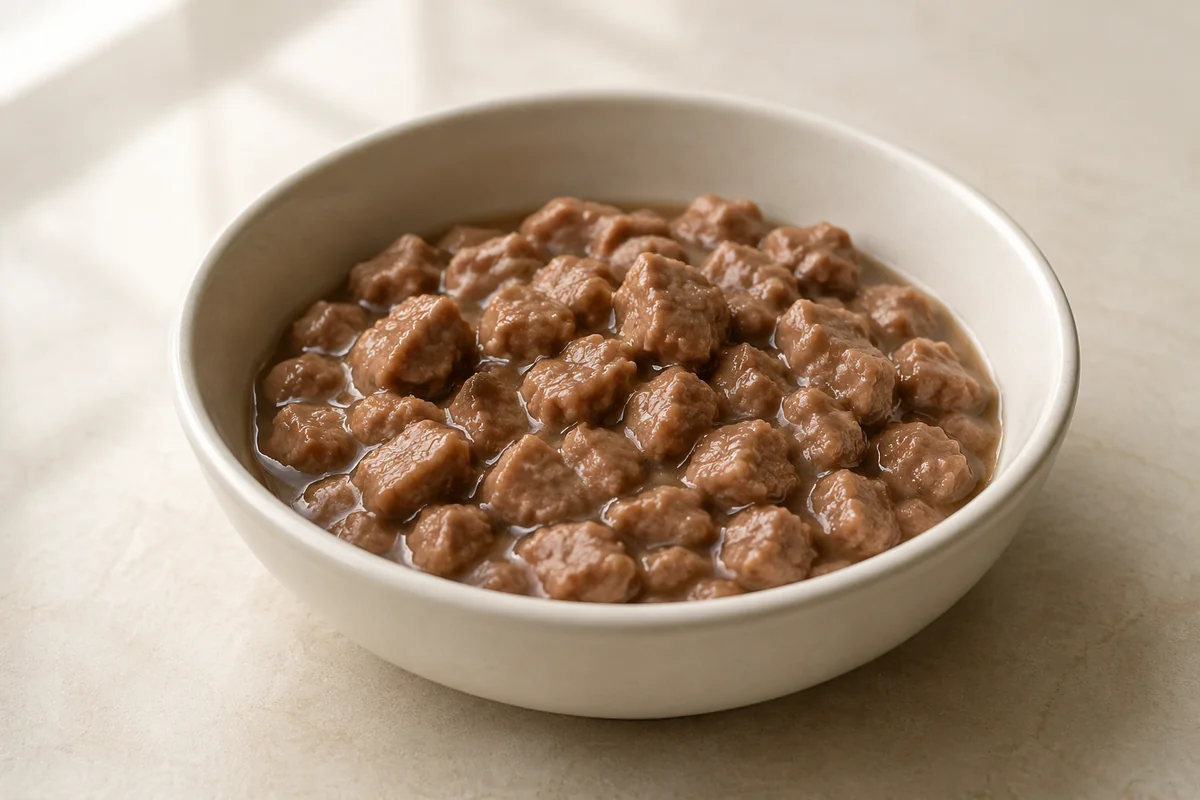
Mash a small portion of the familiar chunky food with a clean fork, incorporating the sauce into the pieces. Keep the rest of the meal familiar. Changing flavor, texture, serving temperature, and location simultaneously makes it hard to learn which change helped.
Watch what is swallowed. Enthusiastic licking followed by another bowl of leftovers is different from eating the food itself.
Compare a smoother complete food
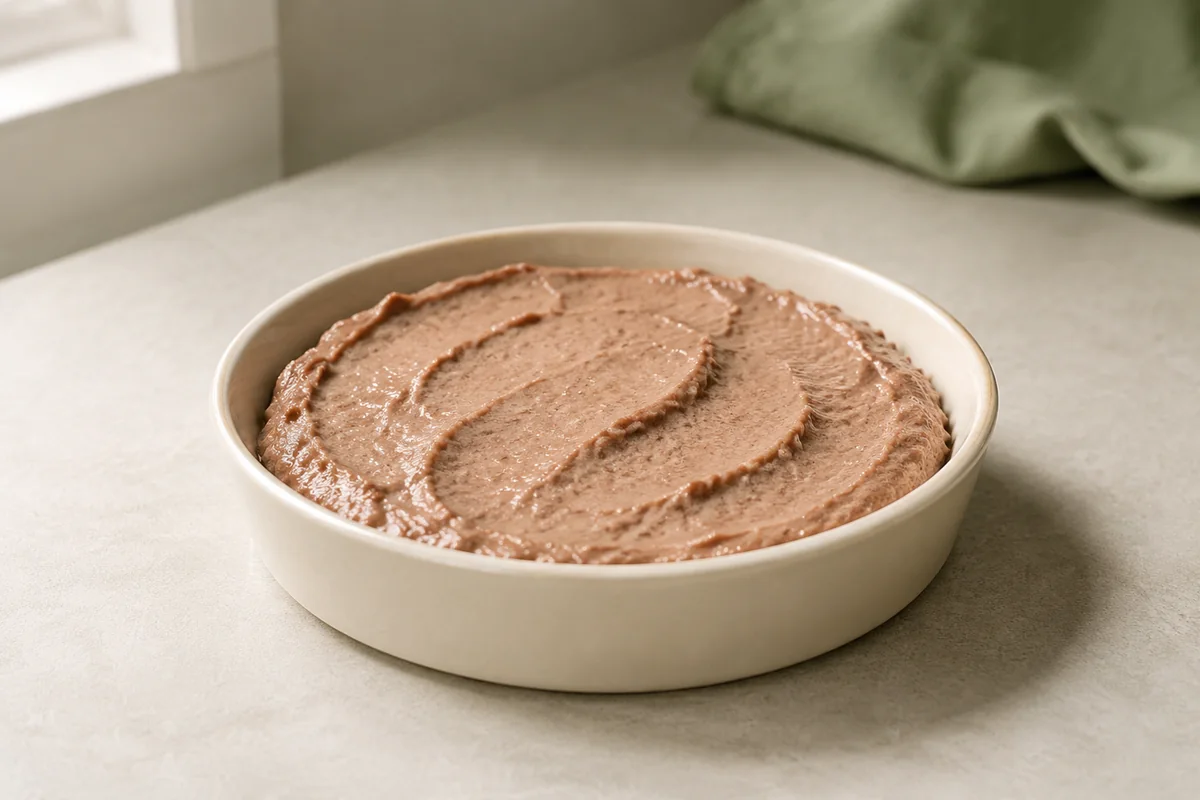
If mashing does not help, buy a small pack of an appropriate complete pâté or mousse before committing to a case. Offer a small sample alongside the accepted food. For an ongoing switch, transition gradually rather than abruptly replacing the diet.
VCA’s advice for feeding picky cats discusses individual food preferences and the importance of reviewing total intake. A flavor name alone is not enough to describe a successful meal: record the recipe and texture too.
| Texture to compare | What you are changing | What to record |
|---|---|---|
| Familiar chunks mashed into their sauce | Piece size while retaining the same recipe | Whether more solids are eaten |
| Complete pâté or mousse | A more uniform consistency | Whether the cat eats the sample, rather than only licking its surface |
| Complete finely minced or shredded food | The size and shape of the pieces | Whether those pieces are swallowed or left behind |
Serve a fresh, comfortable meal
For refrigerator-cold food, gently warming the portion may improve its appeal. Use a microwave-safe dish, stir thoroughly, and check that the food is only gently warm throughout before serving. Never microwave the metal can. VCA’s appetite guidance above specifically cautions against hot pockets when warming food.
Choose a quiet spot where your cat can eat without competition. Keep the trial simple: the aim is to find an acceptable complete meal, not to build an increasingly elaborate collection of toppings.
Gravy, Soup, and Lickable Treats Are Not Automatically Meals
A food’s nutritional adequacy statement applies to the product as a whole. It is not a separate guarantee for the sauce your cat chooses to lick away.
For US products, check whether the food is complete and balanced for the appropriate life stage. AAFCO explains how to read nutritional adequacy statements and distinguishes complete diets from products intended for supplemental feeding. Do not assume that a broth pouch or lickable tube can replace dinner because it is sold in the cat-food aisle.
Our guide to reading cat food labels shows where those feeding-role clues appear. If you are considering a shredded food in broth, the Applaws meal-versus-topper review illustrates why checking the exact recipe matters.
Outside the United States, use the local pack’s feeding-role and life-stage wording; a familiar brand name does not establish that products sold in different countries are equivalent.
Keep a Simple Meal Record
Avoid counting a pouch as “eaten” merely because you served it. Equally, do not guess how many calories were in the gravy alone: the package usually gives information for the whole food.
Use this short record to describe the pattern to your veterinarian or compare otherwise normal meals:
| Time | Food and amount offered | What remained | Other food eaten | Behavior at the bowl |
|---|---|---|---|---|
| Breakfast | Record the exact recipe and portion | Sauce gone; most chunks remain, for example | Record measured dry food or treats separately | Approached readily, hesitated, or walked away |
| Next meal | Record any single change | Note solids as well as liquid | Include food given by other household members | Note any change from usual |
This is an observation template, not a feeding schedule or a reason to postpone care. A quick before-and-after photo can also make “most of the chunks” easier to explain.
If your cat eats both formats, review the MeowTips guide to mixing wet and dry cat food before adding extra meals. The useful question is how the foods fit into the total daily intake, not how many bowls have been put down.
Keep the Food and Bowl Clean
Set aside the unserved portion promptly instead of leaving the entire opened can on the counter during a texture trial. Cover refrigerated food, follow the package’s use-after-opening directions, and wash bowls and utensils after use.
The FDA’s pet-food handling guidance recommends prompt refrigeration or disposal of leftover canned and pouched food and a refrigerator temperature of 40°F or below—about 4°C. Food left out all day should not become the next feeding experiment.
Mistakes That Can Make the Problem Harder to Understand
- Buying a large multipack immediately. First find out whether the new texture is accepted.
- Changing everything at once. A different flavor, bowl, location, and topping create an unclear result.
- Recording what was served as what was eaten. Note the leftovers, including chunks.
- Calling a sudden appetite change “picky.” Compare it with your cat’s normal behavior.
- Withholding accepted food to win a standoff. Ask your veterinarian for a feeding plan if your cat is not eating enough; do not try to starve them into accepting a new food.
When to Call Your Veterinarian
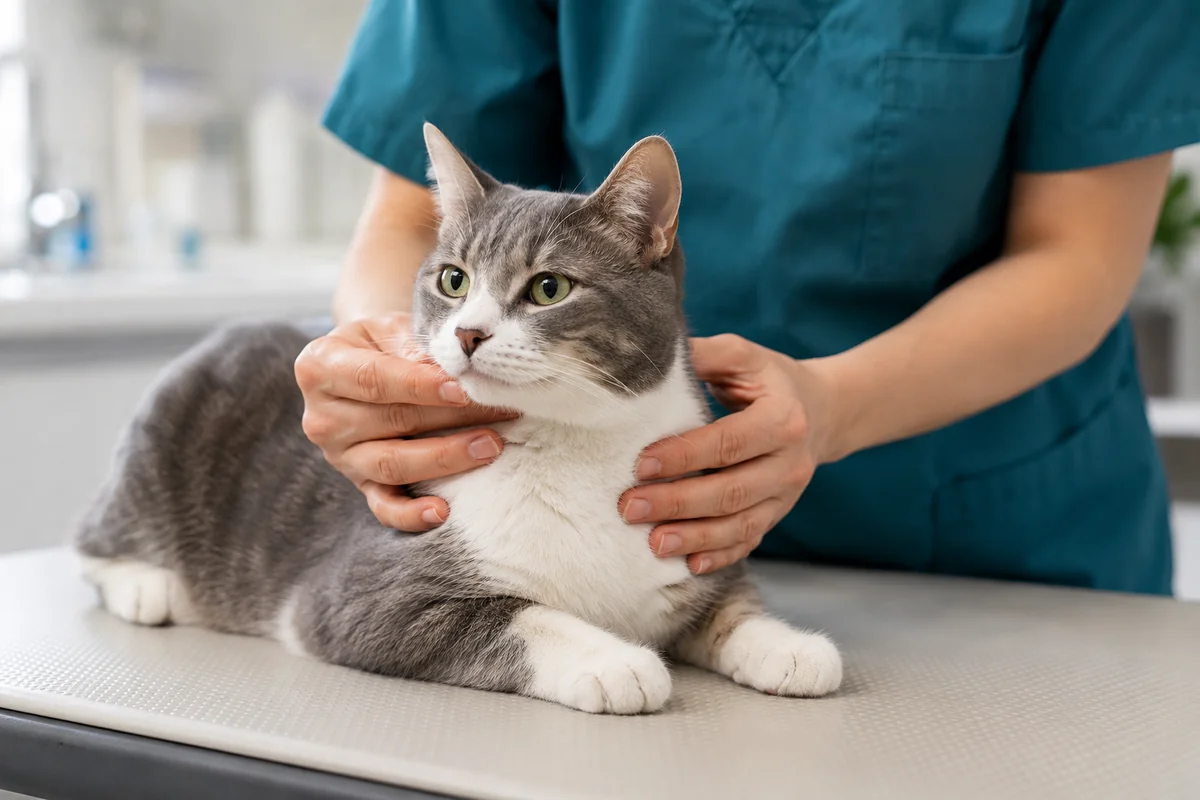
Contact your veterinarian promptly if gravy licking is new, your cat is eating less overall, or eating appears uncomfortable. Mention accompanying changes such as vomiting, unusual tiredness, or weight loss. Seek urgent advice if your cat cannot eat or swallow or appears seriously unwell.
For kittens, cats with diagnosed conditions, or cats eating a prescribed diet, get individual guidance before experimenting. Do not force-feed or syringe-feed unless your veterinary team has specifically instructed and trained you. Cornell’s appetite-loss guidance notes that forcing food into the mouth can worsen food aversion.
Bring the recipe names, feeding-role statements, and meal record. These details give the appointment a clearer starting point than a list of foods your cat has refused.
Frequently Asked Questions
Is it okay if my cat only licks gravy but eats dry food normally?
Look at the complete daily diet. If the wet food is only a small extra and your cat eats an appropriate amount of complete dry food, the situation differs from barely eating at all. Still, report a new change or weight loss to your veterinarian.
Can I calculate calories by weighing the leftover chunks?
Not accurately from the whole-product calorie figure alone. Selective eating means the leftovers may have a different composition from the original mixture. Record what remains; do not present a guess about sauce calories as a measured intake.
Should I buy the same flavor in pâté?
That can be a useful small comparison for a cat who is otherwise eating normally. Check that the new recipe is complete and suitable for the cat’s life stage. The same flavor description does not guarantee the same formulation or acceptance.
Can a gravy or soup pouch replace wet food?
Only if that exact product is intended as a complete diet for the relevant life stage and fits your cat’s feeding plan. Many liquid treats and toppers are supplemental. Read the feeding-role statement rather than judging by consistency.
What if my cat rejects the mashed version too?
Write down the result and return to the food your cat reliably eats. Repeated refusal or reduced total intake needs veterinary advice. Do not keep escalating toppings or removing accepted food in the hope that hunger will solve the problem.
Make the Next Meal More Informative
Start with three facts: whether this is new, how much complete food your cat is eating overall, and whether eating looks comfortable. Those answers guide the next step more effectively than another random flavor purchase.
If your cat is otherwise eating normally, make one small texture change and record the result. Which part does your cat leave: large chunks, fine shreds, or even smooth pâté?
This article provides general educational information and does not replace individual veterinary advice.
Images: AI-generated editorial illustrations created for MeowTips; they do not depict actual patients or product testing.
References