
Why Does My Cat Attack My Feet? 9 Gentle Ways to Stop It

You cross the hallway with a basket of laundry, and a furry shape shoots out from behind the sofa. One quick pounce later, your ankle is wrapped in paws. If you have wondered, “Why does my cat attack my feet?”, the surprise—and sometimes the sting—can make the behavior feel personal.
Most foot ambushes are not revenge or a sudden dislike of you. Moving toes and ankles can switch on a cat’s natural stalk-chase-pounce sequence, especially when the cat is young, energetic, bored, or has learned that people react dramatically. Still, not every bite is playful. Fear, redirected frustration, overstimulation, and pain can produce very different attacks.
The useful question is not simply how to make the behavior stop. It is what happens immediately before it. Once you identify the trigger and read the rest of your cat’s body, you can choose a response that protects your skin without frightening your cat.
Quick Answer: Cats usually attack feet because movement resembles prey and gives them an exciting outlet for hunting or play. Freeze instead of kicking or running, calmly end the interaction, and redirect future ambushes to a wand or kick toy before they happen. Sudden, intense, or painful aggression warrants a veterinary check
QUICK NAVIGATION In This Article
Why Does My Cat Attack My Feet?
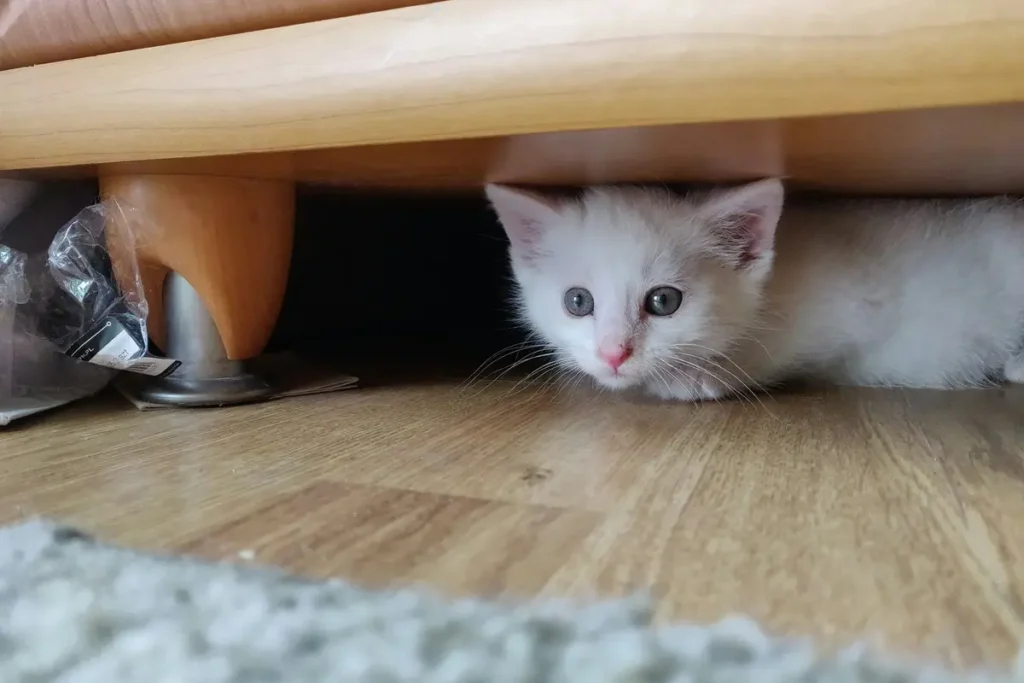
Feet are simply the most available moving target in the room. Several motivations can look alike, so watch where, when, and how an attack begins.
Predatory play and hunting instincts
Stalking, chasing, grabbing, and biting rehearse movements a cat would use while hunting. The MSD Veterinary Manual’s overview of feline behavior problems distinguishes play aggression from fear, pain, redirected, and other forms of aggression.
A playful cat may hide beside a doorway, wait for your legs to pass, then spring forward. Kittens and young adults are frequent offenders, but an older indoor cat with few interesting outlets may also invent ankle hunting.
Movement is the trigger
Feet travel low to the ground, change direction, and disappear behind furniture. Pulling away quickly makes the “prey” more exciting, while a dramatic reaction can turn the ambush into an attention-rich game.
Boredom or unused energy
An indoor cat may sleep through much of the day and reach evening with energy to spare. A bowl of food and a basket of motionless toys do not fully replace the chance to stalk, chase, and catch. The Feline Veterinary Medical Association’s environmental-needs guidance recommends opportunities for play and predatory behavior as part of a healthy feline environment.
Attention-seeking and learned patterns
If an ankle nip reliably earns attention, food, or play, the cat may repeat it. Make biting unproductive while giving calm approaches a better payoff.
Stress, fear, or redirected frustration
A frightened cat generally wants distance rather than a game. A cat aroused by an outdoor animal, sudden noise, or housemate conflict may also redirect that energy toward the nearest person. These incidents often look more intense than play.
Pain or illness
When an adult cat begins attacking without a familiar play pattern, do not assume boredom. Pain can make a cat defensive about movement or touch, and medical conditions can contribute to behavior changes. Cornell’s guide to feline aggression advises ruling out medical causes before treating aggression solely as a behavior problem.
Why Cats Choose Feet and Ankles
Feet combine prey-like movement, easy reach, and a human reaction. Keep a three-to-five-day log of the time, place, body language, and immediate consequence. Patterns such as attacks before dinner or during late-night walks reveal where prevention will work. If the behavior centers on a blocked room, similar frustration may also be behind attempts to stop a cat from scratching the carpet at a closed door.
Playful Pouncing vs. Real Aggression
No single signal proves play or aggression. Read the entire body and situation together.
| Clue | Playful pouncing | Fear, pain, or defensive aggression |
|---|---|---|
| Body | Loose, springy, with pauses or sideways hops | Low, rigid, arched, guarded, or trying to withdraw |
| Ears | Forward or briefly turned sideways | Flattened or held firmly back |
| Tail | Active or twitching during excitement | Tucked, rigid, thrashing, or puffed |
| Pupils | May be enlarged with excitement | May be enlarged with tension; consider the whole body |
| Sounds | Often quiet | Hissing, growling, spitting, or distressed vocalizing |
| Bite and claws | Usually inhibited, though still painful | Harder, sustained, repeated, or intended to create distance |
| Trigger | Moving feet, an ambush spot, pent-up play energy | Touching a painful area, fear, conflict, sudden noise, or another animal |
| Best response | Become still, disengage, and redirect future attempts early | Create distance, remove the trigger if safe, and seek professional advice |
A playful attack can still injure. A hiss, meanwhile, signals that the cat feels unsafe or overwhelmed.
Why Does My Cat Attack My Feet in Bed?
Under a duvet, toes become small bumps that start, stop, and vanish—an unusually convincing prey game. Dawn and evening can make it more tempting because many cats are active around those times.
Do not wiggle your toes to entertain a kitten. If the cat pounces, stop moving and avoid turning the bed into a wrestling arena. Offer later activity away from the bed.
A planned pre-bed play session can help. Let the cat stalk, chase, and catch a wand toy, then finish with part of the cat’s measured daily food. Consistency matters more than one exhausting session.
How to Stop a Cat From Attacking Your Feet: 9 Gentle Steps
1. Schedule short interactive play
Offer at least two brief object-play sessions daily, adjusted for age and health. Slide a wand toy away like prey; do not push it into the cat’s face.
2. Use toys that keep teeth away from skin
Wand toys keep claws away from hands; a sturdy kick toy provides a safe target to grab. Supervise strings and feathers, then store them after play.
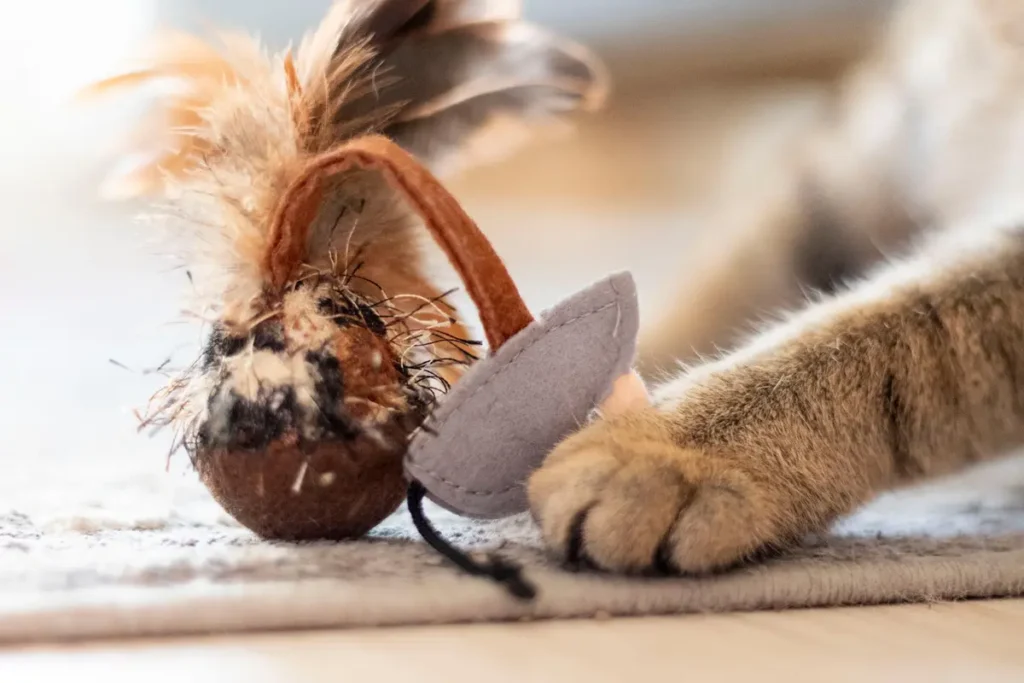
3. Let the cat catch the “prey”
Allow several successful captures, then slow the toy as if the prey is tiring. If food ends the session, use part of the daily allowance.
4. Redirect before the pounce
When the cat settles into a familiar ambush spot, move a wand toy away from your path or cue an alternate activity. AAHA’s behavior-management guidance uses feet-chasing as an example of behavior redirected to a toy.
5. Make feet boring in the moment
If it is safe, freeze. Do not kick, run, or shake the cat off violently. Protect your balance, especially on stairs, and disengage as calmly as possible. Pause attention briefly after rough contact. Then resume normal life without scolding or turning the event into a game.
6. Stop using hands and feet as toys
Everyone in the household needs the same rule. No toe-wiggling under blankets, hand wrestling, or allowing a kitten to climb trouser legs. Children should play with the cat only under adult supervision and with toys that keep a comfortable distance.
7. Reward the behavior you want
Reward calm sitting, watching without lunging, or moving to a perch. You can also train your cat to come when called and use the cue before entering a predictable ambush area—not after a bite.
8. Build a more interesting indoor environment
Add perches, hiding options, scratchers, food puzzles, window views, and rotated toys. Spread resources in multi-cat homes. Match enrichment to age, mobility, and interest.

9. Manage the ambush zone
Temporarily block unsafe hiding places, improve lighting on stairs, and keep a suitable toy near the problem area. If outside cats trigger redirected aggression, reduce the view with blinds or privacy film and give your cat time to settle. Never reach for a highly aroused cat or attempt to pick them up.
A Seven-Day Behavior Reset Plan
This plan starts a routine; it is not a promise that every cat will change in one week. Continue the useful steps and adjust them with your veterinarian if progress stalls.
| Day | Action | Goal |
|---|---|---|
| 1 | Log the time, location, body language, and consequence of each attempt. | Identify predictable triggers and ambush zones. |
| 2 | Begin two short wand-toy sessions and stop all hand-and-foot play. | Give hunting energy an appropriate target. |
| 3 | Place toys near problem areas and redirect at the first stalking signal. | Interrupt the sequence before contact. |
| 4 | Reward calm watching, sitting, or moving to a perch as people pass. | Make an alternate behavior worthwhile. |
| 5 | Add one food puzzle, climbing option, box, or rotated toy. | Increase mental and environmental variety. |
| 6 | Review household responses and agree to freeze, disengage, and avoid punishment. | Remove mixed messages and dramatic rewards. |
| 7 | Compare the log with Day 1 and note frequency, intensity, and recovery time. | Measure change and decide what to continue. |
Progress may look like fewer ambushes, softer contact, easier redirection, or longer calm periods. If attacks become more intense, stop experimenting and seek professional guidance.
Mistakes That Can Make Foot Attacks Worse

- Yelling or chasing: Even negative attention can be exciting, while fear can add a more serious aggression problem.
- Spray bottles or physical punishment: Punishment may increase stress, damage trust, and fail to teach an acceptable alternative. AAHA’s cat-training guidance recommends reward-based learning rather than punishment.
- Playing under the blanket: This rehearses exactly the target behavior you want to reduce.
- Offering food immediately after a bite: The timing may reward the bite. Redirect early or wait for calm behavior before reinforcing.
- Moving the toy against your body: Toys should travel away from hands, feet, and legs.
- Inconsistent responses: If one person discourages ankle biting while another laughs and wiggles their feet, the game remains profitable.
- Expecting toys to do all the work: Many cats need interactive movement from a person, not simply more objects on the floor.
What If a Kitten Keeps Attacking Feet?
Kittens learn through play, and their targets are not always polite. Keep toys near ambush areas and animate one away from your body when stalking begins.
When teeth touch skin or clothing, let play stop. Do not scruff, pin, or wrestle the kitten. Resume later with an appropriate toy. Encourage every family member to follow the same pattern, and give the kitten several brief chances to chase and catch each day.
A kitten may become less intense with maturity, but waiting alone is unreliable if people keep reinforcing attacks. Ask your veterinarian for guidance if the kitten bites hard, seems fearful, or shows other changes.
When to Contact a Veterinarian or Feline Behavior Professional
Arrange veterinary advice when the behavior begins suddenly, intensifies rapidly, or does not resemble the cat’s usual play. Other warning signs include:
- pain or sensitivity when touched;
- limping, reduced jumping, hiding, appetite changes, or altered litter-box habits;
- growling, hissing, a rigid posture, or prolonged agitation;
- deep, repeated, or seemingly uninhibited bites;
- confusion, sleep changes, or new irritability in an older cat;
- aggression toward several people or animals; or
- no meaningful improvement after consistent management.
Start with a veterinarian so medical contributors can be considered. Depending on the case, the next step may be a qualified feline behavior professional or board-certified veterinary behaviorist. Record short notes about triggers and recovery; video can help only if it can be captured safely without provoking another incident.
If a bite breaks human skin, wash it promptly with soap and water. The CDC’s guidance for cat bites and scratches advises seeking medical care for serious wounds, an unknown rabies-vaccination status, or redness, pain, warmth, and swelling. Follow the medical guidance for your country rather than relying on a pet article.
Frequently Asked Questions
Why does my cat attack my feet when I walk past?
Walking creates a low, fast-moving target, and furniture or doorways give a cat cover for stalking. This is often play, especially when the body stays loose and the cat quickly resets. Track the usual locations, then redirect to a wand toy before passing and reward calm watching or moving to a perch.
Why does my cat bite my ankles but not anyone else?
The cat may have learned that your pace, clothing, schedule, or reaction makes the game especially rewarding. It does not necessarily mean the cat dislikes you. Compare how household members respond, remove hand-and-foot play, and have everyone reward the same calm alternative. Sudden targeted aggression with fearful body language deserves professional assessment.
Why does my cat attack my feet under the blanket?
Toes moving under fabric closely resemble small prey disappearing from view. Freeze your feet rather than wiggling them, calmly end the interaction, and move play away from the bed. A structured evening play session can give the cat a more appropriate chance to stalk, chase, and catch.
Why does my cat attack my feet at night?
Cats may be more active around dusk and dawn, and a cat that rested all day may have unused energy at bedtime. Night also makes hallway ambushes easier. Add short daytime and evening play, improve lighting in unsafe areas, and prevent access to a repeated hiding spot when necessary.
Is my cat playing or being aggressive?
Play tends to look loose, bouncy, and quiet, with pauses and inhibited contact. Defensive aggression is more likely to involve rigidity, attempts to escape, flattened ears, hissing, growling, or hard bites. No single signal is decisive, so consider the trigger and whole body. When uncertain, create space and consult your veterinarian.
Should I ignore my cat when they bite my feet?
End attention calmly after an attack, but do not ignore the underlying need. Avoid kicking, shouting, or immediately producing a reward after contact. Instead, schedule appropriate play and redirect at the stalking stage. If biting is sudden, forceful, or accompanied by pain or fear signals, seek veterinary advice rather than treating it as attention-seeking.
Will my kitten grow out of attacking feet?
Some kittens become less intense as they mature, but rehearsed behavior can persist. Teach now that skin and clothing end the game, while toys keep it going. Provide several short, supervised play opportunities, allow safe catches, reward gentler choices, and make sure every person follows the same rules.
When should I worry about ankle biting?
Be concerned when bites are deep or escalating, the cat cannot settle, attacks appear without the old play pattern, or you notice pain, hiding, appetite changes, confusion, or defensive vocalization. A veterinarian can look for medical causes and guide a safe behavior plan. Seek human medical advice for concerning bite wounds.
A Calmer Way Forward
The most useful answer to “Why does my cat attack my feet?” comes from the seconds before the pounce. A loose kitten waiting beside the sofa needs a better hunting game; a tense adult reacting after a frightening event needs distance and a different plan; a cat with a sudden personality change needs a veterinary check.
Meet the need, remove the reward for rough contact, and reinforce the behavior you want to see. Small, consistent changes usually teach more than one dramatic correction ever could.
Where does your cat stage the perfect ankle ambush—and what time of day does it usually happen? Share the pattern in the comments; it may help another cat owner spot the trigger sooner.
Safety note: This article offers general educational information and cannot diagnose an individual cat. Consult a veterinarian about sudden, severe, painful, or persistent behavior changes.