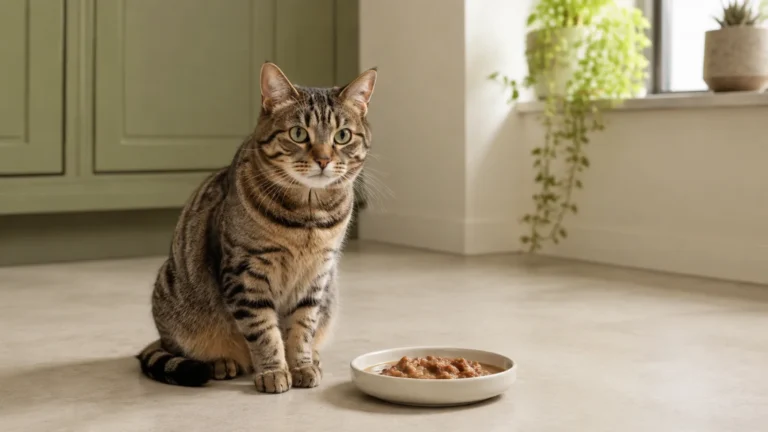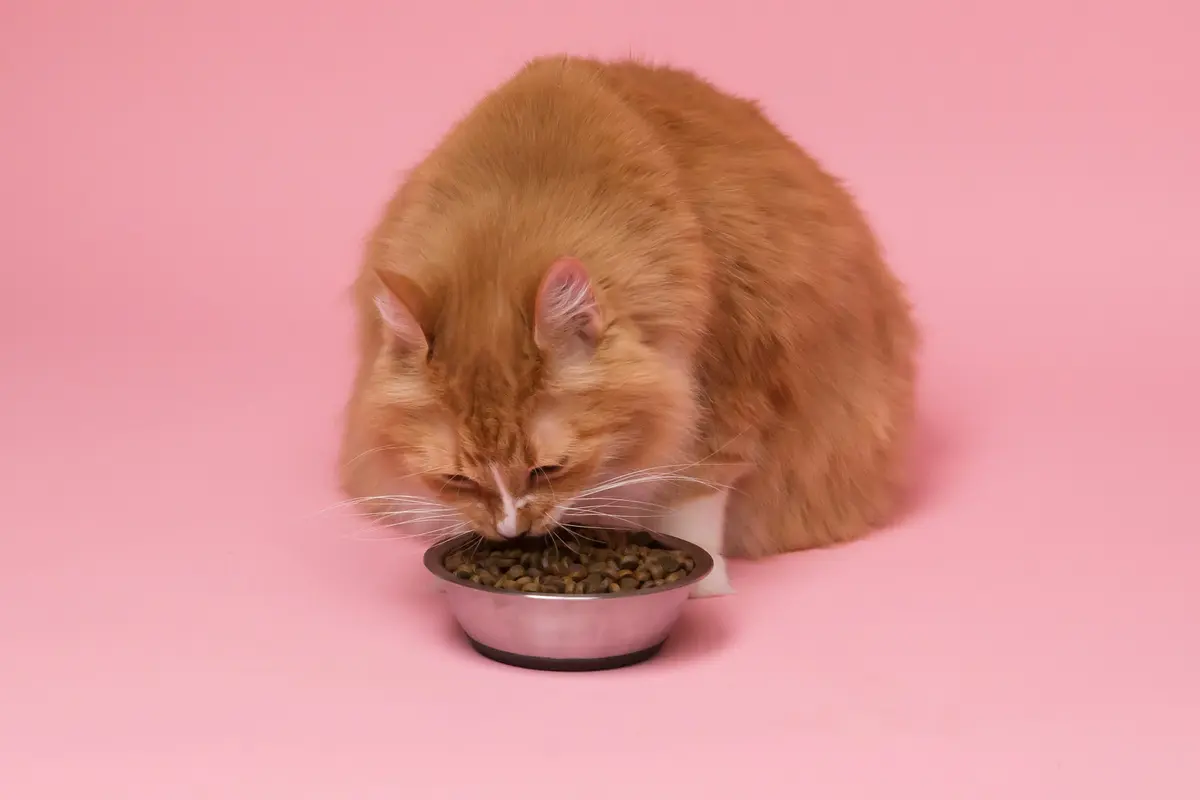

Mixing wet and dry cat food can make meals more flexible. Wet food adds moisture and variety, while dry food is convenient to measure, store, and use in a timed feeder. The catch is that two foods do not create two separate feeding allowances. They must fit inside the same daily calorie budget.
That is where mixed feeding often goes wrong. A cat gets the usual bowl of kibble plus a full can of wet food, and the extra calories quietly add up. The safer approach is not to chase a universal wet-to-dry ratio. It is to work from your cat’s individual daily target and the calorie information on both labels.
This guide shows you how to do that in a way that is practical at home. The examples are educational, not prescriptions; kittens, pregnant or nursing cats, cats with medical conditions, and cats that need to gain or lose weight should have a feeding plan made with a veterinarian.
QUICK NAVIGATION In This Article
Quick Answer
To mix wet and dry cat food, first establish your cat’s total daily calorie target with your veterinarian or the food label as a starting point. Choose what percentage of those calories will come from wet food, give the remaining calories as dry food, and convert each share into cans, pouches, cups, or grams using the labels. Recheck your cat’s weight and body condition regularly.
A mixed-feeding plan should be based on the calories in each product, not how full the bowls look.
The Most Important Rule: One Cat, One Daily Calorie Budget
Think of your cat’s daily food allowance as one budget. Wet food, dry food, treats, toppers, dental snacks, and food used for training all spend from that budget.
This matters because volume is misleading. A small scoop of energy-dense kibble can contain as many calories as a much larger-looking serving of wet food. A 50/50 split by bowl volume is therefore not necessarily a 50/50 split by calories.
Your cat’s ideal daily intake depends on age, body condition, activity, reproductive status, environment, and health. The package guide is a starting estimate, not a guarantee. The American Animal Hospital Association recommends an individualized feeding plan that accounts for the animal, diet, feeding management, and environment. A veterinarian can help set the initial target; consistent measurements and body-condition trends show whether it needs adjustment.
Check That the Main Foods Are Complete and Balanced
Before doing any portion math, read the nutritional adequacy statement. In the United States, wording such as “complete and balanced” indicates that the food is intended to supply required nutrients for a stated life stage. Other markets use comparable terms, although the exact label format differs.
Both main foods should normally be nutritionally complete for your cat’s life stage. A food labelled “for intermittent or supplemental feeding only,” “complementary,” or “topper” is not designed to be the sole diet. If a complementary product provides a large share of daily calories, it can dilute the nutrient balance of the complete diet.
If the label language feels confusing, use MeowTips’ guide to reading cat food labels without falling for hype before choosing the pair of foods.
Treats and non-complete extras should usually remain a small part of the diet. AAHA guidance commonly uses no more than 10% of total daily calories from treats and other non-complete foods, leaving at least 90% for a complete and balanced diet. A veterinarian may design a different plan for a specific patient.
Use the nutritional adequacy statement and calorie declaration—not front-of-pack marketing—to choose the foods.

How to Mix Wet and Dry Cat Food in 7 Steps
1. Establish a Daily Calorie Target
Ask your veterinarian how many calories your cat should eat per day, especially if your cat is underweight, overweight, a kitten, a senior, pregnant, nursing, or managing a condition such as diabetes, kidney disease, urinary disease, or food allergy.
Do not simply copy the target of another cat with the same weight. One may be young and active while the other is older, neutered, and sedentary. Their needs can differ considerably.
2. Find the Calories in Both Foods
Look for:
- calories per can, tray, or pouch on wet food;
- calories per cup and, ideally, per kilogram on dry food;
- the serving weight in grams; and
- the nutritional adequacy statement and life stage.
Labels may use “kcal” rather than “calories.” For pet-food purposes, one kilocalorie is the unit commonly called one dietary Calorie.
When the label gives only kcal per kilogram, you can calculate calories per gram:
Calories per gram = kcal per kilogram ÷ 1,000
For accuracy, weighing dry food in grams is better than estimating a fraction of a cup. Different people can fill the same cup differently, and small daily errors become meaningful over time.
3. Choose a Calorie Split
There is no universal ratio that suits every cat. A veterinarian may approve a 25% wet/75% dry split, 50/50, 75/25, or another arrangement depending on your cat and the products.
Choose the split for practical reasons:
- Wet food may support water intake and can be useful for cats that prefer larger-looking meals.
- Dry food is convenient for measured food puzzles and timed feeders.
- Budget, storage, schedule, and your cat’s preferences matter.
The ratio must describe calories, not the visual amount of food.
4. Calculate Each Food’s Calorie Share
Use these formulas:
Wet-food calories = daily calorie target × chosen wet-food percentage
Dry-food calories = daily calorie target × chosen dry-food percentage
The two percentages should total 100%. Any treats or toppers must also be subtracted from the same total.
5. Convert Calories Into Measurable Portions
For wet food:
Number of cans or pouches = wet-food calories ÷ calories per container
For dry food sold with calories per cup:
Cups of dry food = dry-food calories ÷ calories per cup
If the label provides calories per gram, divide the dry-food calories by that figure to get the daily weight in grams. A small digital kitchen scale makes repeatable portions much easier.
Weighing kibble in grams helps prevent the unnoticed “little extra” that can accumulate with scoops.
6. Divide the Daily Amount Into Meals
After calculating the daily totals, decide when to serve them. The foods do not have to share a bowl. Serving wet food at fixed meals and measured kibble later can make intake and leftovers easier to track.
7. Monitor and Adjust
Record the starting portion, body weight, and body-condition score. Recheck weight every two to four weeks at first, using the same scale when possible. Also watch the waist, rib coverage, energy, stool quality, appetite, and coat.
Contact your veterinarian if weight changes unexpectedly, your cat stops eating, vomiting or diarrhoea persists, thirst or urination changes, or appetite becomes unusually intense. Do not make repeated large cuts to food without professional guidance; cats should not be placed on a crash diet.
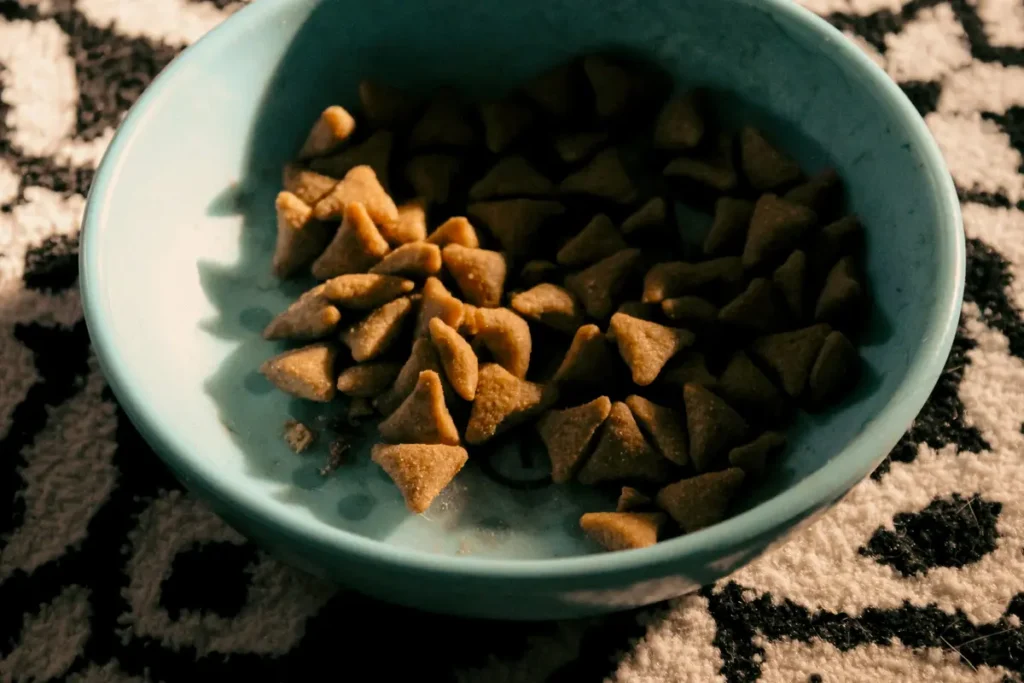
A Worked Mixed-Feeding Example
The following numbers are hypothetical. They demonstrate the method and are not a recommendation for your cat.
Imagine an adult cat has a veterinarian-approved target of 200 kcal per day. The owner wants half the calories from each food.
| Item | Label information | Calculation | Daily result |
|---|---|---|---|
| Wet food | 80 kcal per can | 100 ÷ 80 | 1.25 cans |
| Dry food | 400 kcal per cup | 100 ÷ 400 | 0.25 cup |
| Total | — | 100 + 100 | 200 kcal |
If the cat receives a 10-kcal treat, that 10 kcal must come out of the wet or dry allowance. Otherwise, the day becomes 210 kcal rather than 200 kcal.
For easier serving, weigh the wet and dry portions in grams. Keep any rounding consistent from meal to meal.
Sample Feeding Schedules
Cornell notes that kittens generally need more frequent meals than adults; many adults can be fed once or twice daily, although smaller measured meals may suit some cats.
Two-Meal Adult Schedule
- Morning: half of the daily wet-food portion.
- Evening: the remaining wet food plus the day’s measured dry portion, either served separately or in a puzzle feeder.
Three-Meal Adult Schedule
- Morning: half of the wet-food allowance.
- Midday: half of the measured dry-food allowance in a timed feeder.
- Evening: remaining wet and dry amounts.
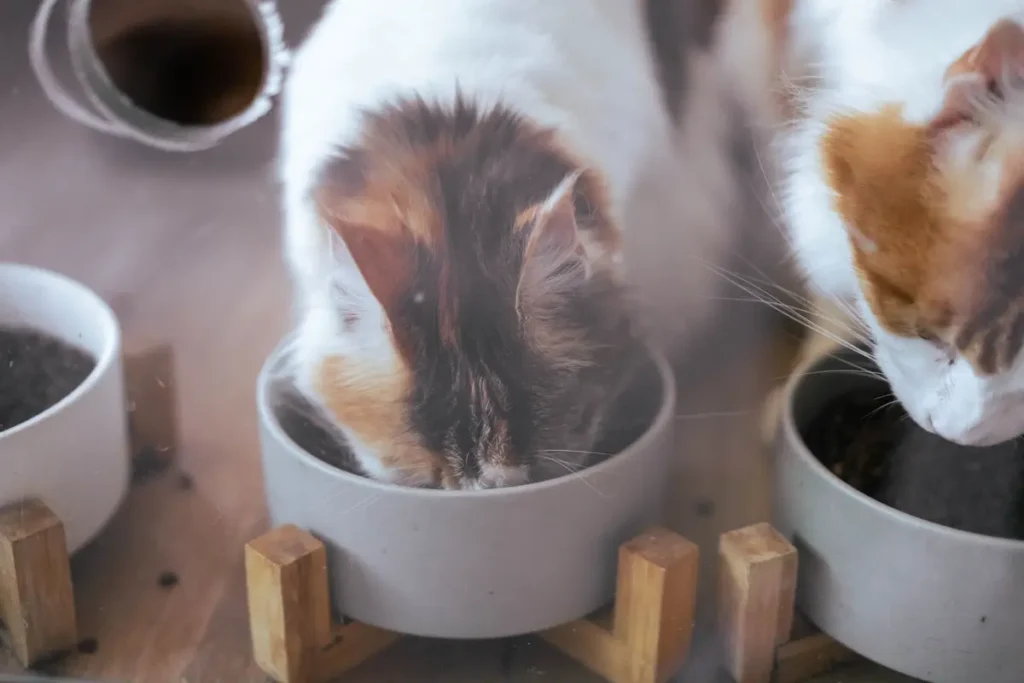
Schedule for a Cat That Grazes
Grazing need not mean an endlessly refilled bowl. Measure the full dry allowance and divide it across feeder openings. Serve wet food at fixed times.
In multi-cat homes, separate feeding stations make it easier to know how much each cat actually eats.
Should Wet and Dry Food Go in the Same Bowl?
They can, if your cat likes the texture and eats the meal promptly. But same-bowl mixing is not required for mixed feeding.
Serving them separately may be easier when:
- your cat eats wet food slowly;
- dry food needs to stay crisp;
- one food is delivered by a timed feeder;
- you are tracking acceptance of a new food; or
- multiple cats steal food.
If you combine them, prepare only a meal-sized amount. Once dry food is moistened or mixed into wet food, treat the whole bowl like wet food rather than leaving it out as long as plain kibble. Follow the manufacturer’s storage instructions and use clean bowls.
How to Change to Mixed Feeding
Sudden diet changes can upset some cats. Unless your veterinarian tells you otherwise, transition gradually over about seven days:
| Days | Current diet | New mixed-feeding plan |
|---|---|---|
| 1–2 | 75% | 25% |
| 3–4 | 50% | 50% |
| 5–6 | 25% | 75% |
| 7 onward | 0% | 100% |
These percentages refer to progress from the old daily plan to the new daily plan, not a prescription for the final wet/dry ratio.
Some cats need a slower transition. Do not force a cat refusing food to “wait it out.” Contact a veterinarian promptly if your cat eats much less than normal or stops eating.
Adjusting the Plan by Life Stage and Health
Kittens
Kittens need food formulated for growth and usually need more meals per day than adults. Their needs change quickly as they grow, so recalculate portions rather than using an adult plan scaled down by eye.
Healthy Adults
A complete adult-maintenance diet, measured portions, and regular body-condition checks form a sensible base. For broader product-selection principles, see MeowTips’ guide to the healthiest cat foods for every age.
Senior Cats
Age alone does not dictate one wet/dry ratio. Dental comfort, muscle condition, kidney health, activity, appetite, and other factors matter. Unplanned weight loss in a senior cat deserves veterinary attention.
Cats With Medical Conditions
Do not add an ordinary wet or dry food to a therapeutic diet without checking with the prescribing veterinarian. Mixing can change nutrient levels or reduce the intended benefit of the therapeutic food.
Multi-Cat Homes
Feed cats separately when they have different calorie targets or diets. Microchip feeders, closed rooms, or supervised meal stations can prevent one cat from eating another’s portion.
Common Mixed-Feeding Mistakes
Adding Wet Food on Top of the Full Dry Allowance
This is the classic calorie-doubling problem. Reduce one food when adding the other.
Using a Ratio From Social Media
A percentage without the calorie target and both foods’ calorie densities is incomplete. “Half wet and half dry” can mean volume, weight, containers, or calories—very different things.
Free-Pouring Kibble
A scoop that looks nearly the same each day can vary enough to affect weight over months. Pre-measure the full day’s dry amount.
Forgetting Treats and Toppers
Freeze-dried pieces, lickable treats, table food, and dental snacks all contain calories. Include them in the daily total.
Treating “Complementary” Food as a Complete Meal
Some appealing cans and pouches are intended only as supplements. Check the adequacy statement rather than assuming every cat-food product is nutritionally complete.
Changing Too Many Things at Once
If you change brand, protein, texture, meal schedule, and portion simultaneously, it becomes difficult to identify what caused refusal or digestive upset. Make a controlled transition and keep notes.
A written meal plan helps everyone in the household avoid duplicate servings.
Troubleshooting a Mixed-Feeding Plan
My Cat Eats Only the Dry Food
Try serving wet food first when your cat is ready for a meal, then offer the measured dry portion later. Experiment with safe serving temperature and texture, but do not withhold food long enough to risk inadequate intake.
My Cat Eats Only the Wet Food
There is no requirement to include dry food if a complete wet diet meets the cat’s needs and is practical for the household. If you want dry food for enrichment, introduce a few pieces at a time within the calorie allowance.
My Cat Begs Between Meals
First confirm that the calorie target is appropriate. Then consider dividing the same daily amount into more meals, using a puzzle feeder, scheduling play before meals, and preventing family members from feeding twice. Begging does not automatically prove that the cat needs more calories.
My Cat Is Gaining Weight
Check actual grams served, treats, stolen food, and unrecorded top-ups. Arrange a veterinary assessment before making a substantial reduction. A structured weight-loss plan should preserve essential nutrients while reducing energy safely.
My Cat Is Losing Weight
Unexpected weight loss is not a sign to solve only by enlarging portions. Dental pain, gastrointestinal problems, hyperthyroidism, kidney disease, diabetes, and other conditions can affect weight or appetite. Book a veterinary examination.
Frequently Asked Questions
What is the best wet-to-dry ratio for cats?
There is no single best ratio. The right split depends on the cat’s calorie needs, health, food preferences, the nutritional adequacy of both products, and the owner’s routine. Calculate the ratio by calories and review it with a veterinarian.
Can I feed wet food in the morning and dry food at night?
Yes. The foods can be served at separate meals as long as the daily portions together meet—not exceed—the planned calorie total and both foods are appropriate for the cat.
Do I need to mix the foods in one bowl?
No. “Mixed feeding” can mean using both types within the same day. Separate bowls or meal times often make portion tracking and food safety easier.
How do I account for treats?
Subtract treat calories from the daily target before calculating the wet and dry portions. Keep treats and other non-complete extras to a small share of total calories unless a veterinarian has planned otherwise.
Is wet food always better than dry food?
No format is automatically best for every cat. Nutritional adequacy, calorie control, the cat’s health, and whether the diet is actually eaten all matter. Wet and dry foods each have practical advantages and limitations.
How often should I recalculate portions?
Review them whenever the product changes, the label is reformulated, your cat changes life stage or activity, or weight and body condition trend away from the goal. Growing kittens require more frequent review than stable adults.
The Bottom Line
The safest way to mix wet and dry cat food is simple in principle: set one appropriate daily calorie target, assign part of it to each complete food, convert those calories into exact portions, and monitor the cat in front of you.
Do not let a scoop, can, or attractive feeding ratio replace observation. Labels provide the numbers; regular weight and body-condition checks show whether the plan is working.
How do you currently divide your cat’s wet and dry meals—and which part is hardest to measure? Share your experience in the comments.
Medical disclaimer: This article provides general educational information and is not a substitute for veterinary diagnosis, treatment, or an individualized nutrition plan. Contact a qualified veterinarian before changing the diet of a kitten, pregnant or nursing cat, cat with a medical condition, or cat that is gaining or losing weight unexpectedly.
Authoritative Sources
- U.S. Food and Drug Administration: “Complete and Balanced” Pet Food
- American Animal Hospital Association: Feeding Plans for Healthy, Appropriate-Weight Cats and Dogs
- Cornell Feline Health Center: Feeding Your Cat
- Cornell Feline Health Center: How Often Should You Feed Your Cat?
- American Animal Hospital Association: Nutritional Risk Factors
- FEDIAF: Nutritional Guidelines for Complete and Complementary Pet Food