How to Stop Cat Scratching Carpet at Door: 9 Kind Fixes

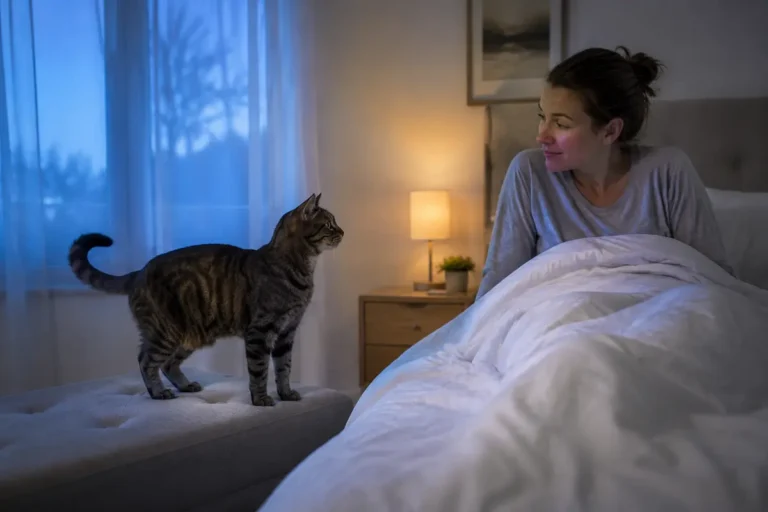
It is 4:30 in the morning. From the other side of the bedroom door comes a determined little scritch-scritch-scritch. By the time you sit up, your cat has pulled another fuzzy strip from the carpet and is looking pleased with the progress.
If you are searching for how to stop cat scratching carpet at door, the first thing to know is that your cat is not plotting against your flooring—or your security deposit. Some cats genuinely want a horizontal surface to scratch. Others are digging because the door blocks access to you, another room or something interesting on the other side.
Those two problems look similar. They need slightly different fixes.
QUICK NAVIGATION In This Article
Quick Answer
To stop a cat scratching carpet at a door, first determine whether the cat is trying to scratch, gain access or get attention. Protect the threshold, place a stable horizontal scratcher beside it, reward its use, practise brief closed-door sessions and keep the rule consistent. Sudden or frantic scratching deserves a veterinary check.
Why Cats Scratch Carpet at a Door
Scratching is normal feline behaviour
Cats scratch to stretch, maintain their claws, leave visible marks and deposit scent from their paws. It is an ordinary feline behaviour happening in a very inconvenient location.
The Cornell Feline Health Center’s guidance on destructive scratching recommends matching the replacement scratcher to the cat’s preferred material and orientation. A cat raking the carpet with its front paws will usually find a horizontal pad more relevant than a tall post across the room.
Location matters too. A scratcher hidden in the spare room is not competing with the exciting threshold your cat has already selected.
The cat may be trying to open the door
Watch the movement. A cat performing a full-body stretch and making repeated, deliberate strokes may be scratching. A cat pushing paws beneath the door, pulling at the carpet edge and pausing to meow is more likely trying to gain access.
In that situation, another post alone may not solve the problem. The closed door is the trigger. At a bedroom door, the possible reward—access to a favourite person—is powerful. If scratching sometimes opens it, persistence has paid off.
Cats that also call when a person disappears may be showing a wider pattern of contact-seeking. MeowTips explains the overlapping causes in why cats meow when their person leaves the room.
Boredom and stored-up evening energy
A young or under-stimulated indoor cat may reach bedtime with plenty left in the tank. The quiet house offers a fascinating door with humans behind it.
Look at the whole day rather than trying to “wear out” your cat in one enormous bedtime session. Short interactive play periods, climbing choices, food puzzles and opportunities to watch normal household activity can make the evening less explosive.
Stress, change and territorial uncertainty
A move, new pet, visitor, altered work schedule or newly restricted room can make a doorway more important. Scratching may help a cat leave familiar scent near an uncertain boundary. It can also become a repetitive response to frustration.
The PDSA’s cat-friendly scratching advice recommends sturdy scratchers, suitable alternatives and attention to stress rather than trying to suppress a natural behaviour.
The carpet has become rewarding
Looped fibres resist and lift with a satisfying tug. Once an edge appears, it becomes easier to grab. The sound may also bring a human running, adding attention to the textural reward.

How to Stop Cat Scratching Carpet at Door: A Positive Plan
1. Identify what happens immediately before and after
For a few days, note:
- the time scratching begins;
- whether the door is open or closed;
- who or what is behind it;
- whether the cat meows, digs, stretches or scent-marks;
- what household members do in response; and
- whether food, play, access or attention follows.
Look for the payoff. A phone video can reveal details missed while half asleep.
2. Protect the exact patch immediately
Training takes time; carpet damage does not politely wait.
Cover the threshold with a flat, stable carpet protector, tightly fitted low-pile runner or other smooth barrier that cannot slide, curl, trap claws or block the door. Check both sides after installation and make sure the door can still open safely.
Protection prevents rehearsal of the ripping action. It is management, not the complete treatment.
Avoid loose towels, exposed adhesive, sharp edges or improvised materials your cat might chew. Test any protector in a small hidden area before using it on valuable flooring.
3. Put the right scratcher beside the doorway
For a carpet-scratching cat, begin with a stable horizontal scratcher long enough for the cat to stand on and pull against. Try cardboard, sisal matting or another cat-safe texture.
Place it directly beside—or temporarily over—the chosen spot. Do not expect a scratcher several metres away to win the first round.
When your cat uses it, quietly provide a treat, praise or a short game. Reward after the paws touch and scratch the correct surface. Never drag the cat’s paws across it; that can make the new object unpleasant.
4. Make the alternative worth choosing
Try a little catnip or silver vine if your cat responds to it. Moving a toy briefly across the pad can encourage exploration. Count food rewards within the day’s normal intake.
5. Practise closed-door skills when nobody is desperate
Do not begin training during the 4:30 AM carpet-remodelling shift.
During the day, leave your cat on the comfortable side with essential resources and a rewarding activity. Close the door for one second, reopen it while your cat is calm and reward that calmness.
Gradually build from one second to three, five, ten and longer. If scratching starts, the step was too difficult. Shorten the next repetition rather than scolding.
The goal is to teach that closed doors are temporary and calm behaviour predicts good things.
6. Stop making scratching operate the door
Once genuine needs are met, avoid opening the door in the middle of active scratching. Wait for a brief pause, then open it if access is part of your plan.
Consistency matters. If one person waits for quiet while another opens the door after five minutes of scratching, the cat may learn to scratch for six.
This does not mean ignoring distress. A frightened, unwell or panicking cat needs help, not a contest of endurance.
7. Build a better evening routine
For nighttime scratching, try a predictable sequence:
- Offer interactive play earlier in the evening.
- Let the cat stalk, chase and catch the toy several times.
- Gradually slow the game.
- Serve the planned evening food portion.
- Refresh water and clean the litter box.
- Settle the cat with a comfortable bed and safe solo enrichment.
A predictable home setup supports more than this one habit. These basic cat-care tips for new owners cover food, water, litter facilities, grooming and safe spaces as parts of the same daily routine.
8. Reduce doorway triggers
If the door leads outside, animals, sounds or scents may increase arousal. Use curtains or privacy film where appropriate and deter visiting animals humanely.
In a multi-cat home, make sure the door is not blocking essential resources or trapping cats together. Access should not depend on passing a feline gatekeeper.
9. Maintain claws without removing the need to scratch
Regular nail checks can reduce snagging, especially for indoor or older cats. Ask a veterinary professional to demonstrate trimming if needed; never force a struggling cat.
Claw care may soften the consequences, but it will not resolve access frustration, boredom or stress. Your cat still needs an acceptable place to scratch.

Troubleshooting: Match the Fix to the Clue
| What you observe | Likely driver | Best first response | What may fail on its own |
| Long horizontal strokes on carpet, even with the door open | Preferred scratching texture or orientation | Horizontal scratcher directly at the spot; reward its use | A vertical post in another room |
| Paws hooking beneath a closed door with meowing | Access or social contact | Closed-door practice, consistent access rules and calm-time rewards | Adding more scratchers without door training |
| Scratching begins before breakfast | Food anticipation and learned routine | Predictable feeding schedule; reward quiet rather than scratching | Feeding immediately after the noise |
| Bursts occur after a quiet day | Boredom or unused play energy | Short daily play sessions, climbing and food-search activities | One frantic game after scratching starts |
| Behaviour follows a move, new pet or schedule change | Stress or territorial uncertainty | Restore predictability, separate resources and provide safe resting areas | Punishment or strong-smelling deterrents |
| The cat keeps shifting to the edge of every barrier | Access motivation remains unresolved | Reassess why the door must stay closed and train gradual tolerance | Making the protected area slightly larger each night |

Mistakes to Avoid
Do not yell, hit or use a squirt bottle
Punishment may stop a moment while you are present, but it does not explain where to scratch or help a cat tolerate a closed door. It can add fear and stress to an already charged location.
Do not use essential oils or homemade scent mixtures
“Natural” does not automatically mean cat-safe. Concentrated oils and strong homemade repellents can create exposure risks through paws, fur, skin or inhalation. A physical barrier plus a rewarded alternative is clearer and safer.
Do not use painful or startling floor traps
Avoid sharp-side-up mats, unstable objects, shock devices and anything designed to frighten the cat. Choose flat, secure floor protection that simply prevents access to the carpet fibres.
Do not hide the replacement scratcher too soon
Leave the successful scratcher at the doorway until the new habit is well established. If you want it elsewhere, move it a small distance at a time.
Do not declaw to protect the carpet
Declawing removes part of each toe; it is not a training method. It also leaves the motivation behind scratching or door digging unresolved. Work with your veterinarian and a qualified behaviour professional on humane alternatives.

When the Behaviour Needs a Veterinary or Professional Check
Book a veterinary appointment if carpet scratching starts suddenly, becomes frantic or appears alongside:
- overgrown, broken or painful claws;
- limping, stiffness or reluctance to jump;
- itching, hair loss, skin redness or excessive grooming;
- increased vocalising or confusion;
- changes in appetite, thirst or litter-box habits;
- hiding, irritability or reduced interaction; or
- an inability to settle even when access and enrichment needs are met.
A veterinarian can look for discomfort, skin disease, claw problems, sensory changes or another health issue. If health causes are excluded but the pattern remains intense, ask for a referral to a qualified feline behaviour professional who uses reward-based methods.
Frequently Asked Questions
Why does my cat scratch the carpet by a closed door?
Your cat may be trying to reach the room rather than choosing the carpet as a normal scratching site. Paws reaching beneath the door, meowing and stopping once the door opens suggest access-seeking. Long scratching strokes that continue when the door is open point more towards a preferred texture or orientation.
Will putting a scratching post by the door stop the carpet damage?
A well-matched scratcher can help, especially when it is horizontal, stable and placed directly beside the damaged spot. It may not solve the problem if the cat is digging to open the door. In that case, combine the scratcher with carpet protection, closed-door practice and consistent access rules.
Should I ignore my cat scratching the bedroom carpet at night?
Do not ignore the behaviour until you have checked food, water, litter access, stress, discomfort and the reason for the closed door. If those needs are met and scratching has become an attention strategy, avoid rewarding it during the noise. Practise the new routine during the day first.
How long does it take to stop a cat scratching under a door?
Some cats begin choosing a nearby scratcher within days, while a well-rehearsed access habit can take several weeks of consistent practice. Progress should look like shorter episodes, more pauses and greater use of the alternative surface. Worsening or distressed behaviour calls for professional advice rather than tougher deterrents.
A Better Doorway Habit Is Possible
Learning how to stop cat scratching carpet at door is less about defeating a stubborn cat and more about reading the job they have assigned to that patch of floor. Protect the carpet, supply the right scratching outlet, practise calm boundaries and reward the behaviour you want.
The door can stay intact. So can your relationship.
Tell Us About Your Cat
Does your cat tap at closed doors, sing outside them or attempt a full carpet excavation? Share their funniest doorway habit in the comments, along with what helped.
Safety and behaviour disclaimer: This article provides general educational guidance and cannot diagnose an individual cat. Sudden, painful, compulsive or distress-related behaviour should be discussed with a veterinarian or qualified feline behaviour professional.