
You are dressed, the coffee is still hot and the front door is almost within reach. Then sunlight hits your black shirt and reveals enough pale fluff to suggest you hugged a cloud. If you need to know how to get cat hair off black clothes, the fastest answer is not always “wash them again.” A good fix starts dry, uses the gentlest effective tool and stops clean laundry meeting the household’s most enthusiastic shedder.
Cat hair does not appear more often on black fabric; contrast simply makes every pale strand audition for a leading role. Texture and static can add to the cling. The plan below handles the five-minute emergency, the laundry pile and the source of the transfer—without blaming the cat for possessing a coat.
Quick answer: To remove cat hair from black clothes, shake the garment outdoors, then roll or brush it in one direction. With no tool, use a barely damp clean microfibre cloth. For heavy coverage, tumble dryer-safe items briefly on air-only before washing. Check the care label, clear the lint filter and store clean dark clothes behind closed doors.
QUICK NAVIGATION In This Article
Why black clothes make every cat hair obvious
The colour is the first culprit. Cream, ginger and grey hairs stand out sharply against black, navy and charcoal, even when the amount is small. A smooth cotton shirt may release them with one pass of a brush; fleece, brushed knits and some synthetics give loose hair more places to lodge.
Then there is transfer. You sit on the cat’s favourite chair, carry a furry blanket, fold laundry on a shared bed or put a clean jumper on a sofa for thirty seconds. The cat need not touch the garment directly. Hair travels on hands, throws, upholstery and other clothes.
Washing alone can disappoint because wet hair may gather into clumps, remain in fabric folds or move around the load. That is why the useful sequence is:
- Remove as much loose hair as practical.
- Launder only if the garment needs washing.
- Keep the cleaned item away from furry surfaces.
How to get cat hair off black clothes in five minutes
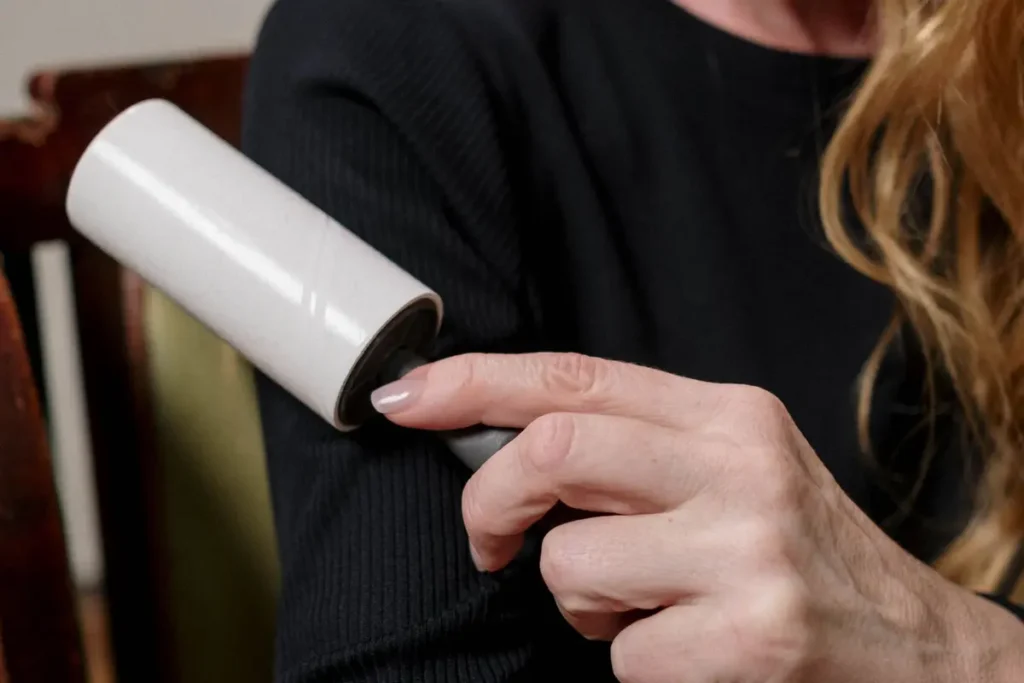
1. Use a lint roller with short, overlapping passes
Lay the item flat or keep it taut on a hanger. Roll from the shoulder down, overlapping each strip so you do not create clean racing lanes between furry ones. Replace a disposable sheet when it stops feeling tacky; an exhausted sheet mostly presses hair deeper.
For a reusable roller, follow its cleaning instructions. Keep the surface clean and fully dry before it meets dark fabric.
2. Try a directional lint brush
A velvet-style clothes brush is excellent for jackets, trousers, tees and many knits. Brush in the marked direction, lift the collected ridge of fur, then repeat. Test an inside seam first if the garment is delicate or loosely woven.
Unlike a sticky roll, a brush produces little waste and belongs happily near the front door. One in the wardrobe and a travel-size option in a work bag can prevent a surprising amount of wardrobe drama.
3. Make a no-tool microfibre sweep
No lint roller? Lightly dampen a clean microfibre cloth, wring it thoroughly and sweep the garment in one direction. “Barely damp” is the useful setting; wet cloth can mark some fabrics or spread lint of its own.
Gather the fur into a line, lift it off by hand, and let the fabric dry before wearing. Test first on wool, silk, rayon/viscose, velvet, dry-clean-only pieces and anything prone to water spots.
4. Use clean rubber gloves on sturdy garments
A clean, slightly damp household glove can gather hair from denim, durable cotton and robust outerwear. Pull the garment flat and use light strokes. Avoid aggressive rubbing: friction can roughen the surface, encourage pilling and make a black knit look tired even after the fur is gone.
Use a glove reserved for clean tasks—not the one that just met a bathroom cleanser.
5. Handle delicate black clothes like delicate black clothes
Start with the care label. For velvet, fine wool, silk, embellished pieces or tailored dry-clean-only clothing, use a garment brush specifically intended for that fabric or ask the cleaner handling the item. Strong tape, hard scrapers and enthusiastic rubbing can leave a more permanent problem than cat hair.
The smarter laundry routine for furry black clothes
6. Shake and de-fur before the washer
Take heavily furred garments outdoors and give them a firm shake. Then use a roller or brush on the visible surface. Removing the loose layer first means less hair circulating through the washer and landing on the next load.
Fasten zips, empty pockets and follow each care label. Separate very furry cat blankets and pet bedding from work clothes and dressier darks. A half-empty hamper is not a moral failure; it is simply a sign that the black-shirt load is waiting for better company.
7. Use an air-only tumble before washing—when labels allow
For machine-dryable items, a short air-only or no-heat tumble can loosen hair before washing and move some of it to the lint filter. Do not use this step for clothing whose label rules out tumble drying. After the cycle, remove the hair from the lint screen before doing anything else.
Heat is not the hero here. Excess heat can shrink, fade or damage fabrics, so the garment and appliance instructions take priority over any internet shortcut.
8. Wash normally, without turning the drum into a chemistry experiment
Use the detergent amount and cycle recommended for the fabric and machine. Do not pour in extra detergent on the theory that more soap will chase more fur away; residue can create its own dull, clingy finish. An extra rinse may help some washable loads, but check the appliance guidance and consider water use.
Skip unverified mixtures of vinegar, bleach, fabric softener and other cleaners. Products can interact, damage fabric or harm a machine. Store pods, liquids and sheets where curious paws cannot reach them. The ASPCA’s guide to poisonous household and laundry products explains why detergent and unused dryer sheets should stay inaccessible to pets.
9. Dry according to the label, then clean the machine
If tumble drying is permitted, wool or reusable dryer balls may help keep fabric moving and reduce static, though results vary by load and material. Keep dryer balls stored away if your cat treats them as toys, and never add essential oils to them.
Clean the lint screen after the cycle. When the machine is cool, wipe visible hair from the door seal or drum according to the manufacturer’s instructions. Check any accessible filters on the recommended schedule. A clean appliance is less likely to return yesterday’s fluff to tomorrow’s black jeans.
Reduce the hair before it reaches your clothes
10. Create a fur-light dressing zone
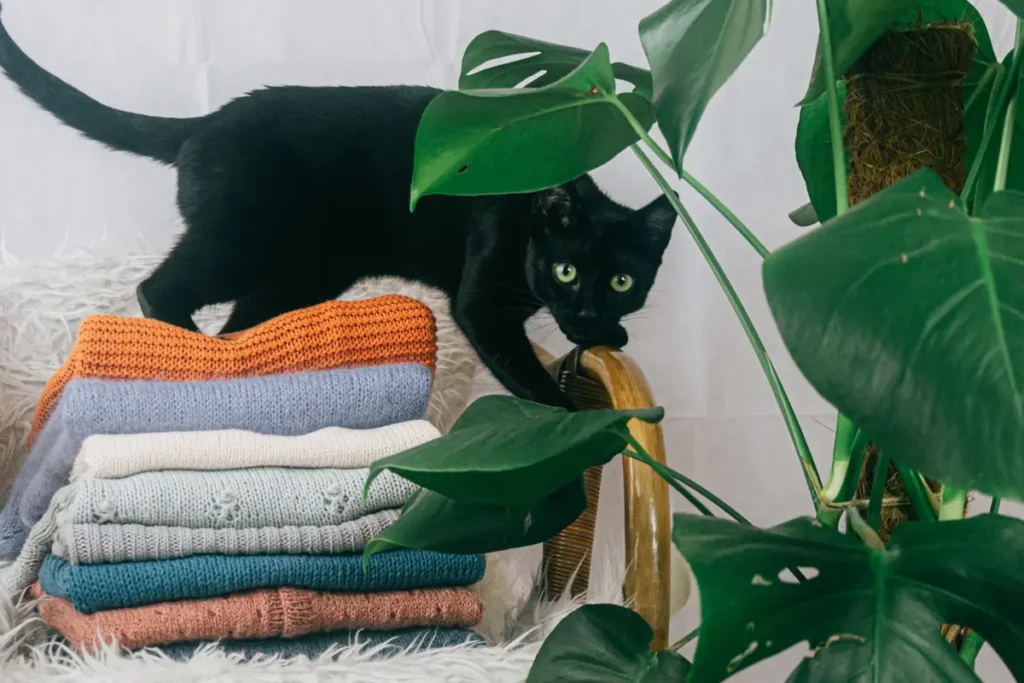
The easiest hair to remove is the hair that never arrives. Keep wardrobe and dresser doors closed. Dress after cuddling, not before. Place tomorrow’s outfit in a breathable garment bag or inside the wardrobe rather than on a chair your cat has already annexed.
A washable throw on the favourite lap chair catches much of the transfer. Launder that cover separately when it becomes furry. Put a hook near the door for a lint brush, and keep clean laundry baskets covered or inside a closed room.
These habits fit naturally beside the routines in MeowTips’ basic cat-care tips for new owners: small, repeatable systems beat one heroic cleaning session.
11. Brush the cat—not the black trousers
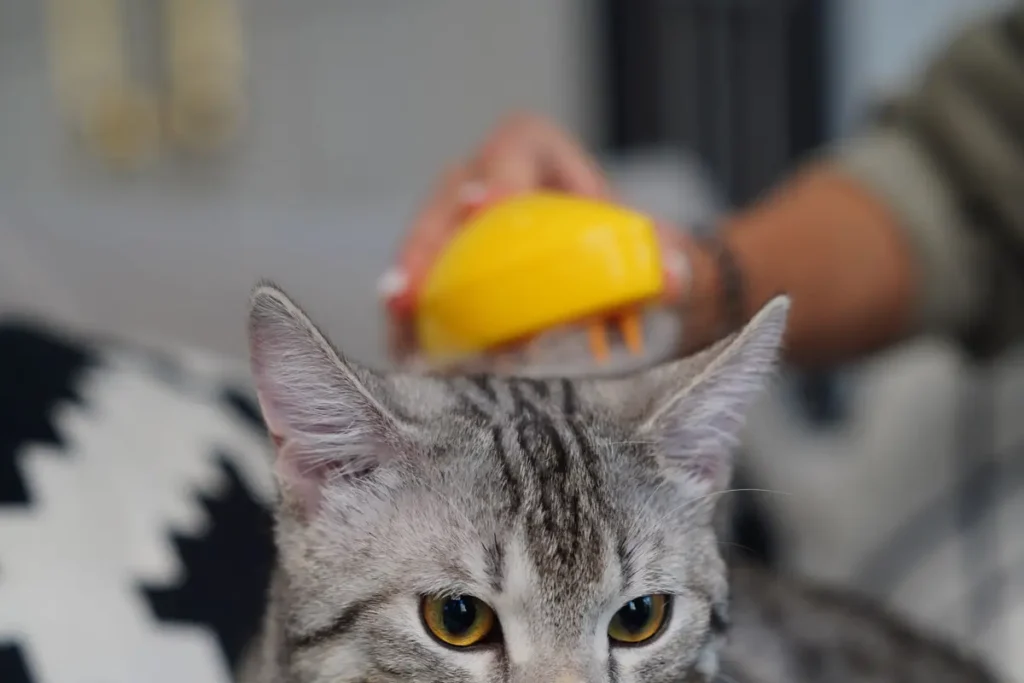
Regular, gentle grooming removes some loose coat before it reaches upholstery and clothes. The correct tool and frequency depend on coat length, texture, age and the individual cat. PDSA’s cat grooming guidance recommends suitable tools, slow positive sessions and stopping if a cat is worried or stressed.
Let the cat sniff the brush, make the first session brief and reward calm participation. Never hold a frightened cat down to finish a grooming quota, and never shave a healthy coat merely to protect a wardrobe.
If shedding changes suddenly or comes with itching, bald areas, sores, greasy fur or many flakes, treat that as a coat or health question rather than a housekeeping puzzle. MeowTips’ guide to dandruff on a cat’s back explains common possibilities and signs that warrant veterinary advice.
Cat-hair removal cheat sheet
| Situation | Best first move | Follow-up | Avoid |
| Black shirt, leaving in two minutes | Lint roller on taut fabric | Inspect shoulders and back in daylight | Rolling with a spent sticky sheet |
| No lint roller available | Barely damp clean microfibre cloth | Sweep one way and air-dry | Soaking the fabric |
| Black fleece or sturdy knit | Directional clothes brush | Repeat gently in high-friction areas | Hard scraping or frantic rubbing |
| Heavy fur before a wash | Shake outdoors and pre-brush | Air-only tumble if the label allows | Putting a fur-coated load straight in |
| Wool, velvet or dry-clean-only item | Fabric-appropriate garment brush | Test a hidden area or consult the cleaner | Duct tape, pumice or unknown sprays |
| Clean dark outfit for tomorrow | Put it straight into a closed wardrobe | Dress in a lower-fur room | Leaving it on the bed or sofa |
Safety tips for cat hair and laundry hacks
Some viral tricks create a larger problem than the one they solve. Keep the following boundaries in place:
- Check care labels first. Water, friction, adhesive and tumble drying are not suitable for every textile.
- Test hidden fabric. Try brushes, cloths or tape on an inside seam before treating a visible panel.
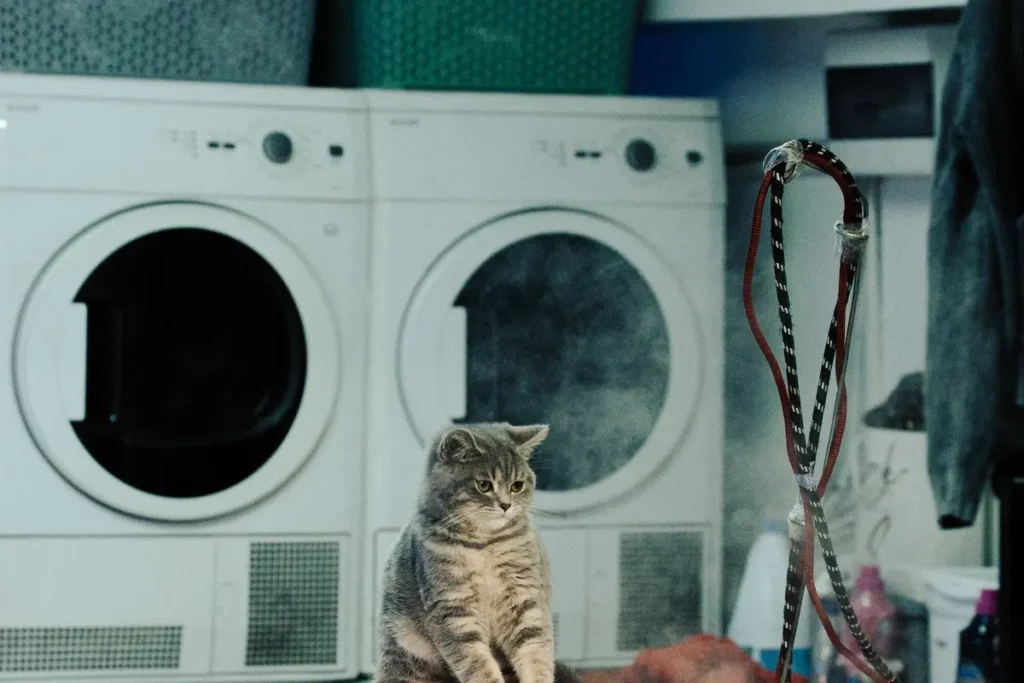
- Keep cats out of appliances. Check the washer and dryer every time before loading and closing the door. Keep doors shut when machines are not being used if your cat likes enclosed spaces.
- Lock laundry products away. Detergents, pods, scent boosters and dryer sheets are not toys. Clean spills promptly and keep the cat away until the area is safe and dry.
- Do not add essential oils. “Natural” does not mean feline-safe, and fragrance is unnecessary for removing hair.
- Avoid blades, pumice and rough scrapers. They can snag fibres, damage clothing and injure a hand that slips.
- Do not punish the cat. Sitting on soft laundry is thoroughly ordinary cat logic. Closed storage and a separate cosy bed solve more than shouting ever will.
Frequently asked questions
How do you get cat hair off black clothes without a lint roller?
Use a barely damp, clean microfibre cloth and sweep the garment in one direction. The hair should gather into a line that you can lift away. A clean, slightly damp rubber glove can work on sturdy fabric. Test a hidden spot first, use very little moisture and avoid rubbing delicate or dry-clean-only clothing.
Does washing clothes remove cat hair?
Washing can remove some cat hair, but it may not remove all of it and can redistribute loose fur through the load. Shake and brush heavily covered garments before washing. If the care label allows, an air-only tumble before the wash may loosen more hair. Clean the lint screen, door seal and relevant filters afterwards.
How can I keep cat hair from sticking to black clothes?
Store clean black clothes behind closed wardrobe doors, dress away from the cat’s favourite resting spot and cover shared chairs with washable throws. Regular gentle grooming can reduce loose coat in the home. Keep a clothes brush near the exit for the final few strands that ignore your carefully negotiated household boundaries.
Why are my clothes still covered in cat hair after washing?
Loose fur may remain trapped in textured fabric, move from another item or return from hair left in the washer. Pre-brush garments, separate very furry bedding, avoid overloading the drum and follow the machine’s cleaning instructions. After washing, use a clothes brush or lint roller once the item is dry and inspect the washer seal.
A black wardrobe and a cat can coexist
Learning how to get cat hair off black clothes is less about finding a miracle gadget and more about using the right order: remove loose fur, launder only as the label allows, clean the equipment and protect the finished garment. Add calm, coat-appropriate grooming and the daily fluff becomes a manageable chore—not a reason to redecorate exclusively in cat colour.
What is your favourite cat-hair hack—and which piece of black clothing does your cat seem personally determined to accessorise? Share the quirk and the trick that works in the comments.
Safety and behavioural note: This article offers general household and cat-care information. Follow garment, appliance and product labels. Contact a veterinarian if shedding changes suddenly or your cat develops skin, coat or behaviour changes, and seek prompt advice after suspected exposure to a laundry or cleaning product.