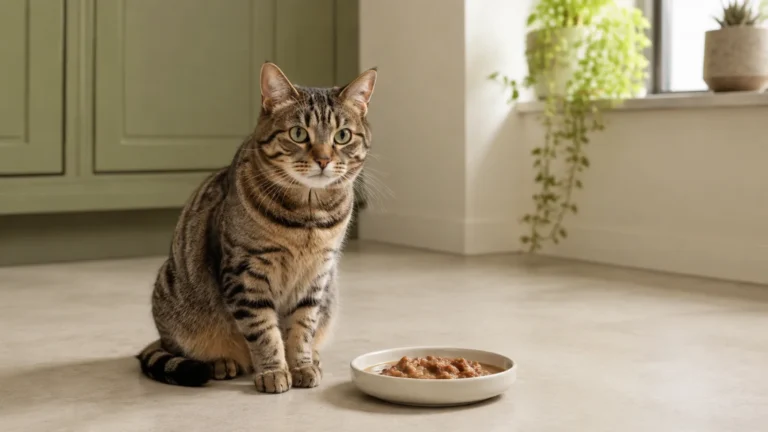

Picture the pet-food aisle: one tin promises recognisable chicken in broth, the ingredient list is only three items long, and the contents look more like lunch than cat food. It feels like an easy yes. This Applaws wet cat food review, however, hinges on one small word many shoppers miss—complementary.
That word changes how the food should be served—and why two Applaws cans may have very different feeding roles.
QUICK NAVIGATION In This Article
Quick verdict
Classic Applaws Chicken Breast in Broth is a complementary adult food, not a complete everyday diet. Its simple recipe and moist, shredded texture can make it useful as a topper. Applaws Vitality is different: selected recipes are labelled complete and balanced. The safest buying rule is to check the exact can, range and country label.
Review methodology and disclosure
This is a label-based review. MeowTips did not conduct a feeding trial, laboratory analysis or palatability test. Product information was checked on 24 August 2026 against current regional labels, official nutrition guidance and recall records.
The main recipe is Applaws Chicken Breast in Broth for adult cats. We also compare the newer US Vitality range because not every Applaws wet recipe has the same role.
Formulas and labels change. Confirm the ingredient panel, life-stage statement and nutritional-adequacy wording on the package you are holding before purchase.
Applaws wet cat food review: what the label actually says
The standard US Applaws Chicken Breast in Broth product page calls the recipe a “complementary pet food for adult cats.” Its ingredients are chicken breast, chicken broth and rice. The manufacturer directs owners to feed it with complete food for a balanced diet.
That is the product’s intended job.
Applaws also sells Vitality recipes in some markets. The current US Applaws Vitality range information describes those foods as complete and balanced for adult cats and lists added vitamins, minerals, taurine and other nutrients.
The accurate answer is: some lines are complementary, while specific Vitality recipes are complete. Read the exact label.
Product snapshot
| Detail | Classic Chicken Breast in Broth | Applaws Vitality example |
| Brand and recipe | Applaws Chicken Breast in Broth | Applaws Vitality Fish Selection in Broth |
| Food type | Wet, complementary | Wet, complete and balanced |
| Life stage | Adult cats | Adult cats |
| Main protein | Chicken breast | Tuna fillet, with recipe-dependent fish additions |
| Texture | Shredded/flaked meat in broth | Flaked meat in broth; Vitality also includes pâté recipes |
| Completeness statement | Complementary pet food | Complete and balanced pet food |
| Calories | US/AU label: 712 kcal/kg; UK label: 828 kcal/kg | US fish selection: 744–847 kcal/kg depending on recipe |
| Pack sizes checked | US 5.5 oz; UK/AU 70 g; Canadian specialty listings include 156 g | US 2.47 oz multipack example; other sizes/recipes exist |
| Availability | Confirmed in US, UK, Canada and Australia | Confirmed in the US; the Vitality name also appears in Australia, but recipes differ. Check local stock in the UK and Canada. |
| Review type | Label-based | Label comparison only |
Ingredient analysis
Chicken breast
Chicken breast is the first ingredient and the named animal-protein source. That is easy for a shopper to understand. Still, a familiar cut of meat does not supply every nutrient a cat requires in the correct amount and ratio.
“Made with chicken breast” is an ingredient claim. “Complete and balanced” is a nutritional-adequacy claim.
Chicken broth
Broth supplies moisture and helps create the loose, shredded texture. Wet food can contribute water to a cat’s daily intake, but no one food format guarantees good hydration. Fresh drinking water should still be available.
Rice
The classic Chicken Breast in Broth recipe contains rice in every regional ingredient list we checked. That means this particular recipe should not be described as grain-free.
Rice is not automatically harmful or evidence of poor quality. It matters to buyers avoiding grain, following a veterinary elimination plan, or expecting meat and broth only.
What is not added to the classic recipe
The classic formula does not list a vitamin-and-mineral premix. Its simplicity may appeal to topper buyers, but it should not be judged as a sole diet.
Vitality’s longer label includes fats, vitamins, minerals, taurine and ingredients such as guar gum. Longer is not automatically worse; fortification supports its complete-and-balanced claim.
Guaranteed analysis and regional differences
The percentages below are as-fed label values, meaning moisture is included.
| Market and package checked | Protein | Fat | Fibre | Moisture | Calories | Label role |
| US, 5.5 oz | min 14% | min 0.1% | max 2% | max 86% | 712 kcal/kg | Complementary |
| UK, 70 g | 16% | 1% | 0.1% | 80% | 828 kcal/kg; 58 kcal/can | Complementary |
| Australia, 70 g | min 14% | 0.1% | max 2% | 86% | 712 kcal/kg; 49.8 kcal/can | Complementary |
| Canada, 156 g specialty-retailer listing | 14% | 0.3% | 1% | 82% | 712 kcal/kg | Complementary |
Pack sizes and regional specifications differ, and back-of-pack values may change. Use your local can as the final authority.
We have not published a dry-matter calculation for this recipe. The labels provide minimum or maximum guarantees rather than exact laboratory values, and forcing those limits into a precise-looking calculation could be misleading. The US Food and Drug Administration’s guide to complete and balanced pet food explains both adequacy statements and why wet-versus-dry nutrient comparisons require a moisture-free basis.
Texture, aroma and palatability considerations
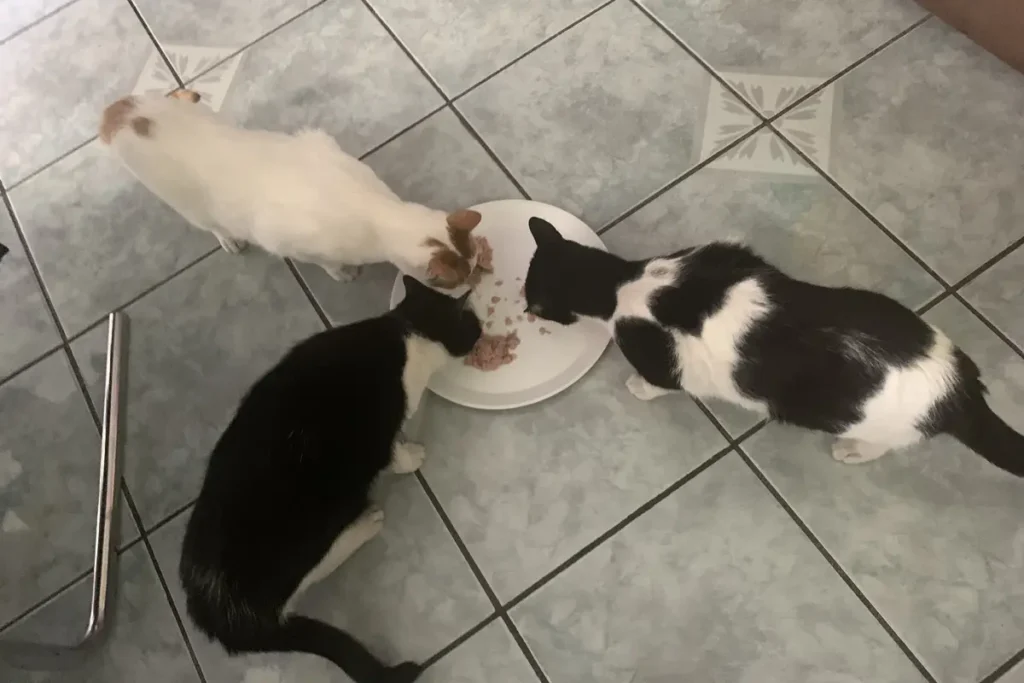
Open a classic Chicken Breast in Broth can and the expected format is visible shredded chicken in liquid—not a smooth pâté and not firm chunks in gravy. That distinction may matter more to a picky cat than a beautifully designed label.
Possible reasons a cat may accept the format include:
- a preference for strands or flakes rather than pâté;
- the aroma released when served at room temperature;
- broth coating their usual complete food; and
- a small amount adding novelty without replacing the familiar meal.
None of that guarantees palatability. We did not taste-test this product, and online ratings cannot predict your cat’s response.
Buy the smallest pack first. Offer a spoonful beside—not mixed through—the familiar food, so one refusal does not waste the whole meal.
Benefits of classic Applaws Chicken Breast in Broth
- Short, transparent ingredient list: Chicken breast, broth and rice are straightforward to identify.
- Moist food format: The broth adds dietary water.
- Useful topper texture: Shreds and liquid can change the aroma and feel of a complete meal.
- No carrageenan listed: This matters to buyers who prefer recipes without it.
- Wide availability: The classic product is sold across the four target regions, even though sizes and values vary.
Limitations buyers should understand
- It is complementary: The classic recipe is not intended to provide complete nutrition by itself.
- The range can be confusing: Vitality and Limited Ingredient products have different feeding roles.
- It contains rice: This is not the right recipe for someone specifically requiring grain-free food.
- Chicken is unavoidable here: Cats with a diagnosed chicken allergy need veterinary guidance and a properly controlled diet.
- The fat guarantee is very low: That number should not be mistaken for proof that the product is an ideal weight-loss food.
- Regional labels differ: A US review cannot safely substitute for the pack sold in Manchester, Toronto or Melbourne.
Who this food may suit
Classic Chicken Breast in Broth may suit a generally healthy adult cat whose main diet is already complete and appropriate, especially if the owner wants:
- a moist topper for a familiar complete food;
- a shredded rather than pâté texture;
- a short ingredient list for easier label reading; or
- occasional variety without turning every meal into a full diet change.
These basic cat-care tips for new owners place food, fresh water and health monitoring in a wider routine.
Who should speak with a veterinarian first
Ask your veterinarian before making this or any topper a regular part of the plan if your cat has:
- a diagnosed food allergy or is undergoing an elimination trial;
- kidney, urinary, liver or heart disease;
- diabetes or a digestive disorder;
- obesity, unwanted weight loss or poor body condition;
- a therapeutic or prescription diet;
- persistent vomiting, diarrhoea or appetite changes; or
- kitten, pregnancy, nursing or medically complex senior needs not covered by the adult label.
Do not use a topper to mask sustained appetite loss. A cat eating markedly less, losing weight, vomiting repeatedly or acting unwell needs veterinary advice.
Complete versus complementary: the practical difference
The UK Pet Food explanation of complete and complementary foods puts the distinction plainly: complete food supplies required nutrients in suitable amounts and proportions; complementary food must be combined with another appropriate food type.
In practical terms:
- Find the adequacy statement. Look for “complete and balanced” in North America or “complete pet food” in UK/European-style labelling.
- Match the life stage. Adult maintenance is not the same as growth or all life stages.
- Treat “complementary” as a role, not a flaw. A topper can be useful when used as intended.
- Keep extras proportionate. Too many toppers and treats can displace nutrients or add unwanted calories.
- Recheck after formula changes. A familiar brand name does not guarantee the same recipe or status forever.
MeowTips’ guide to choosing healthy cat food for different life stages adds broader label and age guidance.
How it compares with realistic alternatives
Applaws Vitality
For US shoppers who want Applaws wet food as the main meal, a Vitality recipe labelled complete and balanced is the closest in-brand alternative. It includes added nutrients and may be served as the diet’s complete wet component according to its label. Check the specific life stage, recipe and local availability.
Another complete wet food
A complete wet food for your cat’s life stage can be the nutritional base, with classic Applaws used as a measured topper. Compare adequacy, calories, manufacturer information and your cat’s needs—not just the first ingredient.
Is it good value?
Value depends on the job you expect the can to do.
As a topper, one can may stretch across meals when stored as directed. As a mistaken sole diet, it is poor value because complete food is still required.
Avoid comparing shelf prices alone. Consider:
- cost per usable serving;
- whether your cat accepts the texture;
- waste after opening;
- the cost of the complete base diet; and
- local availability.
We have not listed prices because they change by retailer, package and country.
What to check on the package before buying
Use this quick five-point label check:
- Range name: Is it Limited Ingredient, classic Applaws or Vitality?
- Completeness wording: Does it say complementary, intermittent/supplemental, complete pet food, or complete and balanced?
- Life stage: Adult, kitten, senior or all life stages?
- Ingredient list: Does the recipe contain chicken, fish, rice, gums or another ingredient relevant to your cat?
- Current details: Check calories, feeding directions, best-before date, lot code and contact information.
Recall check
No current official recall notice for this specific Chicken Breast in Broth wet recipe was found in the US, UK, Canadian or Australian records checked on 24 August 2026. That is a point-in-time search, not a lifetime guarantee.
There is historical context: a 2021 UK Food Standards Agency notice covered specified Applaws dry cat foods made by Fold Hill Foods. It did not identify the Chicken Breast in Broth wet can reviewed here. Always match the product format, lot and date rather than treating a brand name as one single item.
Final balanced verdict
Classic Applaws Chicken Breast in Broth does its intended job reasonably clearly: it is a simple, moist, complementary adult food that can add texture and variety to a complete diet. The ingredients are easy to read, and the shredded presentation may appeal to cats who dislike pâté.
Its biggest limitation is also the central buying lesson. The classic recipe is not a complete daily diet. Meanwhile, selected Vitality recipes are labelled complete and balanced, so old blanket statements about all Applaws wet food are no longer reliable.
Our verdict: consider classic Applaws as a topper, not an automatic meal replacement; consider Vitality only after confirming the exact complete-and-balanced statement on your local pack.
Frequently asked questions
Is all Applaws wet cat food complete and balanced?
No. Many classic and Limited Ingredient Applaws wet recipes are complementary foods. Selected Applaws Vitality wet recipes are labelled complete and balanced for adult cats. Check the exact range, recipe and regional package rather than relying on the brand name alone.
Can I feed my cat Applaws wet food every day?
A complementary Applaws recipe may be offered regularly only as part of an otherwise complete, appropriately portioned diet. It should not replace complete nutrition. A Vitality recipe labelled complete and balanced can play a different role. Ask your vet if your cat has medical or weight concerns.
Is Applaws Chicken Breast in Broth grain-free?
No. The current US, UK, Canadian and Australian ingredient information checked for Chicken Breast in Broth includes rice. Other Applaws recipes may differ, so read each ingredient panel individually.
Is Applaws wet food good for picky cats?
Its shredded meat and broth may interest cats that prefer flakes over pâté, but no food is universally palatable. Introduce a small amount beside familiar food and avoid buying a large case until you know your cat accepts the texture.
A clear label beats a clever claim
The useful takeaway from this Applaws wet cat food review is wonderfully unglamorous: turn the can around. “Natural,” “limited ingredient” and visible chicken can describe the recipe, but the adequacy statement tells you whether it can stand alone.
If your cat has tried Applaws, share the exact recipe, country and texture they accepted—or dramatically rejected—in the comments. That detail will help other readers far more than a simple thumbs-up.
Veterinary and nutrition disclaimer: This article provides general educational information and does not replace advice from your veterinarian or a qualified veterinary nutrition professional.