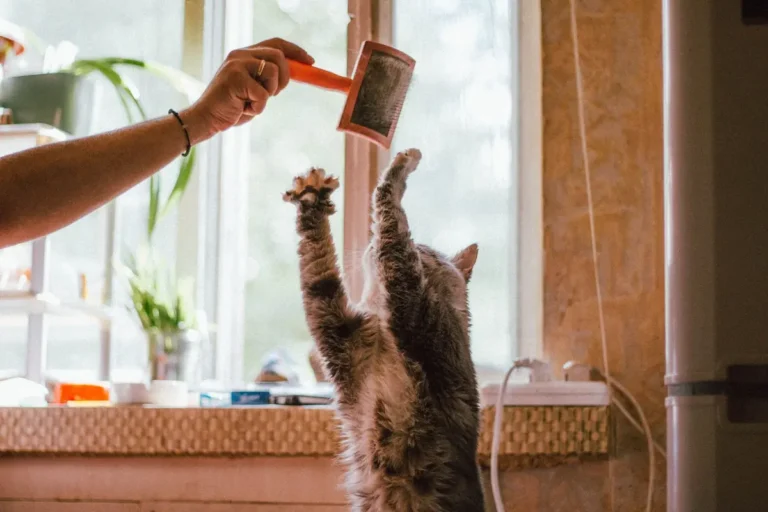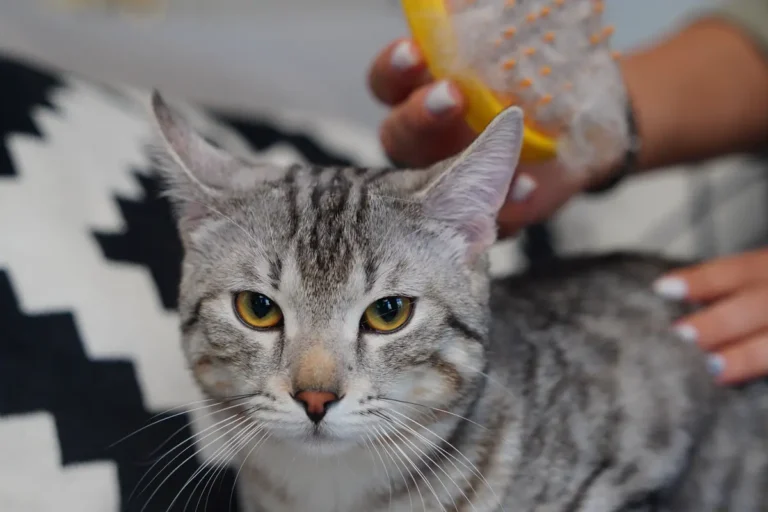

You take out the clippers. Your cat spots them from across the room. Five seconds later, you are looking under the bed while your cat looks back as if you have broken an important agreement.
If that scene feels familiar, the answer is not to hold your cat tighter or finish faster. The safest way to trim cat nails without getting scratched is to make the job smaller: prepare before your cat arrives, teach paw handling separately, clip only the sharp tip, and stop while everyone is still calm.
Some cats will eventually sit through a full paw. Others may be comfortable with one nail today and another tomorrow. Both outcomes count as progress.
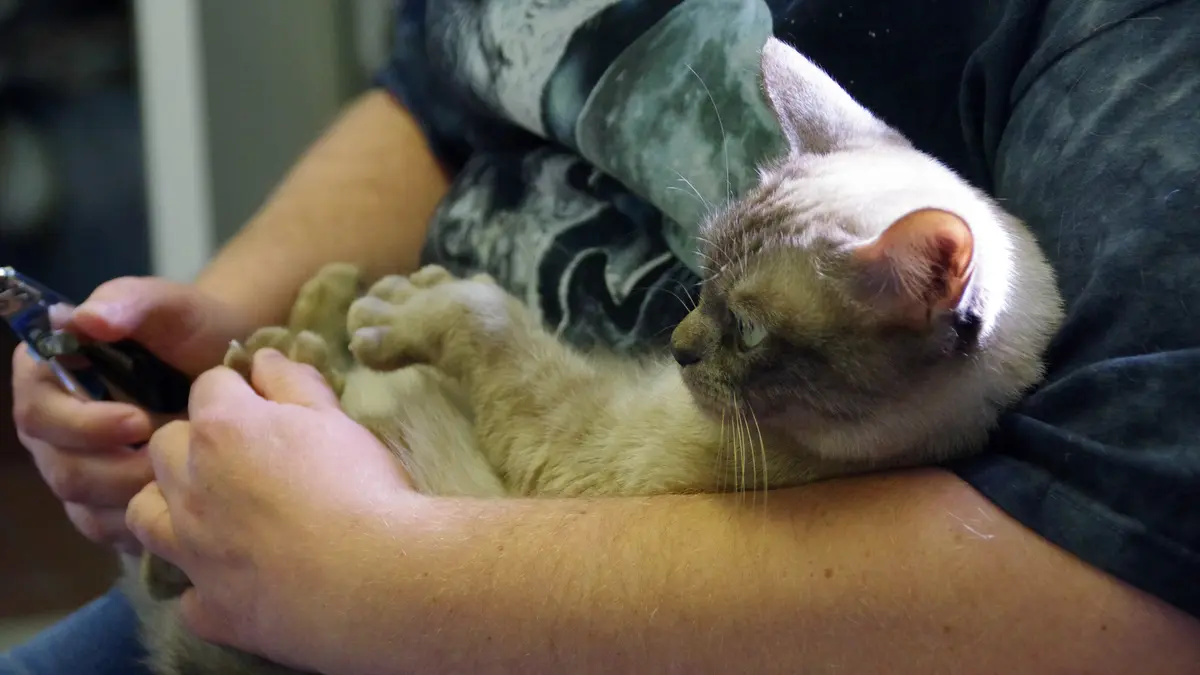
A real nail-trimming session: the cat is supported securely while the handler works carefully.
QUICK NAVIGATION In This Article
Quick answer
To trim your cat’s nails with less risk of scratches, wait until your cat is relaxed, work in a quiet room and use sharp clippers made for cats. Gently press the toe pad to expose one claw, identify the pink quick, and remove only the clear hooked tip. Reward your cat and stop after one or two nails if their body becomes tense. Never punish, chase or overpower a struggling cat. If you cannot see the quick, the nail is abnormal, or your cat becomes highly distressed, ask a veterinarian or experienced cat groomer for help.
Does your cat actually need a nail trim?
Not every cat needs the same schedule. Scratching is normal behavior, and a sturdy scratching surface helps cats stretch, mark their environment and shed the outer layers of their claws. Outdoor cats may also wear their claws naturally. Indoor, senior and less-active cats often need more help.
Check your cat’s paws regularly rather than relying only on a calendar. A trim may be due when:
- claws catch repeatedly on blankets, carpets or clothing;
- you can see the claws when your cat is resting;
- a claw taps on hard flooring;
- the sharp hook has become long and pronounced; or
- your cat struggles to retract a claw.
Cats Protection advises contacting a veterinarian if a claw may be growing into the paw pad. That is especially important for older cats, whose claws can become thicker or more curved. Limping, swelling, bleeding, discharge, repeated paw licking or a sudden dislike of paw handling also deserves professional attention.
What you need before you begin
Set up before inviting your cat over. Searching for treats with one hand while holding a paw with the other is how a calm session turns chaotic.
Gather:
- sharp, cat-specific nail clippers;
- several tiny, high-value treats;
- a soft towel or non-slip mat;
- bright, indirect light;
- styptic powder in case you nick the quick; and
- a quiet room with no other pets competing for attention.
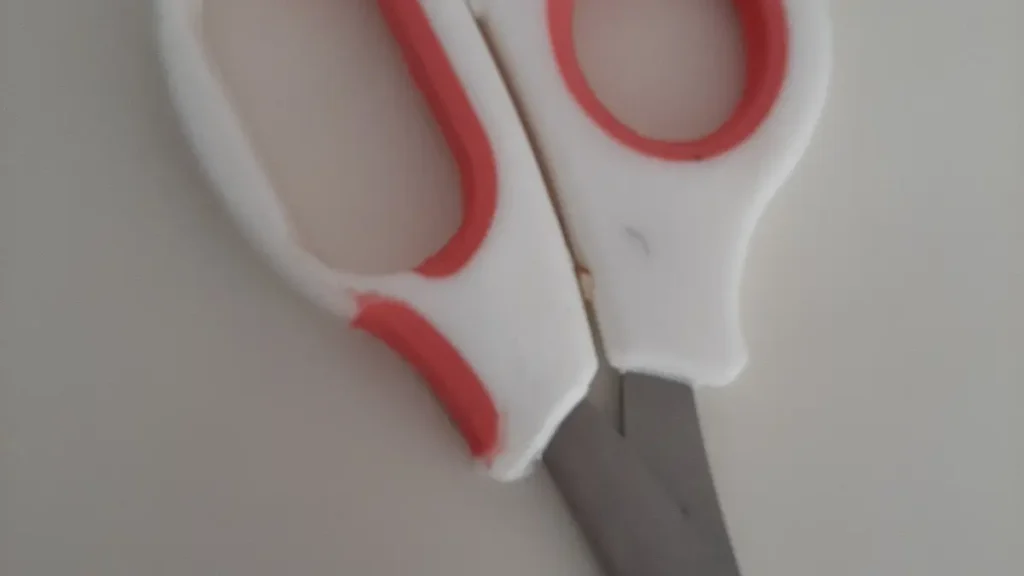
Use clippers designed for cat claws. Human nail clippers press a curved claw from the wrong angle and may split it. Replace or sharpen dull pet clippers because crushing pressure can make a cat pull away suddenly.
Use clean, sharp clippers designed for cat claws and prepare the rest of your supplies before starting.
First teach the part that does not involve cutting
For a cat who hates nail trims, your first few sessions may not include clippers at all. Pick a moment when your cat is resting comfortably but is not trapped in a deep sleep.
Touch the shoulder, slide your hand down the leg, briefly touch a paw and offer a treat. End there. During later sessions, hold the paw for one second, release it and reward. When that is easy, apply very light pressure to the toe pad until a claw appears, then release immediately.
The order matters: touch, release, reward. Your cat learns that giving you a paw does not mean losing control of it.
Keep these practice sessions under a minute. Watch for early signs that your cat needs a break: a twitching tail, ears rotating sideways, skin rippling, a paw being pulled back, pupils widening, head turning toward your hand or treats being refused. A hiss, swat or bite is not the first warning; it is a late one.
This gradual approach is useful for other grooming jobs too. If paw handling is only one part of a bigger struggle, the same cooperative-care principles in our guide to brushing a cat that hates being brushed can help you build calmer routines.
How to trim cat nails without getting scratched: step by step
1. Choose a low-energy moment
Try after a meal, a play session or a nap, when your cat is naturally settled. Avoid trimming during zoomies, immediately after a stressful event or when you feel impatient. Close the door, silence sudden noises and give your cat a secure surface.
2. Position your cat without pinning them
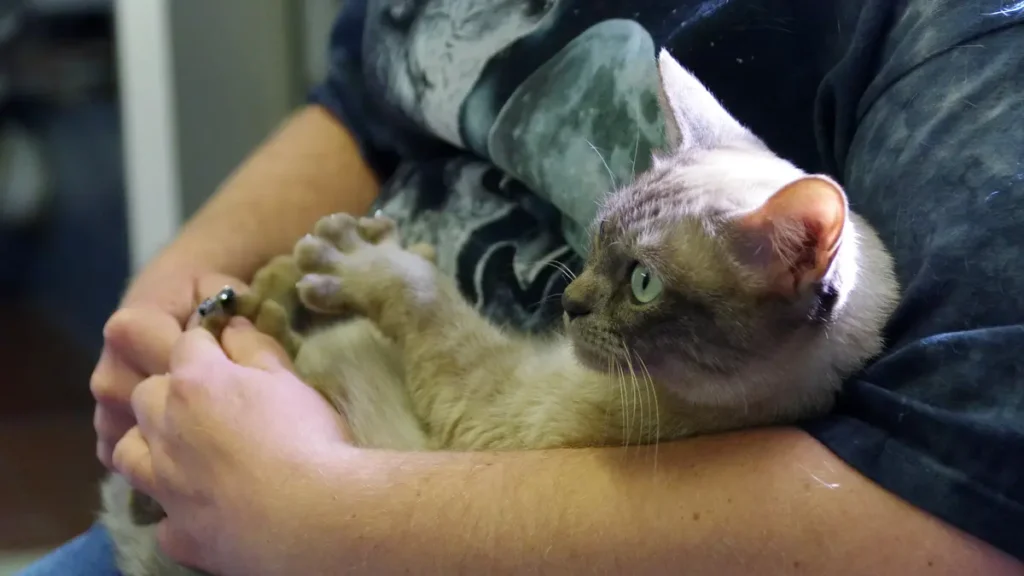
Many cats are comfortable sitting on a lap facing away from the person. Others prefer standing on a non-slip mat while you work from the side. Support the body and paw, but do not press the cat flat or hang on when they try to leave.
A towel on your lap can improve grip and protect your legs. A towel should not become a way to overpower a panicking cat. If wrapping makes your cat struggle harder, stop and use shorter training sessions or professional help.
3. Extend one claw gently
Hold the paw loosely between your fingers. Place a finger under one toe and your thumb above it, then apply gentle pressure until the claw extends. Do not squeeze the whole paw. If your cat pulls away, follow the movement rather than tightening your grip, then release.
4. Find the quick
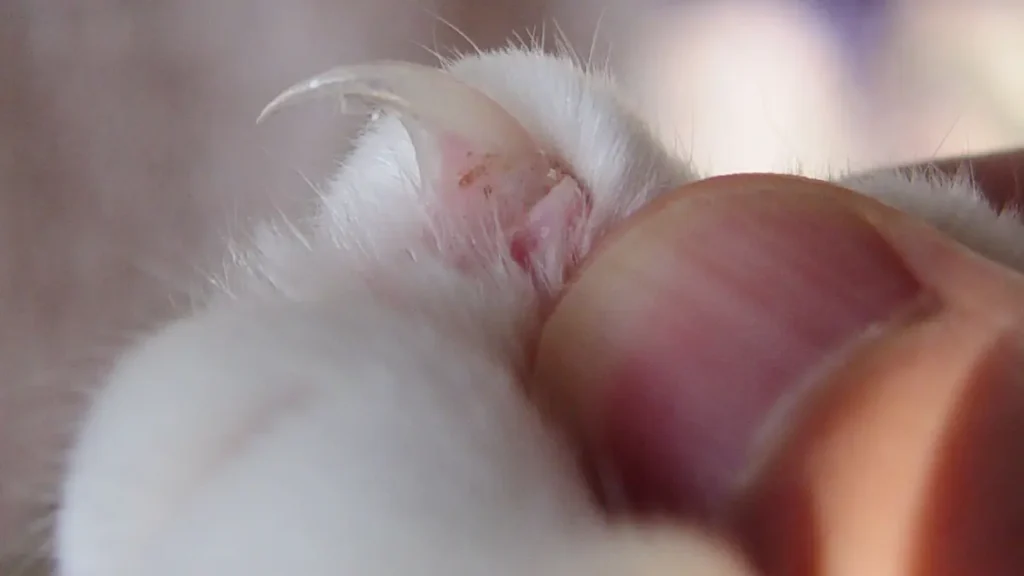
In a light-colored claw, the quick looks like a pink center containing nerves and blood vessels. The clear, narrow hook beyond it is the section you can trim. Dark claws are harder to judge, so take off only the very tip. If you are uncertain, leave more nail and ask your veterinary team to demonstrate at your next visit.
Cut only the clear hook. Leave a comfortable margin in front of the pink quick.
5. Clip the sharp tip in one clean motion
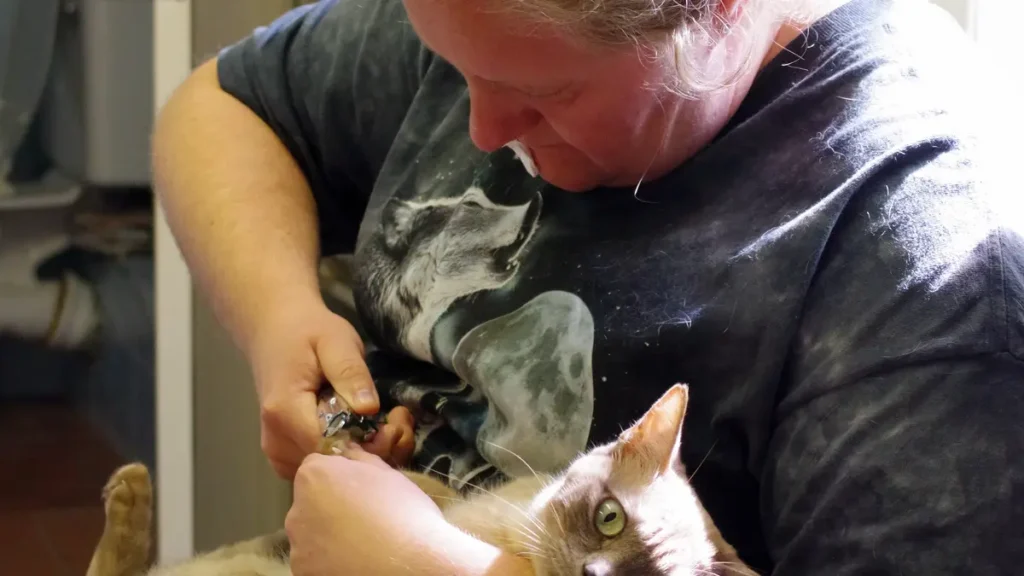
Hold the clippers steady and remove only the pointed hook. Do not keep nibbling toward the quick to make the nail look shorter. The goal is to blunt the dangerous point, not create the shortest possible nail.
6. Release, reward and reassess
Let go of the toe immediately and give your cat a tiny treat. If their body still feels soft and they willingly remain, you can try one more claw. If the tail starts flicking, the paw retracts repeatedly or your cat turns toward the clippers, finish the session.
7. Stop before the argument
One nail is a successful session. Two nails are a successful session. You do not need to finish all four paws at once. The ASPCA’s cat grooming guidance also recommends short sessions, immediate rewards and avoiding clipping when either the cat or person is upset.
Support the cat without pinning; short, calm sessions protect trust.
How to avoid getting scratched
Most defensive scratches happen after a cat has started asking for space. These habits reduce the chance of reaching that point:
- Keep your face away from the cat’s front feet.
- Wear normal long sleeves if they help you feel relaxed, but do not use heavy gloves to force handling.
- Never play with the cat using your fingers immediately before grooming.
- Keep each attempt shorter than your cat’s current tolerance.
- Approach from the side instead of reaching over the head.
- Make the exit easy; a cat who can leave may feel less need to fight.
- Have another adult offer treats only if their presence relaxes the cat.
Do not scruff, shout at or punish a cat for resisting. Fear can make the next trim harder and can damage the relationship you are trying to improve. The feline-welfare guidance in the AAFP alternatives to declawing brochure recommends a calm environment, breaks and positive reinforcement.
If your cat has a history of serious bites or attacks, do not test your luck at home. Cat bites can cause significant infection. Ask your veterinarian about a safe plan, which may include an in-clinic trim or veterinarian-prescribed medication for a future appointment. Never give human sedatives, pain medicine, CBD or leftover pet medication without veterinary direction.
What if you cut the quick?
Even careful people occasionally clip too close. If the nail starts bleeding, stay calm and release the paw if holding it increases the struggle. Apply styptic powder with gentle pressure according to the product directions. Keep your cat indoors and observe the paw.
Contact a veterinarian if bleeding is heavy, does not stop promptly with pressure, restarts repeatedly, or the claw looks torn rather than neatly clipped. Seek advice sooner if your cat is weak, has a bleeding disorder, takes medication that affects clotting, or seems very painful.
Do not keep trimming after an accident. Give your cat time to recover, then rebuild comfort with easy paw-touch-and-treat sessions before showing the clippers again.
How often should cat nails be trimmed?
There is no single interval that fits every cat. The ASPCA suggests a relatively frequent routine, while feline-practitioner resources note that lifestyle changes how often trimming is needed. A sensible home plan is to inspect the paws every two weeks and trim only the nails that have developed a long sharp hook.
Indoor cats, kittens learning the routine, seniors and cats with limited mobility may need more frequent attention. Active cats with excellent scratching options may need less. The front claws often grow sharper sooner than the rear claws, and the inner dewclaws deserve a separate check because they do not contact the ground.
A scratching post does not replace every nail check, but it supports healthy behavior and natural claw maintenance. For a wider routine covering food, litter, grooming and preventive care, see our basic cat care guide for new owners.
Check each claw separately and stop when the cat begins to lose patience.
When to stop and call a veterinarian or groomer
Professional help is the kinder choice when:
- a claw is split, bleeding, infected or embedded in the paw pad;
- the paw is swollen or your cat is limping;
- the nails are unusually thick, dark or distorted;
- your cat shows intense fear, open-mouth breathing, repeated escape attempts or aggression;
- you cannot safely identify where to cut; or
- pain or arthritis may be making paw handling uncomfortable.
A veterinary nurse or technician can often demonstrate the angle and amount to trim. An experienced cat groomer may handle routine trims, but medical-looking nail or paw problems belong with a veterinarian.
Regular trimming is an alternative to damage-control measures, not a reason to remove a cat’s claws. The American Association of Feline Practitioners opposes elective declawing and explains that scratching is normal feline behavior.
Frequently asked questions
Can I trim my cat’s nails while they are asleep?
You can gently handle a relaxed, drowsy cat, but do not startle a deeply sleeping cat with a clip. Wake them softly, let them see and smell what is happening, and stop if they become alert or tense.
Can I use human nail clippers on my cat?
Cat-specific clippers are the safer choice because they match the curved claw and are less likely to crush or split it. If you do not have suitable, sharp clippers, postpone the trim.
How many nails should I trim in one session?
Trim only as many as your cat comfortably allows. For a beginner, one or two nails can be enough. Several easy sessions are better than one forced session that creates a lasting fear of paw handling.
Should I trim the back claws too?
Check all four paws, including the dewclaws on the front legs. Rear claws often need less frequent trimming, but age, activity and nail shape matter more than a fixed rule.
Why does my cat bite when I touch their paws?
They may be frightened, overstimulated, unfamiliar with handling or painful. Start with very brief touch-and-reward practice. If the reaction is new, severe or limited to one paw, arrange a veterinary examination before trying again.
The calm-session rule
The best nail trim is not the one that removes the most claw. It is the one that leaves your cat willing to come back next time.
Prepare the room, clip only the clear tip, reward quickly and treat an early stop as good judgment—not failure. With repetition, many cats learn that paw handling predicts a treat and lasts only a few seconds. If yours does not, professional help is still a successful, cat-friendly choice.
Medical note: This article provides general educational information and does not replace examination or advice from your veterinarian. Seek veterinary care for pain, injury, infection, abnormal nails or severe distress.