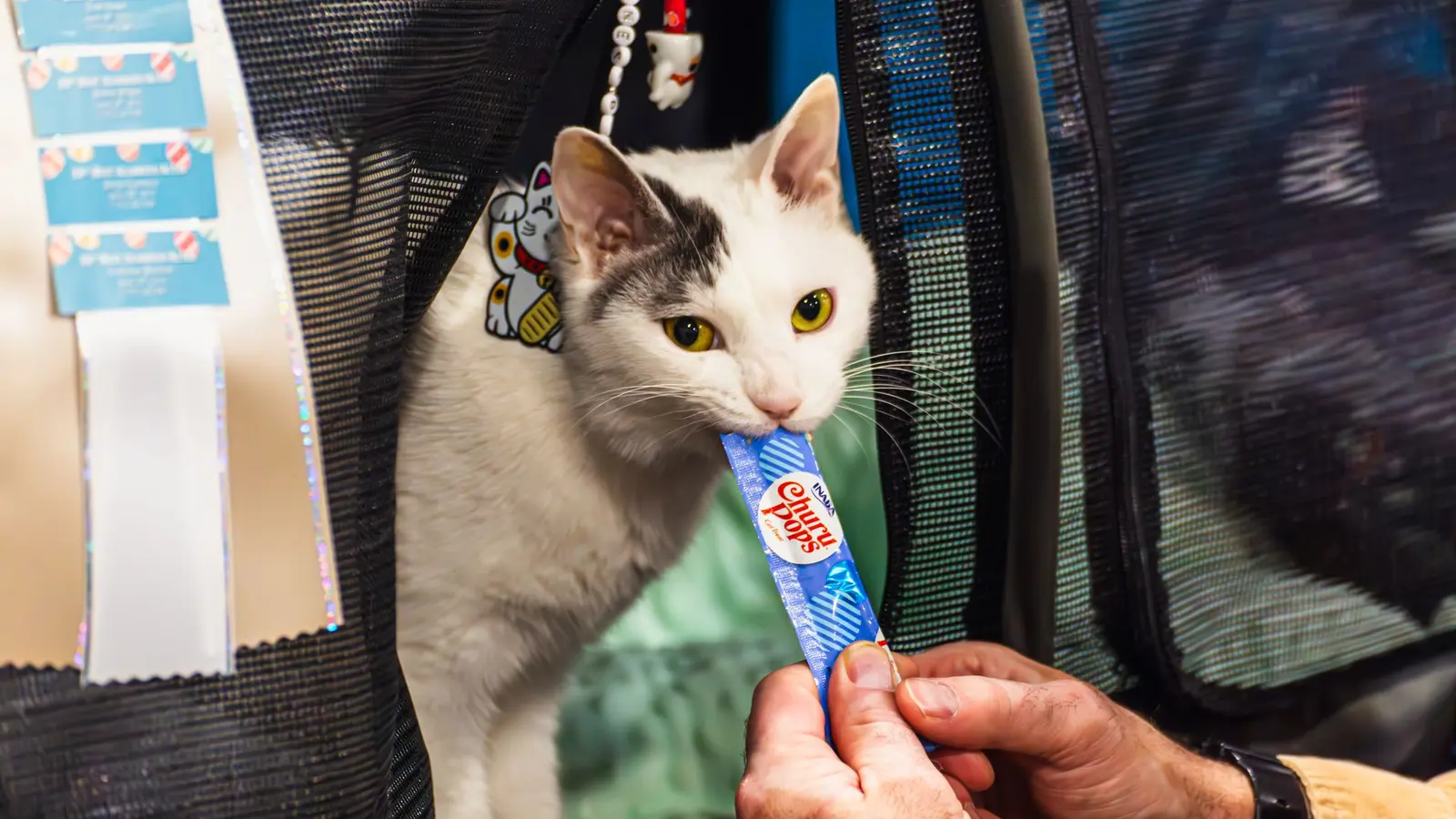

The carrier appears, your cat disappears, and a routine veterinary appointment suddenly feels like a timed obstacle course. If that pattern is familiar, the problem usually is not stubbornness. Your cat may have learned that the carrier predicts restraint, movement, unfamiliar smells and a visit to the clinic.
Learning how to get a cat into a carrier starts long before you need to leave the house. Keep the carrier in your cat’s normal environment, reward small voluntary steps toward it, and practise the door, lifting and movement separately. If you must travel today, use a small prepared room and calm, efficient handling rather than chasing your cat through the house.
QUICK NAVIGATION In This Article
Quick answer
Place an open carrier in a quiet room your cat already uses. Add familiar bedding, then reward looking at, approaching and entering the carrier. Move forward only when your cat can repeat the current step with relaxed body language. Next, practise briefly closing the door, lifting the carrier and walking a few steps. Keep sessions short and never make punishment part of the carrier experience.
If the trip is urgent, call the veterinary clinic for guidance, prepare the carrier and room before bringing in your cat, and avoid a prolonged chase. A frightened or painful cat may need an individualized plan from a veterinarian.
Why cats learn to avoid the carrier
Many carriers spend most of the year in a closet. They appear just before a car ride and veterinary exam, then disappear again. From the cat’s point of view, the carrier is a reliable signal that control is about to be lost.
The object itself can also be difficult. A swinging door may clang. A slick floor can make the cat feel unstable. A narrow front opening may require awkward handling, while strong cleaning products or another animal’s scent can make the space less inviting.
This history matters because it changes the starting point. A curious kitten may investigate within minutes. An adult cat who has repeatedly been chased and pushed inside may need days or weeks of easier experiences. The goal is not to follow a rigid timetable; it is to change what the carrier predicts.
Choose and prepare the carrier
A practical carrier should be secure, well ventilated and large enough for the cat to stand, turn around and lie down comfortably. A sturdy hard-sided model with a removable top can make training and veterinary handling easier, although a secure soft-sided carrier can work for some cats. Inspect zippers, latches, screws, seams and the handle before use.
The ASPCApro carrier guide recommends a sturdy carrier, checking it for defects and giving the cat enough room to turn around. The FelineVMA transportation position statement also emphasizes suitable carriers, acclimation and secure placement during travel.
Prepare the carrier before your cat approaches it:
- Wash removable surfaces with a mild, unscented approach and let everything dry.
- Add a thin, washable, familiar-smelling blanket or towel that does not block ventilation.
- Secure the door fully open so it cannot swing into the cat.
- If the hard carrier separates safely, begin with the bottom half as an open bed.
- Put the carrier in a calm location where your cat already rests or passes regularly.
Do not immediately place your cat inside. At first, the carrier is simply part of the furniture.
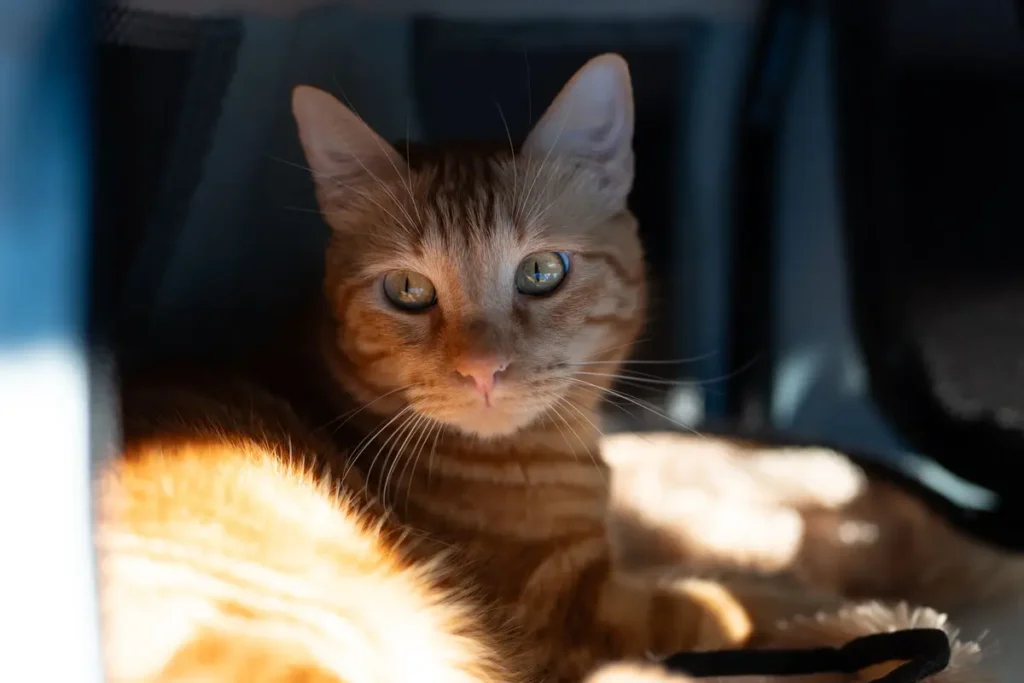
How to get a cat into a carrier step by step
1. Reward noticing the carrier
Sit several feet away and let your cat make the first choice. The moment they look toward the carrier, calmly place a small treat at a comfortable distance from it. You can also use a brief play reward or gentle attention if food is not motivating.
Repeat until the carrier’s presence no longer causes retreat, crouching or a fixed stare. A cat who will not eat near it is not being difficult; the setup is probably too intense. Move the carrier farther away, remove the top if possible or end the session and try later.
2. Build an easy treat path
Place one reward near the entrance, not at the far back. When your cat takes it comfortably, put the next reward just inside. Gradually move the reward deeper over several repetitions.
Do not push from behind. Entering must remain the cat’s action. The detailed Fear Free carrier-training approach similarly breaks entry into small achievements: approaching, placing one foot inside, entering fully and then staying for longer periods.
If you use part of a meal for practice, keep the food within your cat’s normal daily allowance. Do not withhold food for long periods to force cooperation.
3. Reward staying, not only entering
Once all four paws go inside, deliver two or three small rewards while your cat remains there. Then let them leave. A release after a few calm seconds teaches that entering does not automatically mean being trapped.
Over several sessions, extend the pause gradually. You might progress from one second to three, then five and ten. Go back to an easier duration if your cat begins to spin around, rush out or stop taking rewards.
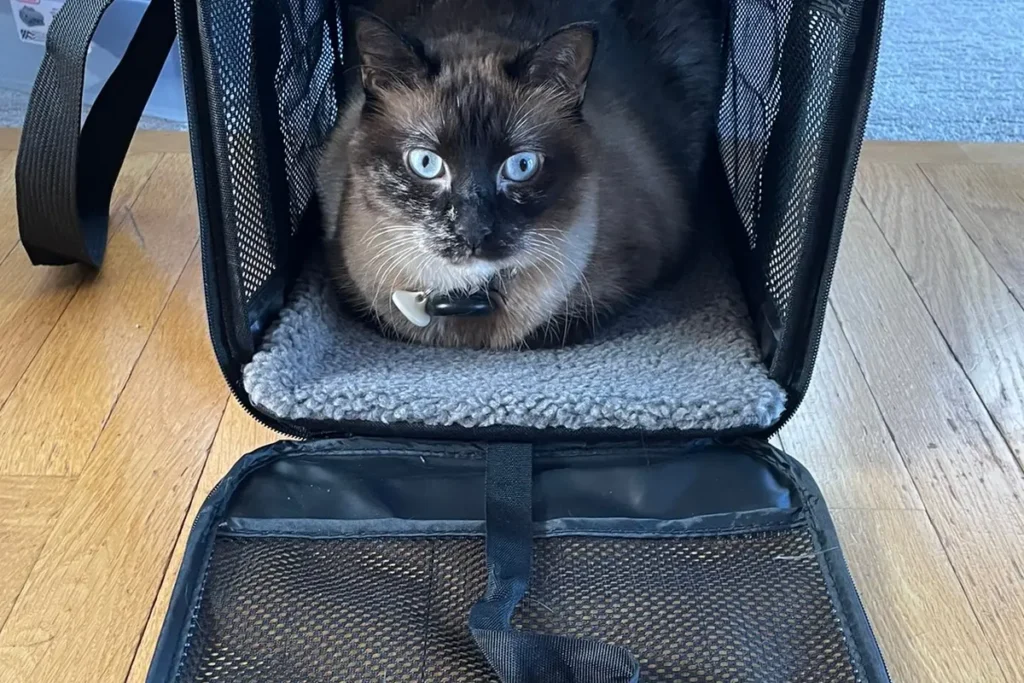
4. Add a cue only after entry is predictable
When your cat is already walking into the carrier reliably, say a short cue such as “carrier” immediately before the movement. Reward after entry. Saying the cue repeatedly while the cat is hiding only teaches that the word can be ignored.
This timing follows the same learning principle used in the MeowTips guide to training a cat to come when called: make the cue clear, connect it to a behavior the cat can perform, and reward the response promptly.
5. Introduce the door in tiny stages
The door is often harder than entry. First touch it and reward. Later move it an inch, then move it halfway, then close and reopen it immediately. Lock it for one second only after the cat remains relaxed with the earlier steps.
Increase duration slowly. Do not jump from an open carrier to ten minutes behind a closed door. The Wisconsin Humane Society carrier plan advises opening the door if the cat becomes distressed and returning to an easier stage.
6. Practise lifting without travelling
With the door securely latched, lift the carrier an inch, set it down and reward. Next, lift it for two seconds. Work toward a few steps across the room, then a short walk to another room.
Keep the carrier level and support it from underneath when needed. A carrier that swings from one hand can feel unstable even when the cat was comfortable on the floor.
7. Add the car gradually
Begin with the cat in the secured carrier inside a stationary car for a very brief, calm session. Later, start the engine. A short drive can follow when the earlier stages no longer produce marked distress.
International Cat Care’s guide to taking a cat to the veterinary clinic recommends making the carrier familiar at home and discusses secure vehicle placement, covering the carrier when helpful and consulting a veterinarian when travel remains extremely stressful.
Never open the carrier outdoors or while the vehicle is moving. Secure it so it cannot slide, tip or become an airborne object during a sudden stop. Follow the carrier manufacturer’s instructions and current local transport guidance.
A practical progress checklist
Move to the next stage when your cat can complete the current one several times without obvious escalation.
| Stage | Ready to progress when… | Step back when… |
|---|---|---|
| Carrier in the room | Your cat eats, rests or moves normally nearby | They hide, freeze or avoid the room |
| Approach | They walk toward the carrier voluntarily | They stretch forward but keep the body far away |
| Entry | All four paws enter and the cat can take a reward | They bolt out or refuse food |
| Door movement | They remain in place as the door moves | Ears flatten, pupils widen or the body presses backward |
| Door closed | They stay calm for a few seconds | They paw frantically, pant or throw their body at the door |
| Lifting | They tolerate a level lift and accept a reward afterward | They scramble, vocalize intensely or remain distressed afterward |
One imperfect repetition does not erase progress. It means the latest step was too difficult, too long or introduced in a distracting environment.
What to do when the vet visit is today
Training works best before an appointment, but sometimes waiting is not appropriate. If your cat needs prompt veterinary care, do not delay necessary treatment while trying to complete a gradual program.
Prepare before approaching your cat
Put the carrier in a small room with the door open and familiar bedding inside. Close exterior doors and windows. Block unsafe hiding places, but leave yourself room to move. Gather the towel, keys and paperwork first so the cat is not confined longer than necessary.
Bring your cat into the room calmly and close the room door. Try a high-value reward at the carrier entrance. If voluntary entry is not happening and the trip cannot wait, use the safest loading method your carrier allows. A removable-top carrier may let you lower the cat into the base and attach the top without forcing them through a narrow opening.
Avoid chasing through multiple rooms, yelling, scruffing or repeatedly grabbing. These actions increase arousal and can make both the current attempt and future training harder.
If your cat may bite, is difficult to handle, appears painful or has previously panicked in a carrier, call the clinic before loading. The veterinary team may change the arrival plan or discuss veterinarian-prescribed pre-visit medication for future appointments. Never give human sedatives or another animal’s medication.
For a medical emergency, call the clinic while preparing to leave and follow its instructions. Safety and timely care take priority over a perfect training experience.
Troubleshooting common carrier problems
My cat takes treats near the carrier but will not enter
Make the opening feel less confined. Remove the top of a hard carrier, open both ends when the design permits, or begin with a flat mat placed where the carrier base will eventually sit. Reward one paw inside rather than waiting for the complete behavior.
My cat enters and immediately backs out
Reward sooner. Deliver the first reward as the fourth paw crosses the threshold, then release another just outside. After a few successful repetitions, offer two rewards inside before placing the release reward outside.
My cat is calm until the door moves
Separate door training from confinement. Touch the door without moving it, reward and stop. Then practise a tiny movement. Secure a swinging door so it cannot rattle unexpectedly. Progress may be measured in inches, not full closures.
My cat cries in the carrier
Some vocalizing reflects frustration or unfamiliarity, while intense or escalating vocalization can accompany distress, pain or motion sickness. Look at the whole cat: posture, breathing, drooling, elimination, frantic movement and recovery after the trip all matter. Discuss repeated or severe signs with a veterinarian.
My cat used to enter but suddenly refuses
Consider what changed. The carrier may smell different, the last trip may have been frightening, a latch may have made a sharp noise, or entering may now be uncomfortable because of pain or reduced mobility. Sudden behavior changes deserve attention, especially in an older cat.
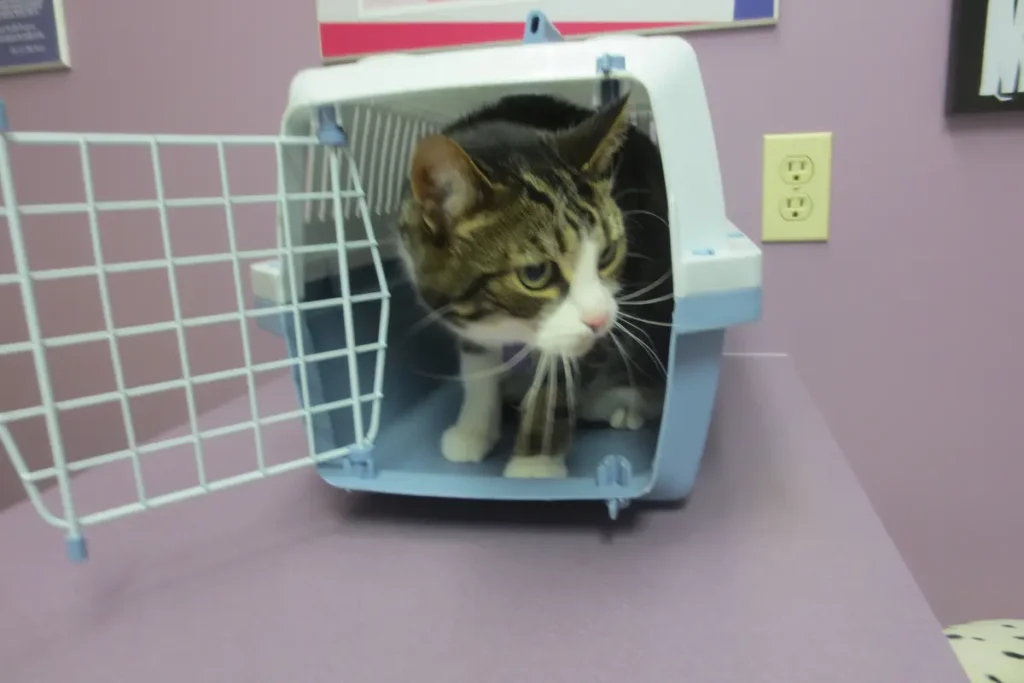
Adjust the plan for the cat in front of you
Kittens
Make the carrier an ordinary resting and play location from the beginning. Practise closing the door and lifting briefly even when no trip is planned. Early comfort helps, but a kitten still needs a securely latched, correctly sized carrier.
Senior cats
Choose easy access, stable footing and soft support. A removable top or wide opening can reduce awkward stepping. If entry has become newly difficult, ask a veterinarian whether pain, weakness, vision changes or cognitive changes may be contributing.
Fearful or newly adopted cats
Start farther away and protect choice. The first goal may be eating in the same room as the carrier. Forcing progress can make the object more predictive of lost control.
Cats who dislike handling
Practise cooperative handling separately from carrier entry. The same stop-before-struggle principle used when brushing a cat that hates being brushed and trimming cat nails without getting scratched can help: work below the cat’s reaction threshold, reward small successes and end while the cat is still coping.
Common mistakes to avoid
- Bringing out the carrier only for veterinary visits. Leave it accessible often enough to become familiar.
- Starting with the reward at the far back. A worried cat may need reinforcement several feet away first.
- Closing the door on the first voluntary entry. This can turn a breakthrough into a trap.
- Practising until the cat is exhausted or irritated. One or two successful minutes can be more useful than a long session.
- Using punishment or frightening deterrents. They do not teach the desired entry behavior.
- Opening the carrier in an unsecured place. A frightened cat can escape in seconds.
- Assuming every cat follows the same timeline. Prior experience, health, age and temperament change the pace.
Frequently asked questions
How long does it take to carrier train a cat?
A confident kitten may progress within days, while a cat with a long history of frightening trips may need weeks or longer. Advance according to relaxed, repeatable behavior rather than a calendar deadline.
Should I feed my cat inside the carrier?
You can use meals or small treats to create a positive association if your cat will eat comfortably there. Begin outside the carrier when necessary and move the food inward gradually. Keep treats within the normal daily food plan.
Can I put a blanket over a cat carrier?
A light familiar blanket can reduce visual stimulation for some cats. It must not block ventilation or cause overheating, and it should not interfere with the handle, latch or secure placement. Watch the cat’s response because not every cat prefers full coverage.
Is a hard or soft carrier better for training?
Either can work if it is secure, correctly sized and well ventilated. A hard carrier with a removable top often offers easier loading and veterinary access. A soft carrier must have reliable seams and zippers and enough structure to avoid collapsing onto the cat.
What if my cat is not motivated by treats?
Try a brief play reward, access to a favorite resting place or gentle social attention if the cat seeks it. Also check the difficulty: a cat who normally likes food but refuses it near the carrier may be too worried to learn at that distance.
Can I use carrier training before an emergency?
Yes. A cat who enters a carrier voluntarily may be easier to evacuate during a fire alarm, severe weather event or other urgent situation. Training improves preparation, but the carrier should still remain accessible, functional and easy for household members to locate.
Make the carrier part of ordinary life
The most reliable way to get a cat into a carrier is to stop letting the carrier mean only one unpleasant thing. Leave it visible, reward curiosity, teach entry before adding the door, and practise small movements when you are not in a hurry.
Choose the easiest step your cat can complete today. Is that looking at the carrier, taking one treat near the entrance or resting inside for five seconds?
Educational disclaimer: This article provides general cat-training and transport information. It cannot assess an individual cat or replace advice from a veterinarian or qualified feline behavior professional. Seek veterinary guidance for pain, breathing difficulty, severe distress, motion sickness, aggression or any urgent health concern.
References
- FelineVMA: 2025 Transportation of Cats in Motor Vehicles Position Statement
- ASPCApro: Teaching Your Cat to Ride in a Carrier
- International Cat Care: Taking Your Cat to the Veterinary Clinic
- Wisconsin Humane Society: Teach Your Cat to Love the Carrier
- Fear Free Happy Homes: Teach Your Cat to Go Into a Carrier Without a Struggle