
You clean the floor, walk away, and find gritty little pieces in the hallway ten minutes later. There may already be a mat in front of the box, which makes the mess feel especially unreasonable. The problem is not that your cat has failed to read the housekeeping rules. Litter is either being kicked out, carried out, or spread farther after it reaches the floor.
The short answer: To keep cat litter from tracking everywhere, first watch where the trail begins. Use a roomy box with walls your cat can enter comfortably, guide the normal exit across a large washable mat, keep roughly 2 inches of a litter your cat accepts, scoop at least daily, and remove loose granules near the box before paws or human feet move them through the home. Change one part of the setup at a time so you know what works—and so your cat keeps using the box.
QUICK NAVIGATION In This Article
Why Cat Litter Ends Up Everywhere
“Tracking” is often used for four different messes. The right fix depends on which one you actually have.
| What you see | Likely source | Best first move |
|---|---|---|
| A pile beside one wall of the box | Litter kicked over the rim during digging | Try a larger box or higher sides, if your cat can enter easily |
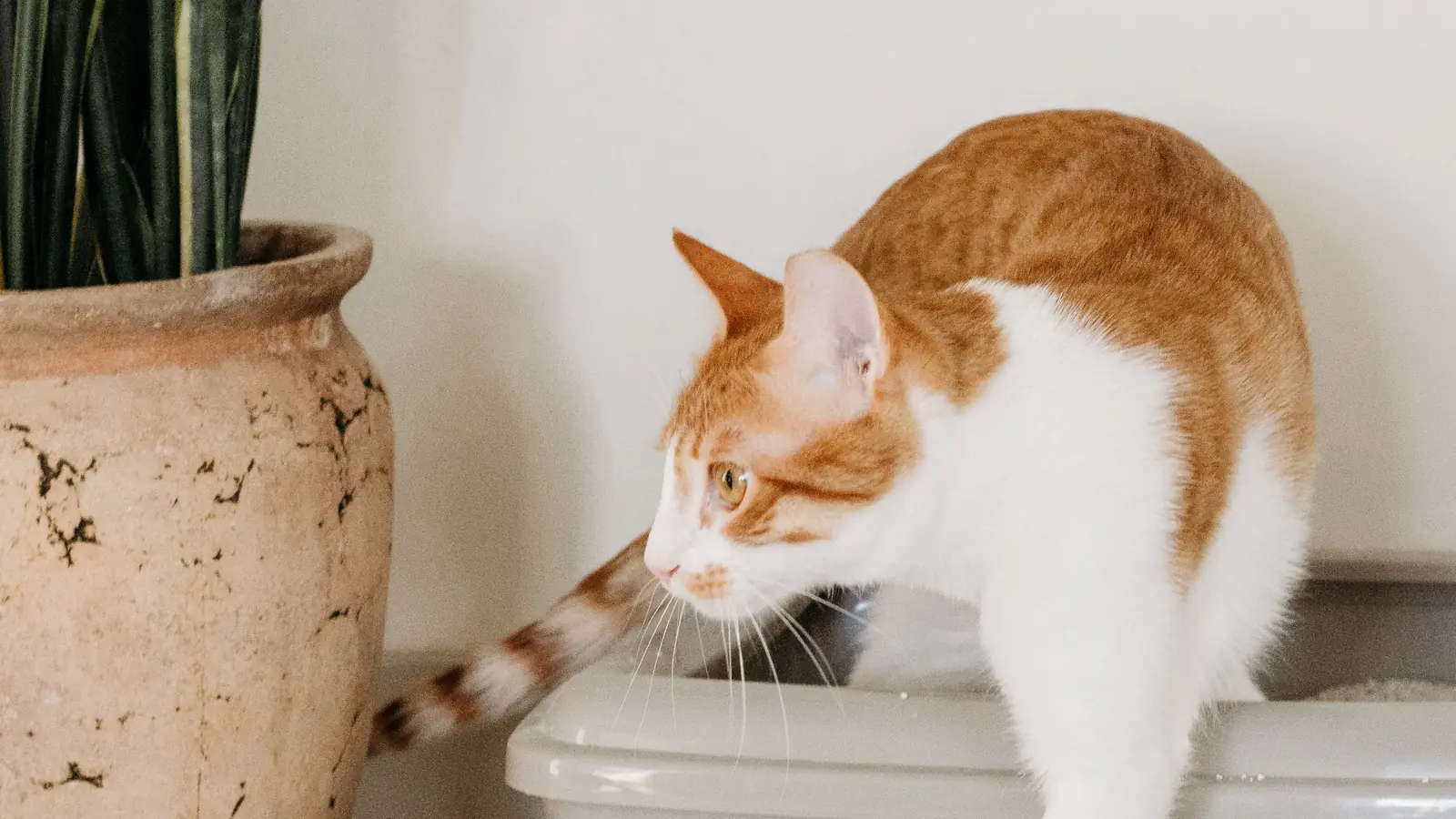
| A dotted trail beginning at the exit | Dry granules carried between toes | Lengthen the mat-covered exit path |
| Damp clumps on paws or hind fur | Wet litter, soft stool, long fur, or difficulty positioning | Clean the box and check your cat; call your veterinarian if it is new or recurring |
| Litter well beyond the box with little trail between | Granules moved by shoes, socks, a vacuum exhaust, or another pet | Remove litter close to the box more often |
Observe before shopping. Look immediately after your cat exits; a quick photo can reveal whether the mess begins at the box, the doorway, or several steps away.
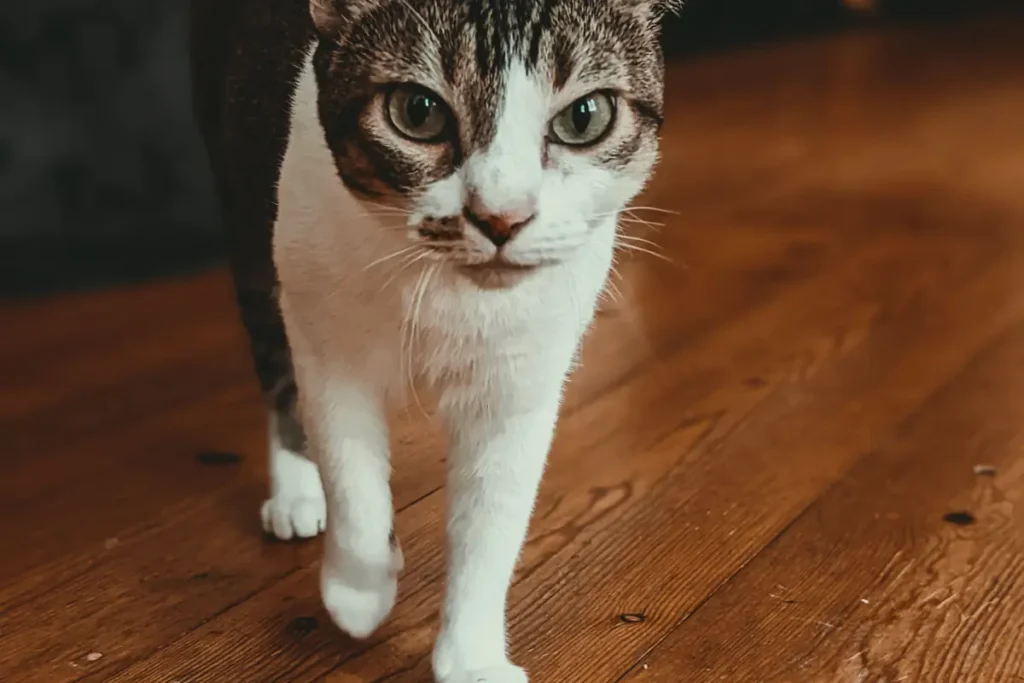
How to Keep Cat Litter From Tracking Everywhere
1. Start With a Box That Gives Your Cat Room
A cramped box makes it easier for a digging paw to send litter over the side. The Feline Veterinary Medical Association recommends a box about 1.5 times the cat’s length from nose to the base of the tail and notes that many commercial boxes are too small. A large storage container or mixing tray can work, provided it is stable, easy to clean, and has no sharp cut edges.
High sides are useful for a vigorous digger, but they are not automatically better. The Ohio State University Indoor Pet Initiative says low-sided boxes suit small kittens and older cats that struggle to get in and out. A senior cat with arthritis should not have to jump into a top-entry box just to save the floor.
If litter regularly goes over one side, a box with three tall walls and a lower front entrance can contain it without making entry an obstacle.
2. Give the Box One Obvious, Comfortable Exit
An open tray may allow exits in every direction. Place its back or one side near a wall while preserving room to enter, turn, and leave without feeling cornered.
Do not trap the box in a narrow closet, behind a loud appliance, or where another pet can guard the only route. The goal is a predictable exit, not an ambush point. Your cat should be able to see a safe way out.
For a covered box, monitor acceptance and odor closely. A lid may contain debris, but Ohio State notes that covered boxes concentrate odors and some cats refuse them when they are not kept very clean.
3. Make the Mat Long Enough for Several Steps
A mat works only when the cat walks across it. Place its longest section in front of the usual exit and, when possible, slide part of it beneath the box so it cannot drift away. Aim for several paw contacts rather than one quick step over a narrow strip.
Choose a flat, nonslip, paw-friendly mat. Sharp or unstable textures may make a cat jump over it. A washable low-pile utility mat can work, but avoid claw-catching loops and chewable foam.
Empty the mat where used litter cannot contaminate play, garden, or food areas. Replace it if the backing curls, cracks, or holds odor after washing.
4. Test a Heavier or Less Dusty Litter—Gradually
Larger, heavier granules often travel less than fine or lightweight material, but no type is universally best. Texture, dust, cost, and your cat’s preference all matter. Many cats prefer a soft, unscented clumping substrate, according to the Feline Veterinary Medical Association.
Do not dump a disliked “low-tracking” litter into every box overnight. Ohio State recommends offering a new litter in a box beside the familiar one so the cat can choose. In a multi-cat home, preserve enough available boxes during the test rather than turning the experiment into a competition.
Judge the whole result: your cat should enter willingly, use the box normally, and leave relaxed. A litter that stays put because the cat avoids the box is not a success.
5. Reset the Litter Depth
Too much litter gives an enthusiastic digger more material to launch. Too little can make covering waste difficult and may expose a slippery box bottom. Ohio State describes about 2 inches as a usual starting depth, not a law for every cat and substrate.
Level the surface after scooping and mark the fill line outside the box so refills stay consistent. Follow the manufacturer’s instructions for specialized litter systems.
6. Scoop Without Creating a Second Trail
Remove waste at least daily. Keep the scoop above the box, bring the waste bag to the rim, and move slowly. Carrying a loaded scoop across the room creates another trail.
The Feline Veterinary Medical Association advises washing the box every one to four weeks with soap and hot water and avoiding strong or ammonia-based products. Ohio State suggests weekly washing with mild dish detergent. Follow the litter system’s directions and clean sooner when residue or odor builds up.
The CDC advises daily cleaning, handwashing afterward, and keeping boxes away from children, other animals, and food-preparation areas. Pregnant people and people with weakened immune systems should avoid the task when possible; otherwise, use disposable gloves and wash hands.
7. Check Paws and Fur When Litter Sticks
Dry grains between the toes are ordinary tracking. Damp litter pasted to paw pads, repeated stool on hind fur, redness, limping, or reluctance to step into the box deserves more attention.
If something is stuck, do not pull hard, use household solvents, or cut near the skin. A veterinarian or cat-experienced groomer can show you safe coat maintenance; MeowTips’ guide to brushing a cat that dislikes grooming explains why restraint and rushing make handling harder.
Sudden tracking can reflect a physical change. Sore joints may alter how a cat enters or turns, while diarrhea can soil fur and paws. If the change is new, repeated, or comes with pain, appetite changes, vomiting, constipation, house-soiling, or unusual urination, contact your veterinarian.
8. Remove Granules Near the Box Before They Travel
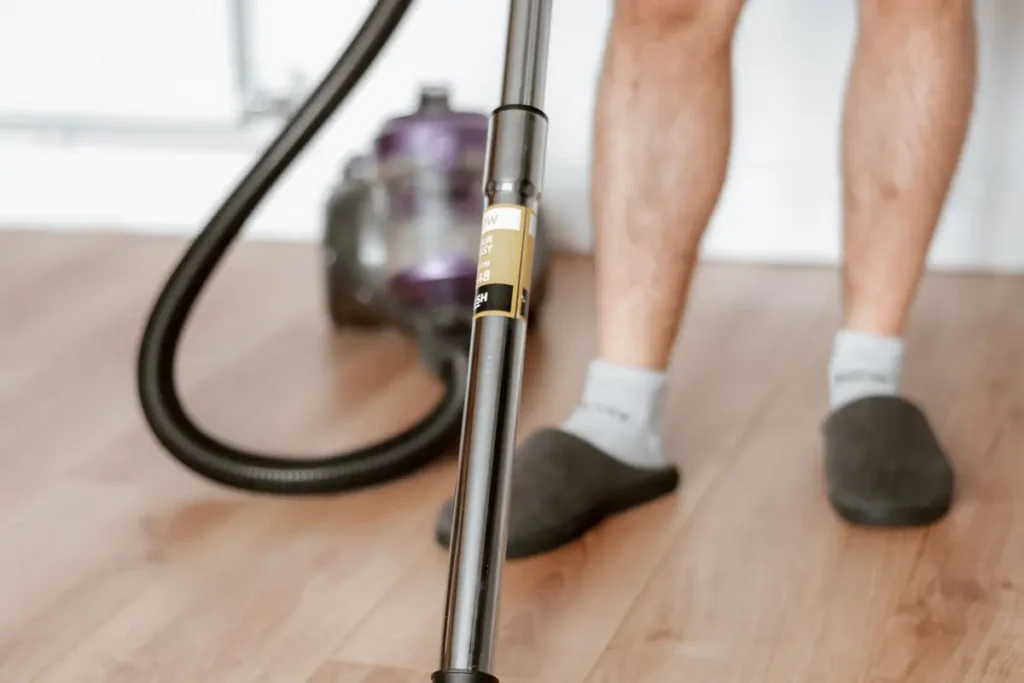
Keep a small covered dustpan and brush or a suitable handheld vacuum nearby. Pick up the first ring of litter once or twice daily, when your cat is elsewhere. On hard floors, collect dry granules before damp mopping; wet clumping litter can turn into a stubborn paste.
Check the vacuum manual first; damp clumps and fine abrasive dust may not suit every machine. Never run it while a nervous cat is using the box or let a robot block access.
On carpet, lift granules before shoes grind them in. For finished wood, laminate, vinyl, or stone, follow the floor manufacturer’s care instructions. Any waterproof tray beneath the setup must remain flat and stable.
9. Stop People and Other Pets From Extending the Mess
If the mat sits in a walkway, socks and shoes may collect litter first. Reorient the exit away from the main path or enlarge the protected area without blocking doors. Keep a stable, lidded waste bin close enough to prevent scoop-to-bin spills.
Dogs and curious children should not have access to the box. In a small apartment, use furniture or a low divider for visual separation while preserving ventilation and access. Avoid a tight, sealed cabinet.
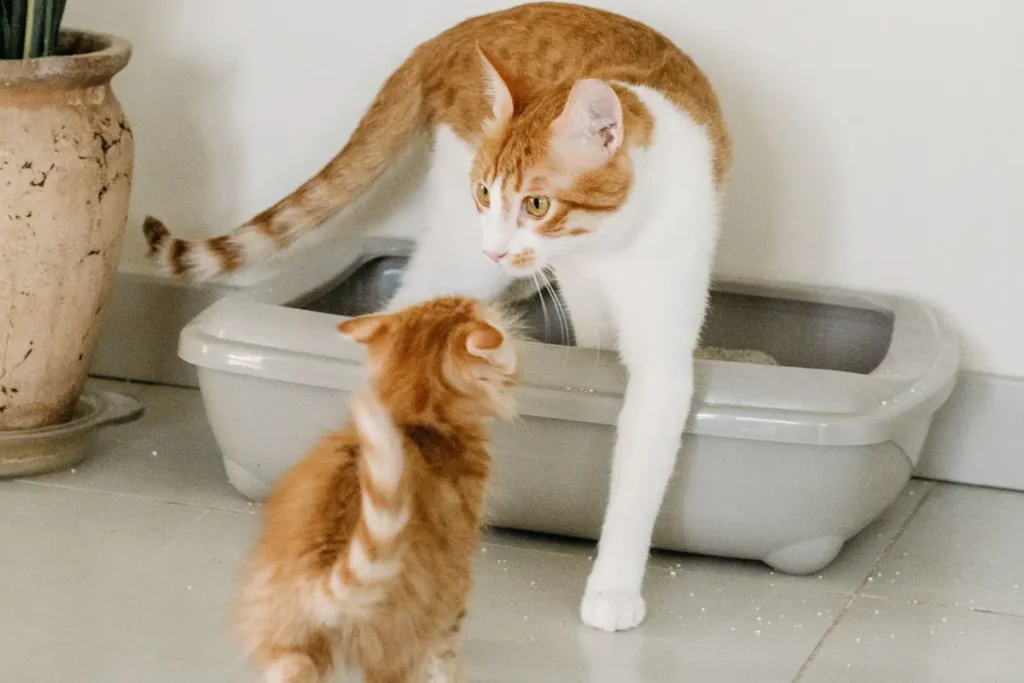
In multi-cat homes, one beautifully contained box is not enough. Both Ohio State and the CDC recommend one box per cat plus one additional box. Place boxes in separate useful locations; a row of boxes that another cat can guard may function like one resource.
A 15-Minute No-Shopping Reset
Before buying replacements:
- Pick up every dry granule within several feet.
- Scoop waste and level the litter.
- Turn the mat so its longest area covers the usual exit.
- Discourage side exits without making access tight or noisy.
- Keep cleanup tools together at the box.
- Observe and photograph the next two or three trails.
Common Fixes That Can Backfire
- Switching every box at once: A cleaner floor is not worth litter-box avoidance. Offer a choice and change gradually.
- Choosing a top-entry box for a mobility-limited cat: Jumping may be uncomfortable or impossible.
- Hiding the box in a cramped cabinet: Limited space, concentrated odor, and a guarded exit can make it unacceptable.
- Adding strong fragrance: Scented litter and air freshener may bother cats. Clean the source instead.
- Using a rough homemade grate: Sharp edges, unstable mesh, and claw-catching gaps can injure paws.
- Punishing digging: Digging and covering are normal behaviors. Improve containment; do not frighten the cat at the box.
- Trimming paw fur with scissors: Get professional help when trimming is genuinely needed.
MeowTips’ cat-care guide for new owners covers the litter box alongside feeding, enrichment, and health. For another household trail, see how to get cat hair off black clothes.
Frequently Asked Questions
What type of cat litter tracks the least?
Heavier, larger granules often travel less than very fine or lightweight litter, but no type is truly non-tracking. Your cat’s acceptance comes first. Compare one new option beside the familiar litter, keep box size and location consistent, and judge tracking only after your cat uses both normally.
Do cat litter mats really work?
They can reduce how far litter travels when they are large enough, lie flat, and cover the route the cat actually takes. A tiny mat beside an open box may miss most exits. If your cat jumps over a rough mat, try a flatter, paw-friendly, washable surface.
Are covered or top-entry litter boxes better for tracking?
They may contain scatter, but they are not suitable for every cat. Covered boxes can hold odor, and top-entry boxes require climbing and jumping. Large open boxes with three high sides and a low entrance often provide a useful compromise for kittens, seniors, and cats with limited mobility.
Can a robot vacuum clean around the litter box?
Only if the machine’s instructions allow the debris and the cat is comfortable with it. Remove damp litter and waste by hand, keep cables and bags secured, and schedule cleaning when the box is not in use. A robot should never block access or startle a cat inside the box.
Why has my cat suddenly started tracking more litter?
Check for a new litter formula, a fuller or dirtier box, worn mat, longer paw fur, wet litter, soft stool, weight or mobility changes, and a different exit route. A sudden persistent change with pain, diarrhea, house-soiling, straining, frequent urination, or blood needs veterinary advice.
How often should I clean the litter-box area?
Scoop at least daily and remove nearby loose litter often enough that it is not carried farther—commonly once or twice a day in a busy area. Wash the box on a schedule appropriate to the system and sooner if residue or odor builds up. Always wash your hands afterward.
Start at the First Three Feet
You may never keep every grain inside the box, but you can stop most of it near the source. Tonight, clean the floor, point the exit across the longest part of the mat, and watch one visit. That single observation will tell you whether your next move is a larger box, a longer path, a careful litter trial, or a health check.
Once the chores are done, try one of these simple ways to play with your cat without store-bought toys. Which part of your current setup seems to start the trail: the rim, the paws, or the walkway?
This article provides general educational information for routine litter-box management. It does not diagnose medical or behavior problems. Contact your veterinarian about sudden changes, pain, abnormal stool or urination, or persistent house-soiling.
References