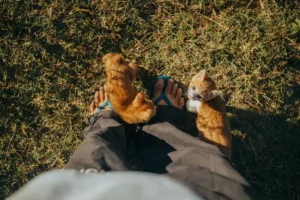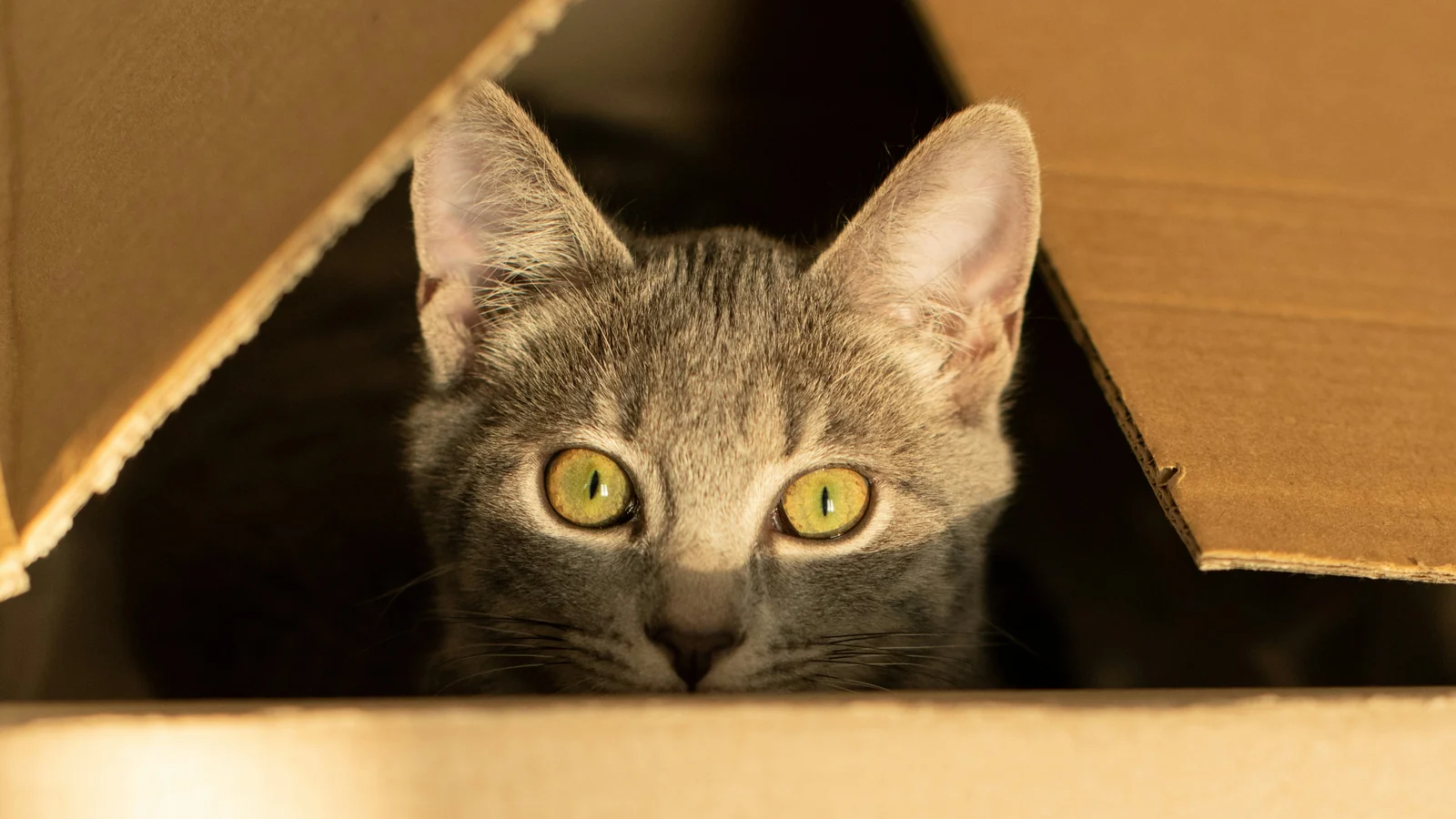

You finally sit down, and your cat appears beside you, watching for something to happen. The feather wand has vanished under the couch. Every little mouse seems to have followed it. What can you do right now?
Learning how to play with a cat without toys starts with giving your cat something interesting to investigate, chase, or find. Try a large paper ball, a roomy cardboard box, a handle-free paper bag, a gentle find-me game, or a simple food search. Keep hands and feet out of the action, stay nearby, and let your cat decide when they’re done.
Here, “without toys” means without buying or finding a purpose-made cat toy. Household objects become playthings once you offer them. If you have no suitable objects at all, start with the find-me game below.
QUICK NAVIGATION
In This Article
Before you start: choose the space and materials
Pick a familiar room with clear floor space. Move breakables out of the way, secure dangling blind cords, and avoid games beside open windows, hot appliances, or unstable furniture. Cornell’s guide to safe cat toys emphasizes both the toy and the surrounding environment: falling objects and unsafe heights matter, too.
Use this quick material check:
- Paper: plain, clean, dry, and free of staples, tape, or food residue. Skip receipts, glossy wrappers, and scraps small enough to swallow.
- Boxes: sturdy, roomy, and free of staples, loose tape, plastic packing material, and exposed adhesive. Choose an opening your cat can pass through comfortably.
- Paper bags: large enough for easy entry and exit, with every handle and handle attachment removed. Never substitute a plastic bag.
- Your cat: awake, comfortable, and free to approach or walk away. Don’t wake a sleeping cat to complete a play session.
Skip paper and cardboard games if your cat tears off and eats pieces. Supervision means watching the activity, not just being somewhere in the house. If a material starts coming apart, end that game.
How to play with a cat without toys: 5 easy games
You don’t need to try all five. Choose the activity that fits what your cat is already doing: following you, investigating a delivery box, or watching something roll across the floor.
1. Roll a paper ball across the floor
Crumple a clean sheet of plain paper into a loose ball that’s too large for your cat to swallow whole. Leave out string, tape, and decorations. If the ball keeps collapsing into small pieces, choose another activity.
Set it down where your cat can see it. Give it a gentle roll away from your cat, then take your hand back. Wait. A cat who watches for several seconds may still be deciding whether to approach.
Try a short roll along the edge of a rug, where the ball slows naturally. Next time, change the direction. You can also let it disappear just behind a box corner, provided you can still see the ball and retrieve it safely.
Let your cat catch and bat it. Don’t snatch it away at every successful pounce. Retrieve it only after your cat moves away, and replace it if it becomes wet or ragged.
If your cat routinely carries things into the water dish, our explanation of why cats put toys in their water bowls may be useful. Keep paper games away from the dish and remove soggy paper promptly.

2. Turn a cardboard box into a hiding spot
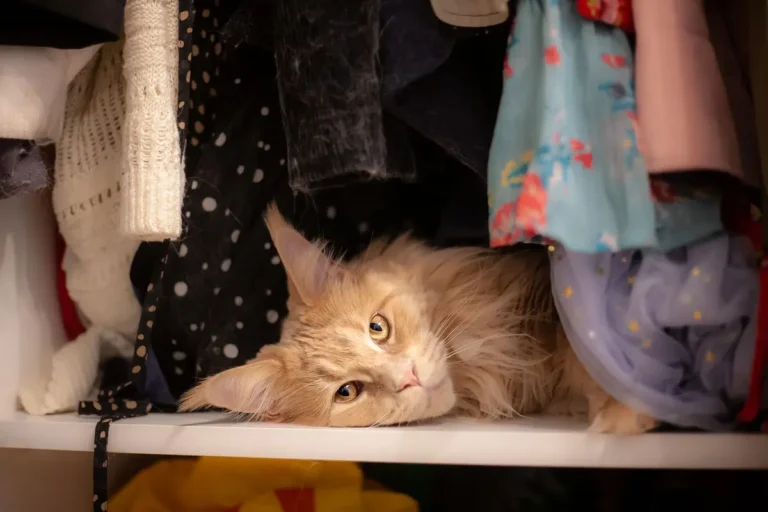
Place a clean box on its side so the entire open end faces into the room. Keep it at floor level. You don’t need to build a castle, glue boxes together, or cut a maze of small holes.
Let your cat inspect the box without being placed inside. If they enter, roll the paper ball past the opening from a comfortable distance. Pause between rolls so your cat can watch, emerge, or stay hidden.
The important detail is the exit: your cat should be able to leave easily without pushing past you. Keep your fingers away from the doorway and never tap the outside where your cat is hiding to provoke a reaction.
For a cat who doesn’t want to chase, the box can simply remain an inviting place to investigate. Change its position slightly on another day, then see whether your cat chooses to explore again.
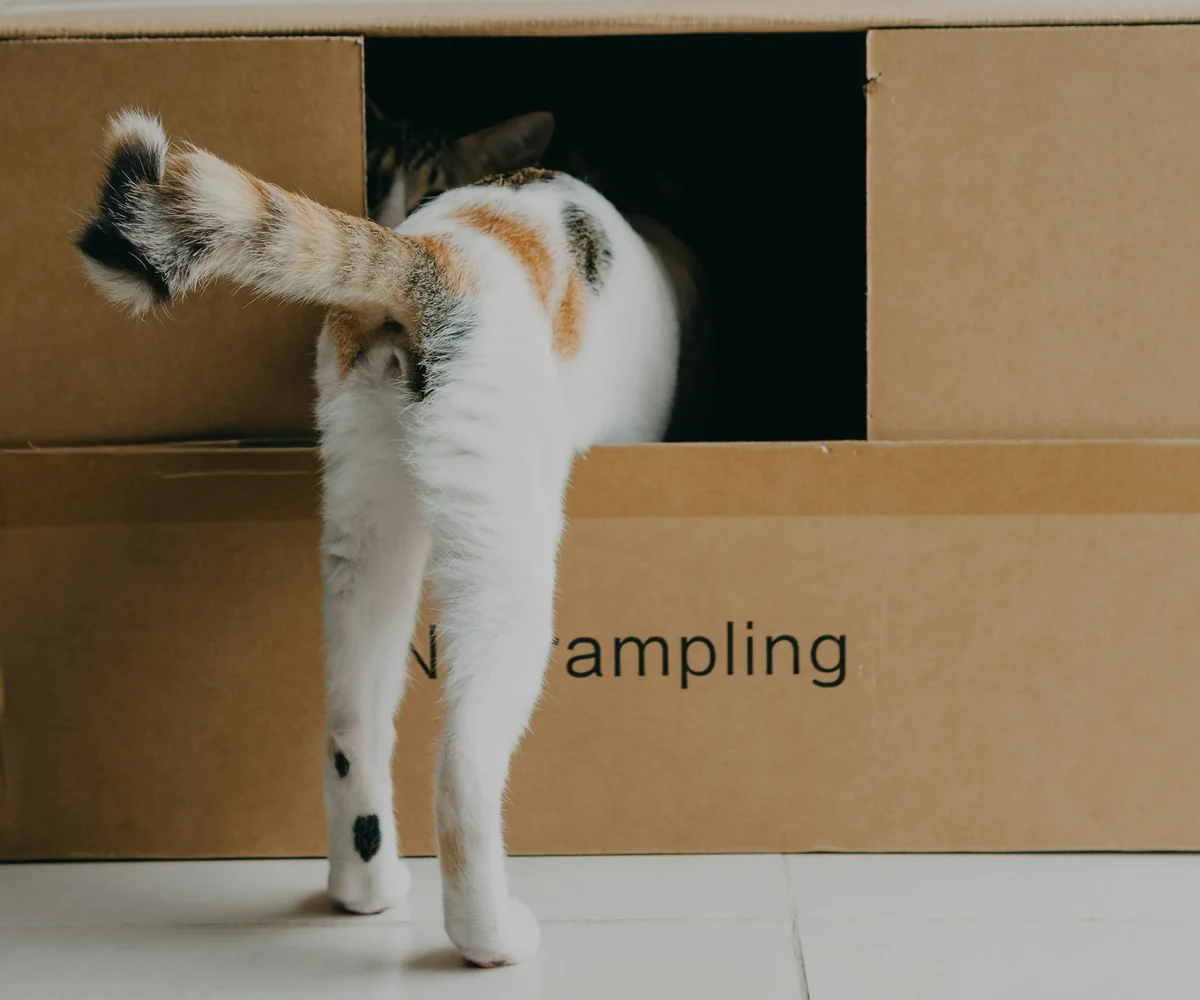
3. Offer a handle-free paper bag
A paper bag can provide a different texture and sound from a box. Check it carefully first: remove the handles completely, including dangling ends, and choose another bag if adhesive or fasteners remain accessible. Open it on its side with the entrance unobstructed.
Stand back and let your cat approach. If they seem interested, roll the paper ball nearby. You don’t need to shake the bag, rustle it beside their ears, or close it around them.
Some cats will walk straight in. Others will sniff the edge and leave. Both responses are fine. The PAWS cat-toy guide identifies paper bags with handles removed as an option for interactive play and warns against string, rubber bands, and other swallowable household items.
Use a box instead if the bag collapses around your cat, tears easily, or seems to worry them. Put the bag away after the supervised session.
4. Play a gentle find-me game
This is the option that requires no play object. Start with a cat who is relaxed and already interested in following you.
Move a few steps away while remaining visible. Use a familiar invitation in your normal voice. When your cat approaches, offer something they enjoy: warm attention, a brief cheek rub if they request it, or a small reward taken from their usual food allowance.
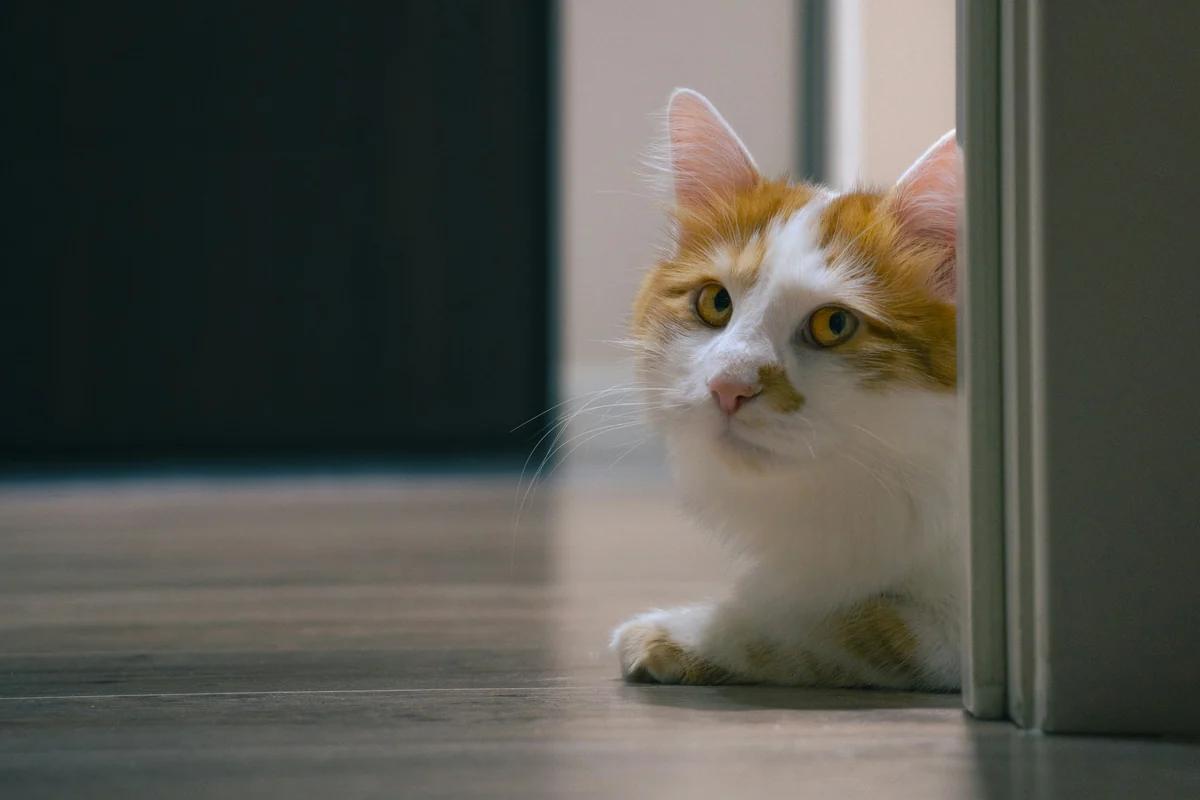
Once that is easy, try standing partly beside an open doorway. Keep enough of yourself visible that finding you is straightforward. Avoid hiding in closets, shutting doors, or making your cat search through unfamiliar rooms.
There is no surprise ending. Don’t jump out, chase your cat back, or turn your ankles into a moving target. If your cat doesn’t come, make the next attempt easier or leave it for later.
For a more structured version, follow our guide to teaching your cat to come when called. Here, the aim is simply a pleasant little interaction, not a test of obedience.
5. Make an easy food search
If your cat normally eats dry food, set aside a small portion of their usual daily allowance. Place a few pieces in obvious, accessible spots on a clean tray or washable floor. Let your cat watch you place the first ones.
Start with finding, not solving. Once your cat understands, you might place one piece beside an open box while keeping it visible. Don’t hide food deep inside furniture, beside cleaning products, or in spaces where your cat could become stuck.
For cats who eat wet food, use a small amount of their usual meal on a clean, shallow dish in an easy-to-reach spot. Keep the activity brief and clean up afterward. There is no need to introduce kibble just for this game.
This is a searching activity, so it won’t replace every opportunity to chase and pounce. Make it easy enough that your cat can find the food without needing you to dismantle a puzzle. If they walk away, offer the remaining meal normally.
Don’t add extra meals, withhold food to force participation, or change a prescribed diet for entertainment. If your cat has dietary restrictions, use an approved food or choose a nonfood game. In a home with several cats, offer separate activities so one cat doesn’t collect everyone’s food.
Make the game easier before making it longer
If your cat loses interest, change one thing: the distance, the movement, or the amount of noise. A paper ball rolling slowly past a box may work better than repeated throws across the room.
Watch the whole interaction. Following an object with their eyes, turning toward it, or choosing to approach can be part of participation. You don’t need a dramatic leap for the session to count.
The Feline Veterinary Medical Association notes that play and reward preferences vary between cats. It also recommends predictable interactions that respect the individual cat and ending training when frustration or distraction takes over.
Let your cat leave. Pause if they become tense, turn their ears back, hiss, or repeatedly avoid the activity. These signals deserve space; they aren’t an invitation to make the game more exciting.
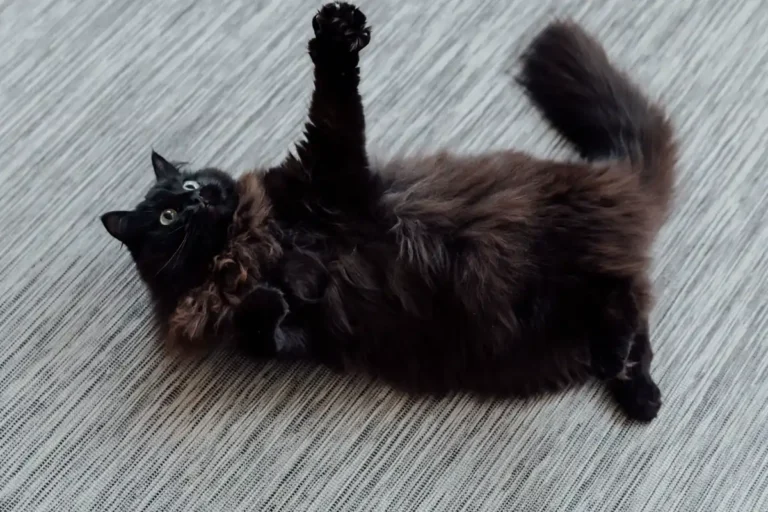
If your cat drops onto their side, look at the rest of their body before reaching toward them. Our article on why cats flop down in front of their owners explains why a visible belly isn’t automatically a request for a belly rub.
Common mistakes that spoil the fun
Using hands under a blanket. Covered fingers and toes are still part of your body. Keep them out of hunting games. Cats Protection’s play guidance advises against encouraging cats to play with fingers or toes, including during kittenhood.
Picking up the nearest small object. Hair ties, rubber bands, yarn, ribbon, and small detachable pieces aren’t suitable substitutes for a missing toy. A no-cost activity still needs a safety check.
Making every game difficult. A beginner food search with invisible food, or a find-me game several rooms away, gives your cat little help understanding what to do. Start with an obvious success.
Insisting on a fixed session length. Very short sessions can be useful. Cats Protection notes that one- or two-minute games are fine. Treat that as an example, not a timer your cat must satisfy.
Frequently asked questions
Can these games work for kittens?
Yes, with close supervision and materials suited to the kitten’s size. Be especially careful about chewing and swallowing pieces. Keep games simple, use low entrances, and never teach a kitten to wrestle with your hands.
What if my cat eats paper or cardboard?
Skip those materials entirely, even if another cat uses them safely. Try a gentle find-me activity or ask your veterinarian which durable play options suit your cat. Suspected swallowing of nonfood objects calls for veterinary advice, not another trial with the same material.
Can older cats join in without jumping?
Yes. Keep everything on a comfortable, accessible level. Place a paper ball nearby instead of throwing it far away, or make the search route very short. Cornell’s guidance for older cats recommends gentle play and cautions against dismissing behavior changes as aging. For a cat with pain, limited mobility, or an exercise restriction, ask your veterinarian how to adapt play.
What if my cat watches but won’t join in?
Try another time, reduce the noise, or offer a different activity. Don’t prod or corner them. If reluctance to play is a new change, particularly with other changes in movement, appetite, or behavior, arrange a veterinary check rather than assuming boredom.
Can I leave these activities out while I’m at work?
The paper-ball and paper-bag games here are designed for supervision. Remove materials your cat could shred or swallow. A carefully prepared, stable, open box may serve as a resting space for a cat who doesn’t chew it, but inspect it regularly and remove it if damaged.
Try one small invitation today
Choose a single game, clear a little floor space, and give your cat time to respond. Keep the version they enjoy and retire the one they ignore. A quiet minute together is a perfectly good place to start.
Which does your cat investigate first: an empty box, a rolling paper ball, or you disappearing around a doorway?
This article offers general enrichment ideas. Your veterinarian can advise on play for a cat with health conditions, mobility limitations, or a habit of eating nonfood objects.
References
- Cornell Feline Health Center — Safe toys and gifts.
- PAWS — Cat Toys and How to Use Them.
- Cornell Feline Health Center — Loving Care for Older Cats.
- Feline Veterinary Medical Association — Setting Up the Environment for Success.
- Cats Protection — Cats and Play.